Choosing a compound miter saw involves balancing power, precision, weight, and versatility. This guide highlights five strong options and a concise buying guide to help American homeowners and woodworkers pick the right model for projects ranging from baseboard installation to trim work. Each listing focuses on real-world features such as bevel range, RPM, positive stops, and portability. Use the summary table below to compare core specs at a glance.
| Product | Brand | Key Feature |
|---|---|---|
| Metabo HPT 10-Inch Single Bevel Compound Miter Saw, C10FCG2 | Metabo HPT | 15-Amp motor; 0-45° bevel; lightweight (24 lbs); Xact Cut shadow line |
| DEWALT Miter Saw DWS779 | DEWALT | 12-Inch blade; 3800 RPM; dual bevel; 10 positive stops |
| Metabo HPT 10-Inch Compound Miter Saw, C10FCGS | Metabo HPT | 15-Amp motor; 0-45° bevel; large 10-Inch table; 24.2 lbs |
| DEWALT Miter Saw DWS713 | DEWALT | 10-Inch; 14 positive miter stops; tall sliding fence |
| Makita LS1040 10″ Compound Miter Saw | Makita | 15-Amp direct drive; 0-45° left; 0-52° right |
Whether you’re a DIY hobbyist or a professional contractor, this selection emphasizes models with strong cutting power, durable construction, and practical features like positive stops, easy adjustments, and portable designs. The following sections provide concise profiles of each chosen model, with emphasis on what makes them suitable for a range of woodworking tasks.
Metabo HPT C10FCG2: Lightweight Powerhouse

The Metabo HPT C10FCG2 delivers a robust 15-Amp motor with a no-load speed up to 5,000 RPM, driving clean, precise cuts through wood and similar materials. Its single bevel design simplifies setup for bevel cuts up to 45 degrees, while an improved miter scale and controls enhance adjustment accuracy. A large 10-inch table provides solid support for longer workpieces, and the vice clamp secures material for consistent results. At roughly 24 pounds, it balances portability with power, making it a practical choice for job sites and small shops.
Users benefit from a shadow line alignment system that guides blade positioning for accurate miters, reducing guesswork on every cut. The compact footprint helps when space is at a premium, yet the saw remains capable of handling typical trim and framing tasks. This model is particularly well-suited for users who value ease of transport without sacrificing cutting performance.
Metabo HPT C10FCGS: Dual-Edge Precision
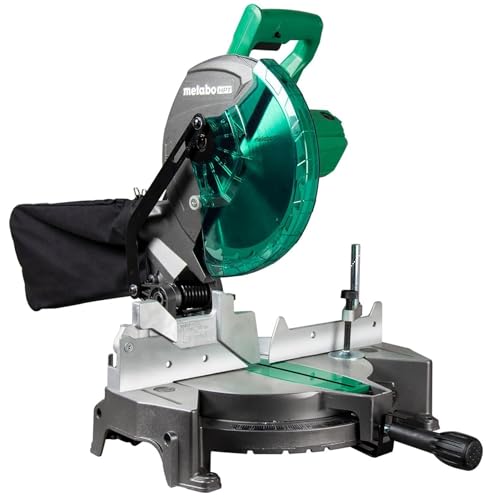
The Metabo HPT C10FCGS is a lightweight 10-inch compound miter saw with a 15-Amp motor and a no-load speed up to 5,000 RPM, geared toward smooth, precise cuts. It features thumb-actuated positive stops for quick miter adjustments and a large table for material support, along with a secure vice clamping system to hold stock steady during operation. Weighing around 24.2 pounds, this model is easy to move between job sites or around the workshop. The combination of portability and reliable performance makes it a strong option for users who handle frequent bevel and miter work.
Bevel and miter functions pair with a sturdy base and user-friendly controls, enabling efficient setup for common angles while maintaining accuracy. This saw suits cabinetry, trim work, and general carpentry, especially where a balance of light weight and power is desired.
DEWALT DWS779: Heavy-Duty 12-Inch Performance

The DEWALT DWS779 stands out for its 12-inch blade and a powerful 3800 RPM motor, designed for larger crosscuts and deeper bevel cuts. It features a comprehensive miter system with a machined base fence for robust accuracy, and a cam-lock miter handle with detent override to deliver precise and repeatable settings. The 12-inch format provides greater cutting capacity, making it a strong choice for framing, decking, or crown molding applications that require longer crosscuts and superior stability.
Users appreciate the accuracy and durability of the DEWALT system, which supports heavy workloads while maintaining consistent miters and angles. The model’s construction is suited for professional use, and its detent system helps maintain reliable settings across multiple cuts, even on challenging materials. It’s a practical option for projects demanding a larger blade and solid performance over time.
DEWALT DWS713: Compact Yet Capable

The DEWALT DWS713 offers a 10-inch blade with a robust set of features in a compact format. It includes 14 positive stops on its miter scale, providing precise and repeatable settings across common angles. The tall sliding fence supports larger boards and ensures clean crosscuts, while the durable construction promotes long-term reliability in workshop or job-site environments. This model is particularly suitable for users who need a portable option with dependable accuracy for trim work and framing tasks alike.
With a balance of portability and capability, the DWS713 is well-suited for contractors who require a compact tool without compromising on essential features like positive stops and a stable fence. The emphasis on accuracy and ease of adjustment aligns with professional standards for precise molding, cabinetry, and finish carpentry work.
Makita LS1040: Precision And Range

The Makita LS1040 combines a direct-drive 15-Amp motor with a wide bevel range to handle diverse tasks. It offers miter cuts from 0° to 45° left and 0° to 52° right, enabling flexible angles for picture framing, trim, and cabinet work. The machine’s 10-inch capacity balances power and portability, making it suitable for professionals who require a reliable cutting tool that’s comfortable to use over extended sessions. The direct-drive design also contributes to efficient power transfer and smoother operation.
Makita emphasizes durability and user comfort, with a robust base and stable fence system that supports accurate cuts across various materials. For those prioritizing a wide bevel range and strong cutting performance in a compact package, the LS1040 is a solid option worth evaluating against other popular brands.
Buying Guide: Key Purchase Considerations
Power and speed: Look for a reliable 15-Amp motor and a no-load RPM of roughly 4,800–5,000 to handle hardwoods and dense materials. Higher RPM can improve finish quality on plywood, laminates, and trim stock.
Bevel and miter range: A bevel range up to 45 degrees (left and/or right) increases versatility for compound angles. Positive stops at common angles save time and improve repeatability.
Cut capacity: 10-inch vs. 12-inch blades determine the maximum crosscut size. Larger capacity is beneficial for crown molding and larger boards but adds weight.
Weight and portability: For job-site work, a model under 25 pounds is easier to transport. Consider foldable stands or integrated carry handles for enhanced mobility.
Table size and clamping: A larger table provides better support for longer pieces. A reliable vise clamp or workpiece hold-down system improves safety and accuracy during cuts.
Accuracy features: Shadow lines, laser guides, or improved miter scales help reduce setup errors. Cam-lock handles and detent overrides improve repeatability.
Durability and warranty: Look for metal bases or rails, quality fences, and a warranty that covers common wear parts. If you work in dusty environments, consider models with dust collection integration.
Budget and intended use: For casual DIY tasks, a lighter, simpler model can be ideal. For professional framing, cabinetry, or trim installation, prioritize accuracy, capacity, and ruggedness over ultra-low price.