Choosing a 12-inch dual-bevel sliding compound miter saw involves balancing power, precision, and versatility. This guide highlights top models that deliver clean crosscuts, accurate bevel adjustments, and solid durability for a range of carpentry tasks. We compare performance features, cutting capacity, and user-friendly details to help you pick a tool that fits your workshop needs and budget.
| Product | Brand | Key Strength |
|---|---|---|
| DEWALT DWS779 | DEWALT | Accurate miter system with 10 positive stops |
| Makita LS1219L | Makita | Compact footprint with extended capacity |
| BOSCH GCM12SD | BOSCH | Axial Glide for wide cuts and compact storage |
| JET JMS-12X | Jet | Dual bevel with robust motor and extendable support |
| SKIL MS6305-00 | Skil | Bright LED shadow line for visibility |
DEWALT DWS779 12 Inch Double Bevel Sliding Miter Saw

The DEWALT DWS779 is a compact, corded 12-inch double bevel sliding compound miter saw designed to maximize crosscut capacity while maintaining accuracy. It features a stainless steel miter detent plate with 10 positive stops, a precise miter system, and machined base fence support. The cam-lock miter handle with detent override provides quick and precise adjustments, helping carpenters achieve exact angles with minimal setup time. This model is well-regarded for its balance between portability and cutting performance, making it a strong option for framing, trim work, and cabinet components.
Performance is supported by a robust motor that handles common hardwoods efficiently, while the positive stops aid repeatable cuts on repetitive tasks. The base and fence alignment contribute to dependable accuracy, especially when working on long boards or repeated crosscuts. For users prioritizing reliable miter angles and straightforward operation, the DWS779 remains a solid, entry-to-mid level choice with a proven track record in professional shops and contractor setups.
In practice, this saw shines when paired with a quality blade and a stable work surface. It is suitable for projects requiring precise angle cuts, crown molding with careful orientation, and general woodworking where consistent repeatability matters. While not the lightest model, its build quality and miter system design offer longevity and dependable results across a wide range of tasks.
DOVAMAN 12-Inch Dual-Bevel Miter Saw

The DOVAMAN 12-Inch Dual-Bevel Miter Saw offers ambidextrous operation and a high-speed 3800 RPM motor, paired with a 4.2 x 13-inch cutting capacity. It features a laser guide to assist in marking precise cut lines and nine positive stops for straightforward angle selection. With 0–45° bevel and miter ranges, the saw is designed to handle common framing and trim tasks with reliable accuracy. Its corded power supply ensures consistent performance during longer work sessions.
Users benefit from a sliding rail system that maintains alignment during cuts, helping reduce wander on longer boards. The laser alignment, combined with 9 preset angles, supports quick setup when working on a series of identical joints. The compact design and inline controls make it suitable for mid-sized shops or job sites requiring precise compound cuts without excessive weight or bulk.
Versatility is a key feature, as the saw accommodates several materials commonly encountered in woodworking and light construction. While it may not match the top premium brands in every metric, it provides good value for the price in terms of capability, ease of use, and repeatable results in a variety of projects.
Makita LS1219L 12″ Dual-Bevel Sliding Miter Saw with Laser

The Makita LS1219L features a unique two-steel-rail sliding system for smooth operation and a compact footprint that allows work close to a wall. It delivers expanded capacity, supporting up to 8″ crown molding vertically nested and 6-3/4″ baseboard vertically, with 15″ crosscuts at 90 degrees. The in-front bevel lock provides convenient operation, helping users lock in precise angles quickly. A laser guide adds an extra layer of accuracy for delicate precision tasks.
Power comes from a robust 15-amp motor with a high-speed rotation reaching 3800 RPM, ensuring efficient cutting through most woods and composites. The saw’s design emphasizes accuracy and repeatability, which is especially valuable for cabinetry, furniture components, and trim work that demand consistent joint alignment. While it carries a larger footprint than some compact models, the LS1219L trades space for a broader range of capabilities and smoother operation in demanding projects.
In practice, this model suits professional shops and serious hobbyists who require consistent results with less setup. The laser, bevel, and miter alignment features support precise compound cuts, and the saw’s solid rails reduce wobble during heavy cuts. The overall build quality resonates with users who value durability and long-term performance.
BOSCH GCM12SD 12-Inch Dual-Bevel Sliding Glide Miter Saw

The BOSCH GCM12SD uses an Axial Glide system that enables wider cross cuts while keeping the unit compact for easier storage. It delivers generous cutting capacity and features a bevel detent system for precise 0°, 33.9°, and 45° left and right angles. The design prioritizes accurate alignment with stainless steel miter scales and clear detents to support repeatable cuts. It’s notably efficient in dust collection, which helps keep the workspace cleaner during long sessions.
With expanded capacity across horizontal and vertical cuts, this model is well-suited to crown molding, baseboards, and cabinet components where larger boards require a solid, stable cut. The glide mechanism reduces friction and resistance, contributing to smoother operation and longer blade life under frequent use. The BOSCH saw is a strong choice for professionals who value precision alongside a compact footprint and reliable dust control.
From a usability perspective, the GCM12SD balances performance with a straightforward adjustment experience. The combination of a robust motor, adjustable bevels, and intuitive measures makes it a versatile tool for both seasoned pros and ambitious woodworkers tackling complex angles and long cuts.
JET JMS-12X Sliding Dual-Bevel Miter Saw
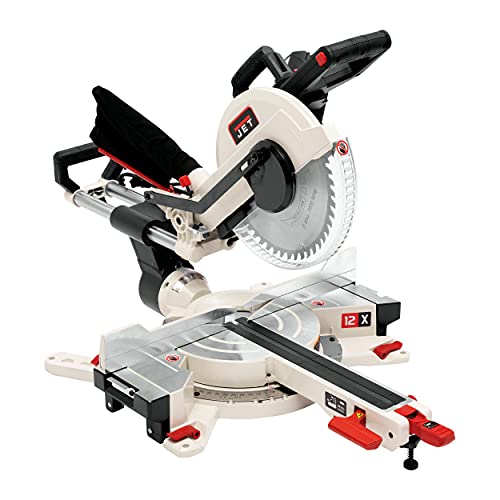
The JET JMS-12X is designed to deliver robust power and versatility for many woodworking applications. It features a heavy-duty 15-amp motor and dual bevel capability with front controls to simplify angle adjustments for compound cuts. The adjustable fence and extension tables provide added support for longer workpieces, improving stability during demanding cuts. This saw is suitable for framing, trim work, and furniture construction where consistent results across repeated cuts are essential.
As a mid-to-high-range option, the JMS-12X emphasizes ease of use and accurate alignment, with features aimed at reducing miscuts and waste. The dual-bevel design expands the range of projects you can tackle without flipping pieces or repositioning excessively. For users who appreciate straightforward operation and solid cutting performance, the JET model offers a dependable balance of power, precision, and user-friendly controls.
SKIL 10″ Dual Bevel Sliding Compound Miter Saw MS6305-00

The SKIL MS6305-00 provides a compact option for users seeking a dual-bevel sliding miter saw with practical features. It delivers a powerful 15-amp motor producing up to 4,800 RPM for fast, precise cuts. The dual bevel design enables cuts at multiple angles on both sides, with four positive stop positions at 48° and 45° left, 0°, and 45° right, increasing flexibility for complex joinery. A bright LED shadow line helps users align material before cutting, improving accuracy in dim or cluttered workspaces.
This model prioritizes straightforward usability and value. The LED indicator aids alignment, while the positive stops simplify repetitive tasks. The saw’s footprint and weight are manageable for smaller shops or mobile setups. While it may not feature the largest capacity or the most advanced laser systems, the MS6305-00 offers a dependable balance of performance, durability, and budget-friendly pricing for hobbyists and entry-level professionals alike.
Buying Guide: Key Purchase Considerations
When evaluating a 12-inch dual-bevel sliding compound miter saw, consider the following factors to ensure you select a model that aligns with your projects and workspace:
- Cutting capacity: Look at horizontal and vertical capacity, including crown molding nesting and baseboard work. A larger capacity reduces the need to flip material and improves efficiency on big tasks.
- Bevel and miter ranges: Ensure the ranges cover common angles for your projects. Positive detents at key angles help with repeatability on repetitive cuts.
- Framing and finishing balance: Some saws emphasize raw power, while others focus on precision alignment or dust control. Decide which is most critical for your typical projects.
- Accuracy features: Detent plates, laser guides, shadow lines, and fence alignment systems influence cut accuracy. Choose models with features that suit your workflow and lighting conditions.
- Dust management: Efficient dust collection improves visibility and cleanliness. Consider built-in dust collection options and compatibility with shop vacuums.
- Footprint and portability: Larger crosscut capacity often means a bigger footprint. If you work in tight spaces or on job sites, a more compact model with stable support is advantageous.
- Durability and warranty: Look for solid aluminum or steel components, quality bearings, and a reputable warranty. This can translate to fewer maintenance issues over time.
- Accessory ecosystem: Availability of compatible blades, clamps, extensions, and fences can influence your overall setup and upgrade path.
In selecting between the top models, consider your most frequent tasks: cabinetmaking and trim often benefit from precision and repeatability, while framing may prioritize cutting speed and power. A laser guide or shadow line can simplify alignment, especially in bright or cluttered environments, but a solid miter system and robust detent setup are equally important for long-term accuracy. Budget-conscious buyers should weigh the long-term value of a durable model with proven accuracy against a lower-priced option with fewer upgrade prospects.