Choosing the right 12-inch miter saw blade can dramatically improve finish quality, edge precision, and overall cutting efficiency. This guide highlights top options across finishes, tooth counts, and carbide technology to help American woodworkers, hobbyists, and professionals compare performance. Each blade is evaluated for crosscut clarity, vibration control, and lifespan, with links to trusted Amazon listings for quick shopping.
| Product | Tooth Count | Best For |
|---|---|---|
| DEWALT DW3128P5 (2-Pack) | 80T & 32T | Versatile crosscuts and fine rips |
| DEWALT DWA112CMB | 40T & 60T | Fine finish and accuracy |
| DEWALT DWA11280 | 80T | Fine finish with long life |
| Freud LU91R012 | 72T | Premium crosscutting with TiCo |
| FOXBC 100T | 100T | Smooth, polished finishes |
DEWALT DW3128P5 12-Inch 80-Tooth & 32-Tooth Miter Saw Blade (2-Pack)
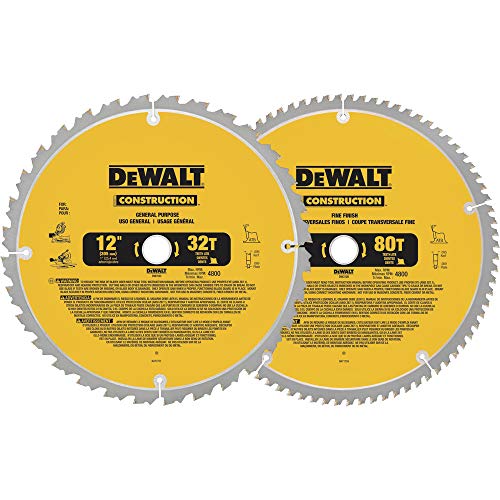
The DEWALT DW3128P5 offers a dual-blade setup: an 80-tooth blade for precise crosscuts and a 32-tooth blade for quicker, coarser cuts. This combination supports versatile tasks from finish carpentry to trim work, helping you achieve clean edges with minimal tear-out. The carbide composition provides durability, while the 12-inch diameter matches most standard miter saws. The included two-pack ensures you always have a dedicated blade for different materials or projects.
- 80-tooth crosscut blade for fine finish
- 32-tooth blade for fast rough cuts
- Carbide construction for long life
DEWALT Miter Saw Blade Combo Pack (40T & 60T) Fine Finish

This DEWALT combo brings a 40-tooth blade for rough crosscuts and a 60-tooth blade for fine finishing. The pack emphasizes accuracy with a patented body slot design that reduces vibration, helping maintain precise cuts across long runs. Optimized tooth geometry supports cleaner edges and improved control, especially when working with hardwoods or sheet goods. A practical choice for professionals who need balanced performance and value.
- 40T and 60T blades for versatility
- Low-vibration design for steadier cuts
- Optimized tooth geometry for accuracy
Freud LU91R012 Thin Kerf 12-Inch Miter Saw Blade

The Freud LU91R012 features a 72-tooth TiCo carbide blend and a negative hook angle to reduce aggressiveness while pushing workpieces toward the fence. The thin-kerf design minimizes material removal and reduces horsepower requirements, delivering a smooth finish with less waste. This blade suits premium finish work and demanding crosscuts in hardwoods and plywood, offering reliable edge quality and durability.
- 5° negative hook angle for controlled cuts
- TiCo carbide blend for durability
- Thin kerf for reduced effort and kerf loss
DEWALT 12-Inch 100-Tooth Fine Finish Blade

The 100-tooth DEWALT blade concentrates on ultra-smooth finishes for plywood and hard woods alike, with a focus on clean crosscuts and reduced chipping. The blade benefits from a patented body slot design that lowers vibration while maintaining stability through the cut. Optimized tooth geometry enhances accuracy, making it a strong choice for finishing tasks and precision joinery.
- 100T for a premium finish
- Low-vibration body slot design
- Optimized tooth geometry for accuracy
FOXBC 12 Inch Combination Miter Saw Blade (60-Tooth)

This FOXBC 60-tooth combination blade is designed for mixed wood cutting, blending ripping and crosscutting performance. A 1-inch arbor and a .102″ kerf ensure compatibility with many miter saws and material types. The blade’s strategic tooth spacing and large gullets support efficient material removal while delivering a relatively smooth finish on common woodworking tasks.
- 60-tooth for general purpose cutting
- 1″ arbor compatibility
- Combination blade for versatility
Buying Guide: Key Purchase Considerations
When selecting a 12-inch miter saw blade, consider material type, tooth count, and blade geometry. Higher tooth counts (60–100T) yield smoother finishes on hardwoods and plywood but remove material more slowly. Lower tooth counts (40–60T) cut faster and are better for ripping or bulk removal. Thin-kerf blades reduce horsepower needs and waste, while thicker kerfs offer added durability in tough materials. Carbide-tipped blades typically outlast steel blades and resist dulling. For best results, match blade tooth geometry to the task—rakers or ATB (alternate top bevel) patterns provide clean crosscuts, while combination blades offer all-around performance. Also consider vibrations reduction features, such as body slot designs, to improve cut accuracy and finish quality. Compare warranty coverage and brand support when evaluating value, and ensure blade compatibility with your miter saw’s arbor size and RPM rating.
In practice, users often maintain a small set of blades for different jobs: a fine-cut blade for finishing trim, a mid-range blade for general purpose work, and a durable blade for heavy hardwoods. If you frequently switch between materials, a 2-pack or combo pack can maximize efficiency and cost savings while keeping sharp edges consistent across projects.