Choosing the right air compressor is essential for efficient sandblasting, rust removal, and surface prep. This guide highlights five top options that balance air output, noise levels, and portability for DIY enthusiasts and small shops. Each product section includes key features to help you compare performance, durability, and ease of use across common sandblasting tasks.
| Product | Brand | Approx. Output | Notable Feature |
|---|---|---|---|
| LE LEMATEC AI303 | LE LEMATEC | Inline filter/moisture trap for tools | Oil-water separation for clean air |
| Ultra Quiet 10 Gallon | Nessxa | 8.76 CFM @ 115 PSI | 70 dB operation |
| VEVOR 13-Gallon | VEVOR | 4.6 CFM @ 90 PSI | Large tank, quiet |
| Inokraft Sand Blaster Kit | InoKraft | Works with 60-120 PSI | Precise media control |
| LE LEMATEC AS118 | LE LEMATEC | 7 SCFM at 90 PSI | Gravity-fed, compact |
Note: The following selections focus on sandblasting compatibility, air delivery, noise considerations, and practical setup for home workshops and small garages.
LE LEMATEC Air Compressor Water Separator Pack

LE LEMATEC’s AI303 inline filter and moisture trap provides clean, dry air to boost sandblasting performance. The integrated oil-water separator helps prevent moisture and oil carryover that can affect abrasive media and nozzle performance. This accessory is compatible with compressors used for spray painting and HVLP guns, offering flexible, durable protection for pneumatic tools. For sandblasting, dry air contributes to more consistent media flow and reduced clogging in the nozzle and lines.
Key considerations: compatibility with standard 1/4 NPT fittings, ease of drainage, and filtering efficiency. The unit is designed to protect investment by reducing moisture-related wear and helping maintain peak tool output during extended blasting sessions.
Nessxa Ultra Quiet 10-Gallon Portable Compressor

This 10-gallon unit emphasizes portability and low noise with a rated 70 dB operation. It delivers up to 8.76 CFM at 115 PSI, suitable for intermittent blasting tasks and quick startups between small projects. The design includes a 2HP oil-free motor and dual cylinders, with a silicone-coated intake line for heat resistance. The combination of quiet operation and solid airflow makes it a practical choice for garages or small workshops where noise is a concern.
Considerations: weight and mobility for garage-to-worksite use, ease of tank fill, and maintenance of oil-free components to minimize ongoing costs and downtime.
VEVOR 13-Gallon Quiet Oil-Free Compressor

The VEVOR 13-gallon model combines a robust 2HP motor with a large-capacity tank, enabling faster air buildup in under three minutes. It runs quietly at around 66dB due to oil-free technology and a reinforced valve system for stable output under high-demand tasks. Dual wheels make it easy to move between indoor and outdoor spaces, making it a versatile option for sandblasting spots that require repositioning or multiple stations in a workshop.
Key considerations: ensuring the air gap and hose length suit your blasting cabinet or workbench, and verifying the output pressure remains steady under continuous blasting loads.
Inokraft Sand Blaster Gun Kit
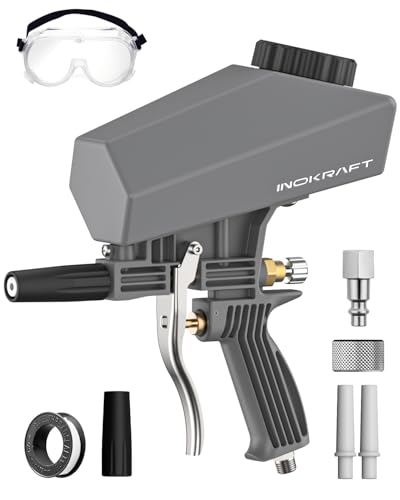
The Inokraft sandblaster kit is designed to pair with 60-120 PSI air compressors. It features a no-leak trigger for precise media control and a ceramic nozzle to deliver high-velocity airflow up to 287 m/s for rust and paint removal. The kit focuses on small projects, offering control that minimizes waste and overspray while maintaining consistent blasting results in tight spots. It’s compatible with common abrasive media and is suitable for DIY tasks in home garages or sheds.
Considerations: suitability for your compressor’s PSI range, nozzle wear and media selection, and ease of media refill during blasting sessions.
LE LEMATEC Gravity Feed Sandblaster AS118

The AS118 gravity-feed sandblaster is intended for light-duty DIY projects, focusing on spot cleaning and fine surface finishing for metal and wood. It requires a capable air compressor that can sustain at least 7 SCFM at 90 PSI and is best paired with a larger tank to avoid performance drops. As a gravity-fed tool, performance depends on setup, media type, and meticulous control of the blasting process for best results on smaller areas.
Considerations: ensuring your compressor meets the recommended SCFM and PSI, evaluating the durability of the gravity-feed system, and planning for multiple passes when targeting thicker coatings.
Buying Guide: Key Purchase Considerations And Comparisons
To select the best air compressor for sandblasting, consider:
- Air delivery (CFM at a given PSI): Sandblasting often requires consistent airflow; larger tanks and higher CFM ratings support longer blasting sessions without frequent recharges.
- PSI range: Ensure the compressor can sustain the target pressure (commonly 60-125 PSI) without rapid drops that affect media flow and blast quality.
- Noise level: For home garages and shared spaces, quieter models (around 66-70 dB) reduce disruption while maintaining performance.
- Portability: If you move between jobs or shift sandblasting setups, wheels and a manageable weight improve workflow.
- Oil-free vs oil-lubed: Oil-free designs lower maintenance and reduce potential oil contamination in media, which is favorable for many blasting tasks.
- Moisture management: Water separators and moisture traps help prevent rust and clogging, preserving nozzle life and media consistency.
- Tank size: Larger tanks enable longer blasting runs, but heavier units require more mobility; balance capacity with workspace constraints.
- Accessories compatibility: Look for standard fittings (1/4 NPT) and compatible sandblasting kits to simplify setup and future expansions.
- Durability and warranty: Steel construction and robust seals reduce downtime during demanding projects and extend tool life.
For a mixed workflow that includes both sandblasting and other pneumatic tasks like painting or spray finishing, choose a compressor with versatile output, quiet operation, and reliable moisture control. When evaluating a specific model, compare CFM at the PSI you plan to run, verify the availability of replacement parts and filters, and assess how the unit’s weight and wheels match your workspace layout. The right combination supports cleaner finishes, lower maintenance, and improved blasting efficiency across a range of DIY projects.