Finding the right blade for a table saw can dramatically improve cut quality, finish, and accuracy. This guide highlights five top-rated blades designed for table saws and miter saws, focusing on ultra-fine finishes, clean cross-cuts, and durable carbide tips. Each option is suited for common hardwoods, softwoods, plywood, and laminates, helping you achieve professional results with less effort. Read on to compare features, suitability, and what to consider when choosing the best blade for your needs.
| Product | Brand | Tooth Count | Kerf | Best For | |
|---|---|---|---|---|---|
| WEN BL1080 | WEN | 80 | 0.10 in | 5/8 in | Ultra-fine finish on hardwoods/softwoods |
| WEN BL1060 | WEN | 60 | 0.10 in | 5/8 in | Fine finish for general projects |
| FOXBC 80-Tooth | FOXBC | 80 | 0.098 in | 5/8 in | Ultra finish and smooth cuts |
| DEWALT DWA11080 | DEWALT | 80 | 0.098 in | 1/2 in? (see note) | Fine finish, clean cuts |
| ANGELSWORD 3-Pack | ANGELSWORD | 32/60/80 | 0.098 in | 5/8 in | Versatile set for framing and finish |
WEN BL1080 Ultra-Fine 80-Tooth Blade
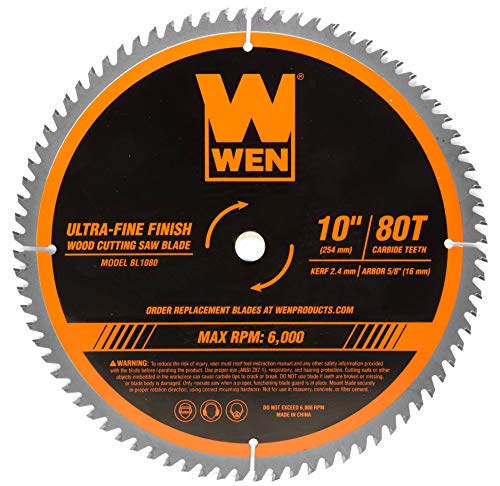
The WEN BL1080 is a 10-inch, 80-tooth carbide-tipped blade designed for ultra-fine finishes on both miter and table saws. With a 5/8-inch arbor and compatibility up to 6000 RPM, it excels at producing clean, precise cross-cuts in hardwoods and softwoods. The thin 0.10-inch kerf minimizes material waste and reduces power draw, helping you achieve smoother results on delicate or highly finished pieces. This blade is suitable for cabinetry, trim work, and fine woodworking where edge quality matters.
WEN BL1060 60-Tooth Fine-Finish Blade
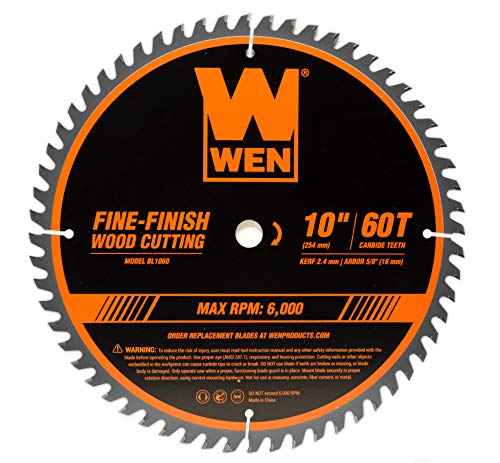
The WEN BL1060 offers a 60-tooth configuration optimized for fine finishes. Its 10-inch diameter and 5/8-inch arbor match most common table and miter saws, with a blade body designed for smooth operation at high RPMs. The finer tooth count reduces tear-out on premium woods and plywood, delivering cleaner edges in joinery, veneer applications, and cabinetmaking. This blade balances aggressiveness with finish quality for general-purpose precision work.
FOXBC 80-Tooth Ultra Finish Blade

The FOXBC 80-Tooth blade features a thin kerf and high-density tungsten carbide for extended life and superior wear resistance. The 0.098-inch kerf reduces waste while maintaining rigidity for accurate cuts. At 10 inches with a 5/8-inch arbor, it is ideal for finishing work on hardwoods and softwoods, delivering a smooth surface with minimal vibration and noise. The ATB grind contributes to a refined finish on cross-cuts and panel edges.
DEWALT DWA11080 Fine-Finish Blade

The DEWALT 80-tooth blade is engineered for long life and consistent finish quality. Its design emphasizes reduced vibration and an optimized tooth geometry for improved accuracy. The blade’s carbide teeth are tailored for fine finishing cuts on difficult woods and sheet goods, making it suitable for cabinetry, furniture, and decorative trim where appearance matters.
Luckyway 2-Pack 10-Inch Blades (32T & 60T)
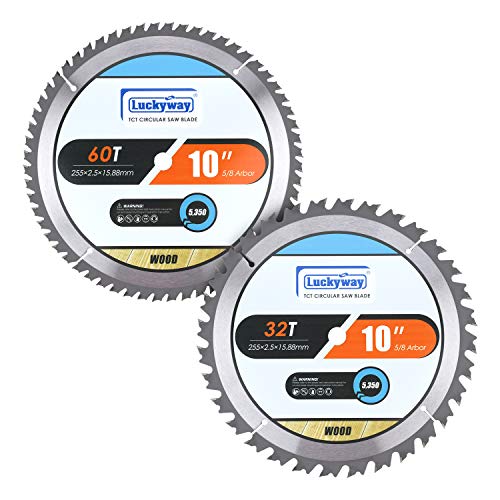
The Luckyway two-pack includes a 32-tooth blade for rough cross-cuts and a 60-tooth blade for finer finishes. This combination is practical for shops needing versatility across framing, plywood, and panel work. The blades use a sturdy body with a 5/8-inch arbor and a robust tooth geometry that supports accurate cuts with balanced performance and reduced vibration.
ANGELSWORD 3-Pack: 32T/60T/80T
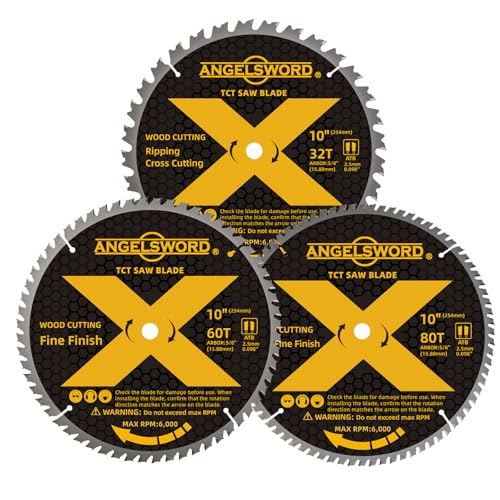
The ANGELSWORD three-pack provides a broad range of tooth counts for different tasks: 32T for framing, 60T for general finishing, and 80T for ultra-fine finishing. The blades use a 5/8-inch arbor and tungsten carbide teeth to deliver durable performance with smooth, accurate cuts. This set is a practical option for DIY enthusiasts who frequently switch between rough cuts and high-quality finishes on various materials.
Buying Guide: Key Considerations for Choosing a Table Saw Blade
- Tooth count and finish quality: Higher tooth counts (40–80T) yield smoother surfaces and cleaner edges, especially on plywood and finished lumber, but may cut slower than lower-tooth blades.
- Kerf width: Thin kerf blades (0.098–0.110 in) reduce material waste and require less power, which is beneficial for table saws with limited torque. They can be more prone to deflection without proper setup.
- Arbor compatibility: Most blades in this list use a 5/8-inch arbor, common on many table saws. Verify arbor diameter on your machine to ensure proper fit and vibration control.
- Material and coating: Carbide-tipped teeth provide longevity and sharpness; some blades employ specialized coatings to reduce heat and friction during cutting, extending life in dense woods and laminates.
- Cut type and application: For cabinetry and fine furniture, prioritize blades designed for fine finishes. For framing or rough-cutting, choose blades with a lower tooth count for faster removal of material.
- Vibration and noise: Some blades emphasize reduced vibration to improve control and cut quality. Check reviews for real-world performance on your saw and with your typical stock.
- Budget and availability: A multi-pack or pack-with-fine plus general-purpose blades can offer good value for shops needing versatility across projects and materials.
When selecting a blade, consider the typical work you perform, the density of your hardwoods, plywood, or laminates, and your saw’s RPM range. A blade optimized for fine finishes will improve both appearance and edge quality, while a tougher blade may be preferred for heavy framing and utility tasks. Regularly inspect teeth for wear and replace blades when scalloping or significant dulling occurs to maintain consistent results.