Choosing the right blade for metal cutting can dramatically improve speed, accuracy, and tool life. This guide highlights five top blades that excel in cutting metal such as sheet metal, pipes, rebar, and hardened alloys. We compare performance traits, materials, and intended uses to help you pick the best option for common metalworking tasks.
| Product | Brand | Length | Teeth (TPI) | Material Type |
|---|---|---|---|---|
| TOLESA Heavy Metal Cutting Reciprocating Saw Blades 9 Inch 14TPI | TOLESA | 9 inch | 14 | Bi-metal with cobalt edge |
| TOLESA Heavy Metal Cutting Reciprocating Saw Blades 6 Inch 14TPI | TOLESA | 6 inch | 14 | Bi-metal with cobalt edge |
| 6-Inch Thick Metal Cutting Reciprocating Saw Blades (18 TPI) – Caliastro | Caliastro | 6 inch | 18 | Bi-Metal with precision teeth |
| EZARC Carbide Reciprocating Saw Blade R678HM Endurance – 6 Inch 8TPI | EZARC | 6 inch | 8 | Carbide-tipped |
| Diablo Steel Demon Carbide Teeth Reciprocating Saw Blade – 6 Inch 8 TPI | Diablo | 6 inch | 8 | Carbide teeth on steel body |
TOLESA 9-Inch Heavy Metal Cutting Saw Blades

TOLESA’s 9-inch blades are designed for quick, robust cutting of sheet metal, pipes, and profiles up to 0.3 inches thick and diameters under 7 inches. The bi-metal composition integrates a cobalt edge to improve wear resistance and reduce heat buildup in heavy metal work. The 0.9-thin-wall design paired with set teeth aims to minimize heat and maximize efficiency in demanding demolition tasks. With 14 TPI, these blades balance speed and durability for frequent metal cutting across fabrication scenarios.
TOLESA 6-Inch Heavy Metal Cutting Saw Blades

This 6-inch TOLESA blade set uses a cobalt-edge bi-metal construction to deliver efficient cuts in metal pipes and profiles up to 4 inches in diameter. The 14 TPI configuration and 0.9-thin-wall design are intended to reduce heat buildup while maintaining cutting speed. Ideal for projects requiring frequent cuts in dense materials without frequent blade changes, these blades provide a strong balance between reach, rigidity, and durability.
Caliastro 6-Inch Thick Metal Cutting Blades (18 TPI)

The Caliastro 8-pack comprises 6-inch blades with 18 TPI, engineered for cutting metals up to 0.25 inch thick. They leverage a bi-metal construction with precision-set teeth to cut black pipe, conduit, rebar, and other common metals with reduced blade bending. The result is smoother cuts and longer blade life under tougher metal-cutting conditions.
EZARC Carbide Reciprocating Saw Blade R678HM Endurance
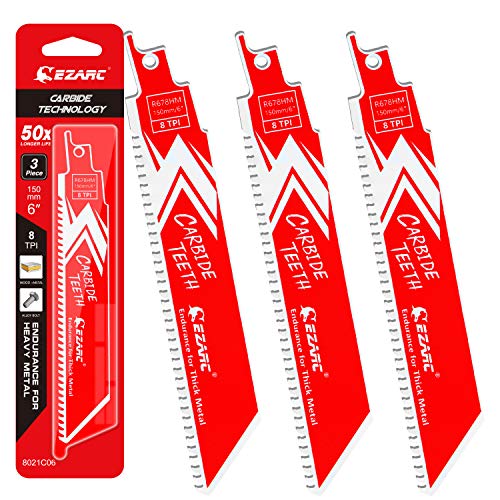
EZARC’s R678HM Endurance blade uses carbide technology to extend life—up to 50x longer than traditional bi-metal blades in heavy metal applications. The 6-inch blade with 8 TPI is designed for challenging cuts in high-strength alloys, rebar, and other tough metals, delivering reliable performance where standard blades wear quickly. It is suited for professionals needing durable blades for repeated, demanding metal-cutting jobs.
EZARC Carbide Oscillating Blades for Hard Materials

These EZARC carbide oscillating blades extend cutting endurance for metalwork, nails, screws, and hardened materials. Although designed for oscillating tools, their carbide construction provides exceptional longevity and durability, especially in mixed-material cuts. They are described as offering life improvements over bi-metal variants and performing well when cutting through nails, screws, and other dense metal components typical in remodels and demolition.
USEWIN 3-Pack Carbide Reciprocating Blades

USEWIN’s 3-pack features carbide-tipped blades with bi-metal construction, designed for thick metal cuts and longer blade life. The teeth geometry aims to reduce cutting friction and heat, promoting smoother cuts through hardened steels, cast iron, and other tough metals. The blades emphasize stability and longevity for professional users tackling demanding metal-cutting tasks.
Buying Guide: Key Considerations For Metal Cutting Blades
- Blade Material: Carbide-tipped blades last longer in hard metals but can be more brittle for certain applications. Bi-metal blades offer flexibility and wear resistance for general metal cutting.
- Tooth Count (TPI): Higher TPI (like 14TPI) provides smoother cuts but may cut slower and generate more heat in thick, tough metals. Lower TPI (6–8) cuts faster on thick sections but may wear faster in hard metals.
- Blade Length: Longer blades (9 inch) reach into deeper cuts or through longer sections, while 6-inch blades work well in confined spaces or for portable tools.
- Heat Management: Designs with thin walls and set-teeth help reduce heat buildup, which preserves blade life and minimizes distorting heat on metals.
- Application Match: Sheet metal, pipes, rebar, and cast iron each benefit from different tooth geometry and carbide vs bi-metal constructions. Review manufacturer notes for best results on your material.
- Tool Compatibility: Ensure the blade is compatible with your reciprocating saw or multitool’s arbor and speed range to maximize life and performance.
- Durability vs Cost: Carbide blades cost more but offer dramatically longer life in hardened metals. For occasional heavy cuts, high-quality bi-metal blades may provide a cost-efficient balance.
- Safety and Handling: Always use appropriate PPE and ensure blades are properly secured to avoid binding, kickback, or breakage during heavy metal cuts.