Belt sanders offer fast material removal and smoother finishes for woodworking projects, and you can find capable options at affordable prices. This guide highlights five budget-friendly belt sanders that balance performance, features, and value. Each model is described with key specs to help you compare power, speed, and versatility for common tasks like flattening tabletops, smoothing edges, and preparing boards for finishing.
Summary of Selected Products:
| Product | Brand | Drive Type | Belt Size | |
|---|---|---|---|---|
| WEN Benchtop Belt and Disc Sander 6502T | WEN | 2-in-1 (belt + disc) | 4 x 36 in belt | Cast iron base |
| WEN Benchtop Belt and Disc Sander 6515T | WEN | 2-in-1 (belt + disc) | 1 x 30 in belt | 5 in disc |
| SKIL 7510-01 6 Amp Belt Sander | Skil | Single belt | 3 x 18 in | Pressure control |
| WEN 6307 Belt Sander | WEN | Single belt | 3 x 21 in | Detachable dust bag |
| WEN 6321 7-Amp Belt Sander | WEN | Single belt | 3 x 21 in | Lightweight, dust bag |
WEN Benchtop Belt and Disc Sander 6502T
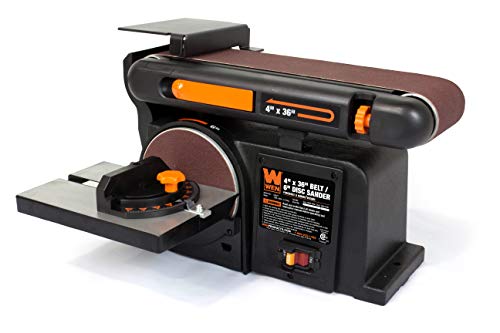
The WEN 6502T combines a belt sander with a 6-inch disc sander for versatile finishes. It uses a sturdy cast iron base to minimize vibrations, which helps maintain control during aggressive material removal. The belt can tilt from 0 to 90 degrees, enabling precise setups for edge work or bevels. With 4-by-36 inch belt work capacity and a reliable dual-function platform, this unit offers practical value for hobbyists and small shops.
WEN Benchtop Belt and Disc Sander 6515T
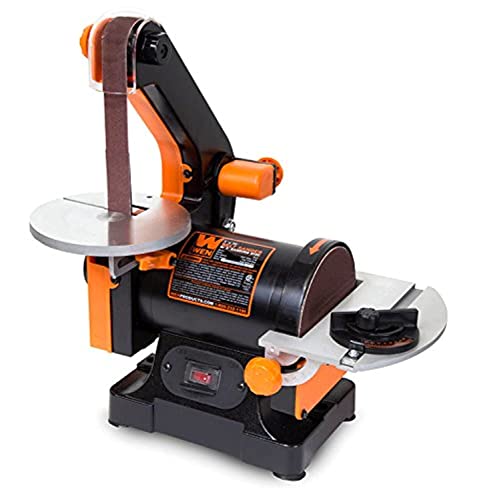
The 6515T model features a 1-by-30 inch belt paired with a 5-inch disc, delivering compact yet capable sanding in a two-in-one format. Its 2.3A motor drives the belt up to 3160 FPM and the disc up to 3450 RPM, providing a broad range for different woods and grits. A heavy-duty base helps reduce movement, supporting steadier finishes on small to medium projects.
SKIL 7510-01 Belt Sander With Pressure Control

The SKIL 7510-01 emphasizes user-friendly pressure management. Its pressure control system warns when excessive force is applied, helping prevent gouges and prolonging belt life. With a 6.0-amp motor capable of handling various wood surfaces and a micro-filtration dust system, this sander suits projects where consistent sanding and cleaner workspaces matter.
WEN 6321 7-Amp Belt Sander
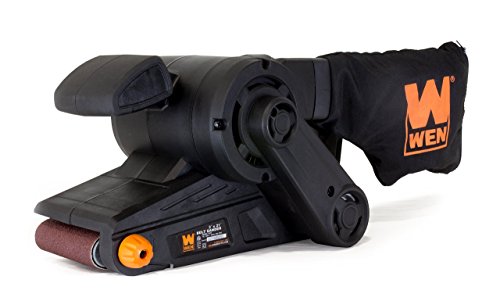
With a 7-amp motor, the WEN 6321 delivers strong belt speed for efficient stock removal. Weighing about six pounds, it remains portable enough for tight spaces. A detachable dust bag reduces cleanup, and this model focuses on straightforward performance for everyday woodworking tasks, including flattening boards and smoothing edges.
DEWALT 20V MAX XR Cordless Belt Sander

Note: This cordless option demonstrates DeWalt’s approach to portability and power. It uses a brushless motor for efficiency and longer runtime, with a tool-free belt change and an arm that rotates to a storage position. While it is a bare-tool option, it supports high-performance sanding where a corded unit isn’t practical, making it useful for mobile setups and larger projects that benefit from wireless operation.
WEN 6307 Variable Speed Detailing File Sander
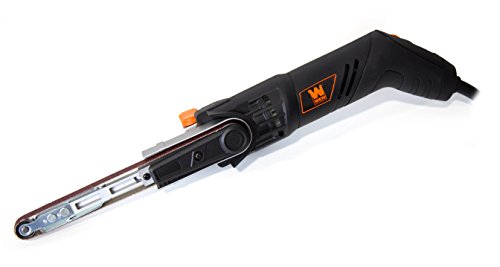
The 6307 is a compact, detail-oriented sander with a 1/2-by-18 inch belt and a variable speed range from 1080 to 1800 FPM. Its adjustable belt tracking and 50-degree swing help when finishing curves or edges on smaller parts. This model excels for fine tuning and finishing work rather than heavy stock removal.
Jellas 3 × 21-Inch Belt Sander
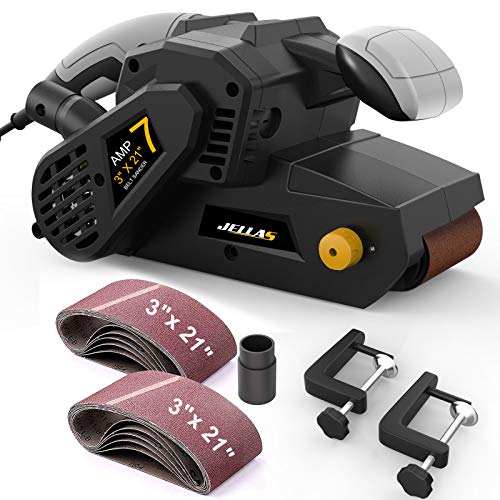
The Jellas BS750-SD sander combines a 7-amp motor with a 3-by-21 inch belt, offering slow-to-fast variable speeds and a 2-in-1 bench capability via included clamps. It comes with a dust bag and a set of sanding belts. The included accessories and adjustable features make it a flexible option for hobbyists seeking value and adaptability in a single package.
Buying Guide: Key Considerations For Budget Belt Sanders
- Power and speed: Look for amperage and belt RPM that align with your typical tasks. Higher amperage models handle tougher stock, while variable speed helps with different woods and finishes.
- Belt size and disc capability: 3 x 18 in, 4 x 36 in, or 3 x 21 in belts are common. Dual-function machines save space and cost for small workshops.
- Stability and vibration control: A cast-iron base or heavy-duty frame reduces wobble during aggressive sanding, improving control and finish quality.
- Dust management: Dust collection or bags help maintain a cleaner workspace and extend belt life by reducing clogging.
- Portability and size: For small shops or mobile tasks, consider weight, footprint, and corded vs. cordless options. Bare-tool models may require a battery and charger separately.
- Versatility: 2-in-1 belt-and-disc units offer more functionality in a single machine, whereas dedicated belt sanders often provide longer belts and faster stock removal.
- Maintenance and belts availability: Check the availability of replacement belts and discs, and whether the unit uses standard sizes you can easily source.
Why Budget Models Can Meet Common Projects
Budget belt sanders typically deliver adequate power for standard DIY tasks such as leveling tabletops, smoothing edges, and prepping boards for finishing. The best value often comes from models that balance a robust base, easy belt changes, and practical dust management. For light-to-medium woodwork, these machines can be a sensible starting point without sacrificing essential functionality.
How To Choose For Your Workshop
Consider the space you have, the types of projects you tackle, and how often you will move the sander around. If you work with larger boards or need quick stock removal, a dual-function belt-and-disc model with a stable base can save time. If you focus on detail work or small parts, a compact belt sander with adjustable speed and a dust-collection system may be preferable. Safety features, including proper guarding and dust extraction compatibility, should also be evaluated.