Choosing the right circular saw blade for MDF can dramatically improve edge quality, reduce splintering, and speed up project completion. This guide reviews five top blades designed to deliver clean finishes on MDF, plywood, and other composite materials while minimizing heat buildup and wear. Each option balances kerf, tooth count, and carbide durability to suit both home workshops and professional job sites.
Summary of Selected Products
| Product | Brand | Tooth Count | Arbor | Notes | |
|---|---|---|---|---|---|
| CRALY 7-1/4 Inch 60 Teeth Ultra Fine Finish | CRALY | 60T | 5/8″ | 1.6 mm | Ultra-fine finish; black ice coating; excellent for MDF |
| UXACE 7-1/4-Inch 24-Tooth | UXACE | 24T | 5/8″ | 1.6 mm | Thin kerf; professional-grade TiCo carbide |
| COMOWARE 7 1/4 Inch 60T ATB | COMOWARE | 60T | 5/8″ | unknown | ATB geometry; anti-vibration |
| Luckyway 5-1/2 Inch 24T/48T Combo | Luckyway | 24T/48T | 10 mm | 1.8 mm | Combo pack for ripping and finishing |
| HARDWIN 6 1/2 Inch 24T ATB | HARDWIN | 24T | unknown | Ultra-Thin Kerf | Lightweight; anti-stick coating |
CRALY 7-1/4 Inch 60 Teeth Ultra Fine Finish Blade

The CRALY blade is engineered for ultra-fine finishes on plywood, MDF, and similar substrates. With 60 ATB teeth and a 5/8 inch arbor, it uses a thin kerf (1.6 mm) to reduce waste and heat. The black Ice coating minimizes friction and resists gumming from resins found in MDF, helping maintain edge quality during longer cuts. Laser-cut expansion slots and stabilizer vents further reduce heat and vibration, contributing to a smoother cut and a longer blade life.
UXACE 7-1/4-Inch 24-Tooth Blade

The UXACE blade uses a 24-tooth count with a 5/8 inch arbor and a 1.6 mm kerf, optimized for framing and MDF work. Crafted with hi-density TiCo carbide tips, it offers strong impact resistance and durability while delivering clean cuts in softwood, plywood, and MDF. The blade’s thin kerf reduces waste and minimizes motor strain, making it suitable for corded or cordless saws in both professional and DIY settings.
COMOWARE 7 1/4 Inch 60T ATB
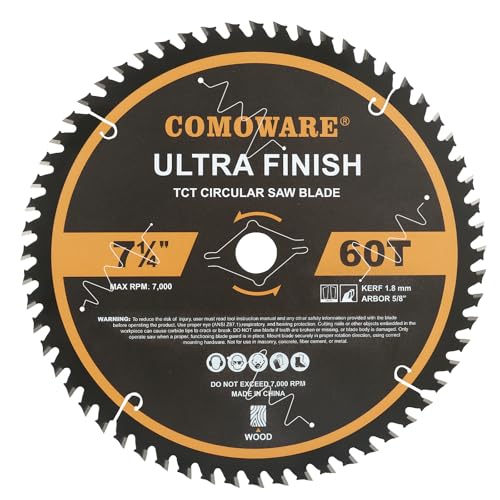
The COMOWARE blade features 60 tungsten carbide teeth arranged in an ATB pattern to deliver clean, precise cuts with minimal splintering. The 5/8-inch arbor is compatible with most 7-1/4 inch saws, and the blade is designed to resist heat buildup during extended MDF cutting tasks. Anti-vibration design helps maintain blade stability and reduce chatter for a smoother finish on panels and laminates.
Luckyway 5-1/2 Inch Combo Blade

The Luckyway combo pack includes a 24-tooth blade for framing and a 48-tooth blade for fine finishes, both with a 10 mm arbor and a 1.8 mm kerf. Made from hardened alloy steel with tungsten carbide tips, these blades are built for durability and long life in heavy-duty MDF, plywood, and laminate cutting. The dual setup offers versatility for projects that require both fast ripping and smooth finishing passes.
HARDWIN 6 1/2 Inch 24T ATB

The HARDWIN 6 1/2 inch blade features a 24T ATB carbide tooth configuration designed for fast, clean cuts in MDF and plywood. With ultra-thin kerf and anti-stick coating, it minimizes resin buildup and heat-induced edge damage. The hollow-core construction reduces weight, aiding in longer cuts with cordless and compact saws. This blade is suitable for framing and finishing tasks requiring precision and efficiency.
Buying Guide: Key Considerations For MDF Blades
When choosing a circular saw blade for MDF, consider the following perspectives:
- Tooth count and geometry: Higher tooth counts (e.g., 60T) yield smoother finishes but cut more slowly, ideal for fine finishing on MDF and laminates. ATB (Alternating Top Bevel) teeth help reduce splintering on the cut side.
- Kerf and material waste: Thin-kerf blades (around 1.6–1.8 mm) minimize waste and lower load on the saw, increasing stability during long MDF cuts.
- Coatings and heat management: Non-stick or laser-cut slots improve heat dissipation and reduce resin buildup, extending blade life when cutting resin-rich MDFs.
- Arbor size and compatibility: Most 7-1/4 inch blades use a 5/8 inch arbor, while some smaller blades use 10 mm. Ensure compatibility with your saw and adjust with adapters if needed.
- Durability vs. cost: Carbide-tipped blades last longer and resist dulling when cutting dense MDF, but premium blades come at a higher price. Balance project frequency with blade longevity needs.
- Application versatility: For mixed materials (MDF, plywood, laminate), a dual-tooth-pack or combination blade can save time by reducing blade changes without sacrificing finish quality.
- Heat management: MDF generates resin and dust; blades with expansion slots and heat-dispersing features help prevent warping and ensure stable cuts.
In summary, for MDF-focused work, a blade with a fine to ultra-fine finish (60T or similar), a stay-cool design, and a robust carbide edge will deliver the cleanest results. For framing and rough cuts where speed matters, a 24T blade paired with a high-quality 48T option provides a practical balance between efficiency and edge quality. Always verify arbor, kerf, and saw compatibility before purchasing.