Choosing the right concrete cutting saw depends on power, depth of cut, water delivery, and dust control. This guide highlights five top-performing models and compares key features to help you select a tool that fits both large renovations and smaller, precise cuts. The selections emphasize electric, gas-free options with efficient dust suppression, safety features, and reliable blade performance.
| Product | Brand | Max Cutting Depth | Power | Dust/Dust Suppression |
|---|---|---|---|---|
| Evolution R230DCT | EVOLUTION | 3-1/2 in | 15A | Diamond blade included; safer than grinders |
| WORKPRO 16 Inch Wet Saw | WORKPRO | 6.69 in | 1600W | Wet cutting reduces dust |
| Evolution R12DCT | EVOLUTION | 4-1/2 in | 15A | Water-fed dust suppression |
| VEVOR Electric 9 in Saw | VEVOR | 3.5 in | 1800W | Wet line; GFCI protection |
| Evolution R300DCT | EVOLUTION | 4-1/2 in | 15A | Premium blade; dust control via guard |
Evolution R230DCT — 9 Inch Concrete Saw

The Evolution R230DCT combines an ergonomic 15A motor with a 9-inch diamond masonry blade for controlled, safe cutting. This model is designed as a safer alternative to angle grinders for concrete, masonry, and similar materials. Its balance and grip aim to support better posture during extended work, helping to reduce fatigue on longer projects. The included diamond blade delivers solid performance for straight or shallow curved cuts in reinforced concrete and masonry blocks.
WORKPRO 16 Inch Wet Concrete Saw

This electric saw focuses on wet cutting to minimize dust and maximize blade life. With a 1600W motor and a 16-inch blade, it achieves up to a 6.69-inch cutting depth. The built-in water attachment cools the blade, reducing overheating and wear, which is essential for indoor use or extended workloads. The system also helps control dust on the job site. Note that the included diamond blade is for concrete; wood cutting requires a blade swap.
Evolution R12DCT — 12 Inch Concrete Saw with Water Fed Dust Suppression
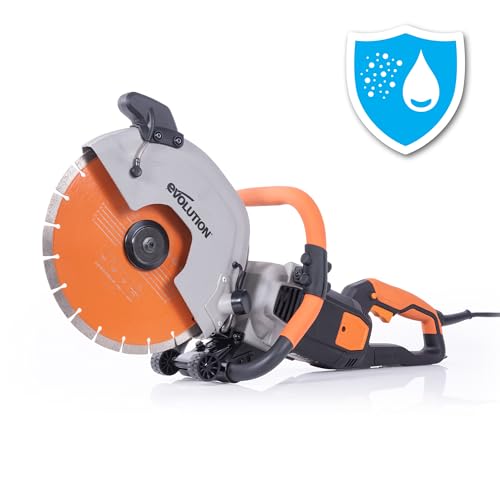
R12DCT brings dual water delivery to support effective dust suppression and OSHA-compliant dust control. It offers a generous 4-1/2-inch cut depth with a blade guard that can adapt to vertical and horizontal cuts. Powered by a 15A electric motor, this model provides consistent performance without the need for gas or fuel. The water-fed dust suppression helps reduce airborne particles and keeps the blade cooler during heavy use.
VEVOR Electric 9 Inch Saw — Wet/Dry System

The VEVOR 9-inch saw emphasizes versatility with a wet/dry cutting option. Its 1800W motor provides ample power for fast, smooth cuts. A built-in water line attachment and a grounded design promote dust suppression and longer blade life. Safety features include a double switch and overload protection, with a GFCI-equipped cord for added protection in damp work conditions.
Evolution R300DCT — 12 Inch Concrete Saw

The R300DCT is designed for higher capacity with a 4-1/2 inch cut depth and a 15A electric motor. It emphasizes a robust blade guard for one-handed vertical cutting and improved control. The tool combines the efficiency of a circular saw with the utility of a chop saw, supporting more aggressive masonry and concrete cuts without the need for a gas engine.
Evolution R255DCT — 10 Inch Concrete Saw

The R255DCT offers a 4-1/16 inch cut depth with a 10-inch premium diamond blade. It emphasizes safer, more practical cutting compared to a grinder, aimed at reducing operator fatigue and increasing accuracy in masonry and concrete work. Like other Evolution models, it relies on an electric motor and a durable, user-friendly design for daily use on job sites.
Buying Guide
Key considerations when choosing a concrete cutting saw include cutting depth, blade size, power source, and dust control. For indoor projects or confined spaces, electric models with water-fed dust suppression offer steady performance and less noise. Gas-powered units provide more mobility but require more maintenance and ventilation planning. Blade compatibility and the ability to make both vertical and horizontal cuts affect workload efficiency. Safety features to look for include double switches, GFCI protection, and robust blade guards. Assess whether wet cutting accessories or water lines are included, as these improve dust control and blade life. Finally, compare ergonomics and weight since fatigue affects accuracy during longer sessions.
When selecting from the featured options, consider your typical cut depth, whether you need wet cutting for dust control, and how often you’ll perform vertical versus horizontal cuts. For professional sites, combining a high-depth, durable electric model with good safety features often yields the best balance of performance and reliability.