Choosing the right firewood moisture meter helps ensure fires burn cleanly, produce more heat, and reduce creosote buildup. The following selections focus on accuracy, ease of use, and versatility for firewood, lumber, drywall, and building materials. Whether you’re a DIY homeowner, a woodworker, or a professional inspector, these meters provide quick readings, durable design, and useful features like data hold and backlit displays to help you make informed decisions about moisture levels before use or remediation.
| Product | Key Feature | Ideal For |
|---|---|---|
| RDINSCOS Digital Moisture Meter – Wood | Pin-type with 12 mm depth, four modes | Firewood readiness and wood projects |
| TopTes TS-630 | Large LCD, tri-color backlight, six calibration scales | Firewood and drywall moisture checks |
| General Tools MMD4E | Backlit display, audible/visual alerts, mold safety | Home inspections and water damage monitoring |
| TESMEN TWM-186 | Pocket design, two modes, seven scales | On-the-go wood and building material checks |
| Povlen Pinless Meter | Non-invasive, large LCD with alert beeps | Woodwork, walls, drywall without pins |
RDINSCOS Digital Moisture Meter – Firewood Ready

The RDINSCOS Digital Moisture Meter delivers instant and precise readings to a depth of about 12 mm in wood, drywall, and other building materials. It supports multiple modes for different wood species and offers a hold function to capture readings for documentation. This model is designed to help determine if firewood is dry enough to burn, potentially reducing smoke and inefficient combustion. It combines pin-type measurement with four selectable settings and a comparative moisture option for quick assessments at the woodpile.
TopTes TS-630 Wood Moisture Meter

The TopTes TS-630 features a large 2.25-inch LCD and a tri-color backlight to indicate Dry, Moist, and Wet conditions, simplifying quick decisions at a glance. It uses a surface-reading approach with data hold and max/min capabilities for recording data, making it suitable for checking firewood and drywall. With seven calibration scales and two material modes, this meter supports a broad range of materials, from wood to building substrates, offering practical versatility for home projects and inspections.
General Tools MMD4E Digital Moisture Meter
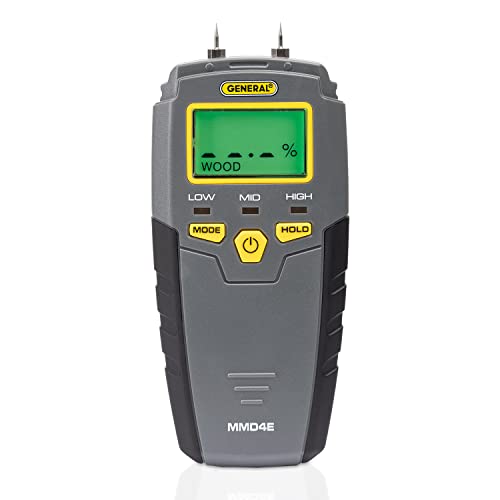
This General Tools MMD4E model emphasizes safety monitoring with a backlit display and audible/visual alerts related to moisture levels. It’s designed to help identify damp areas indicative of mold risk, water leaks, or hidden moisture behind walls or furniture. It includes extra stainless steel pins and a protective cap, along with 9V battery power, making it a robust choice for ongoing home moisture surveillance and early remediation work.
TESMEN TWM-186 Portable Pin Moisture Meter

The TESMEN TWM-186 offers a compact, pen-style design ideal for on-the-go use. It supports two modes and seven calibration scales, enabling precise readings for wood types such as oak, maple, pine, and cedar, among others. The data-hold function stabilizes readings, while the pocket form factor makes it convenient for fieldwork, shop projects, or quick checks during construction or restoration tasks.
Povlen Pinless Wood Moisture Meter

Povlen’s pinless moisture meter provides non-invasive testing with high-frequency sensor tech and an auto-record hold. The large LCD color display features a bar indicator and audible alerts that signal when moisture exceeds a set threshold. It uses softwood and hardwood detection through density adjustments and is designed to protect delicate surfaces while delivering quick moisture readings for walls, ceilings, and floors in building projects or remediation scenarios.
Buying Guide: Key Purchase Considerations
When selecting a firewood moisture meter, consider these core factors to ensure you choose a tool that fits your needs and budget:
- Measurement type: Pin-type meters penetrate the wood to measure moisture content precisely, while pinless meters scan surfaces non-invasively. Pin-type is often more accurate for dense wood, while pinless is quicker and ideal for drywall or finished surfaces.
- Depth and species support: Look for meters that specify measurement depth (e.g., 12 mm) and offer calibration scales for both hardwood and softwood to match your typical materials.
- Display and readability: Large LCDs, backlighting, and color indicators (green/orange/red) help you read moisture levels at a glance, especially in dim workspaces.
- Data hold and memory: A hold function lets you freeze readings, which is useful for recording measurements during field work or reporting findings.
- Calibration and modes: Multi-mode meters with several calibration scales and modes for different materials (wood, drywall, masonry) provide broader utility beyond firewood testing.
- Durability and ergonomics: Compact, pocket-size designs improve portability, while sturdy housings and protective caps extend device life on job sites.
- Power and accessories: Check for long-lasting batteries, included probes, and protective storage cases. Additional pins or sensors can extend versatility for various materials.
- Accuracy and certifications: Look for meters with demonstrated accuracy, clear user manuals, and reputable brand support for reliability in professional contexts.
Buying Guide: How to Use And Compare
To maximize value, compare meters by their intended use. For firewood, prioritize accurate pin-type measurements and a visible color indicator to decide if wood is dry enough for burning. For home inspections, prefer meters with durable construction, reliable moisture thresholds, and audible alerts to detect hidden moisture behind walls. When working with drywall, concrete, or masonry, consider models offering additional modes and broad calibration scales. If you frequently move between sites, a compact, pocket-friendly meter with data hold is a practical choice. Finally, evaluate total cost of ownership, including batteries, replacement pins, and warranty coverage.