Transforming a garage floor requires a balance of durability, ease of installation, and cleanable design. The products below cover epoxy, interlocking tiles, mats, and protective fabrics to suit workshops, home garages, and multi-use spaces. Each option presents differing levels of protection, installation effort, and load tolerance to help you choose the best floor for your garage needs.
| Product | Type | User Benefit |
|---|---|---|
| Rust-Oleum RockSolid Polycuramine Garage Floor Coating | Two-part coating | High-gloss, 20X stronger than epoxy; quick cure times |
| VEVOR Garage Tiles Interlocking | Interlocking tiles | Modular, 5500-lb load capacity, easy DIY install |
| Japard Garage Floor Tiles | Interlocking tiles | Durable polypropylene, 10-ton load, customizable patterns |
| Grandroad Auto Garage Floor Mat | PVC rubber mat | Large 8×20 ft area, anti-slip, vehicle-friendly |
| Armor All Original Garage Floor Mat | Roll-out mat | Absorbent, waterproof backing, transforms space |
The following sections explore five top garage floor solutions. Each product section provides a concise overview, installation notes, and practical considerations to help readers compare performance, longevity, and cost-effectiveness for their spaces.
Rust-Oleum RockSolid Polycuramine Coating
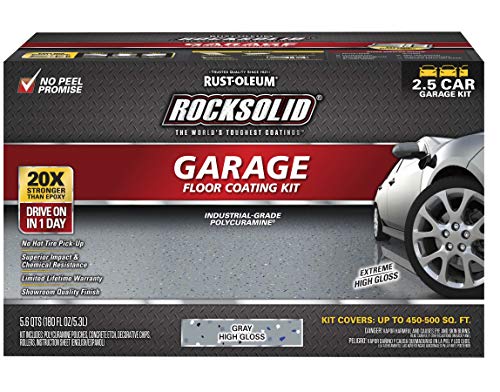
Rust-Oleum RockSolid Polycuramine provides a durable interior concrete coating designed for garage floors, workshops, basements, and more. The self-leveling, buildable formula is claimed to be 20X stronger than standard epoxy and features low odor and low VOC emissions. The two-part system is shipped in burst pouches for controlled mixing. It cures to walk-on readiness in 8-10 hours and vehicle readiness within 24 hours, enabling faster project completion. This coating emphasizes a glossy finish with robust chemical and abrasion resistance, making it suitable for high-traffic garage spaces and multi-use areas.
Key considerations:
– Pros: High durability, rapid cure times, lower odor.
– Cons: Requires surface prep for best adhesion; two-part mixing adds some process steps.
– Best for: Garages that see heavy use, spills, and need a showroom-like finish with easy cleaning.
VEVOR Interlocking Garage Tiles

These 12×12 inch interlocking tiles offer modular coverage with a 5500-pound load capacity. The textured, non-slip surface helps keep footing secure in damp conditions, and the 0.53 inch (13.4 mm) thickness provides wear resistance. The upgraded interlocking system features six loops for a seamless fit. They are designed for garages, basements, repair shops, and even display areas, with a quick DIY installation that requires no tools or adhesives.
Key considerations:
– Pros: Flexible layout, high load tolerance, quick installation.
– Cons: Some users report sensitivity to temperature changes affecting fit; pre-2025 models may differ in compatibility.
– Best for: DIYers seeking a customizable, modular floor that can be reconfigured or expanded over time.
Japard 20 Pack Interlocking Tiles

Japard offers a 20-pack of interlocking polypropylene tiles, sized at 15.7″ x 15.7″ each, with a thickness that supports heavy loads and a high-end checkerboard appearance. The tiles are designed for easy assembly without tools and can be arranged to suit various aesthetic patterns. They are suitable for indoor and outdoor use, including garages, basements, decks, and patios. The mesh design aids water drainage and surface drying, which helps maintain a clean workspace.
Key considerations:
– Pros: Aesthetically versatile, durable, tool-free assembly.
– Cons: Larger tile size may require precise planning for exact coverage.
– Best for: Spaces where visual appeal matters and a modular, exportable floor is desired.
Grandroad Auto 8×20 Ft Floor Mat

This large PVC rubber mat measures 8×20 feet (160 sq ft) and is designed to cover expansive garage spaces. The jacketed diamond plate texture delivers anti-slip properties, aiming to keep both foot traffic and parked vehicles stable on damp surfaces. The mat is recommended for indoor use and can be trimmed to fit various layouts. It provides a protective layer under daily wear, oil drips, and gear, helping to reduce staining of underlying concrete.
Key considerations:
– Pros: Large coverage, anti-slip texture, vehicle-friendly.
– Cons: Requires temperature acclimation for best laying; installation may benefit from edge securing.
– Best for: Large single-car or two-car garages needing seamless protection with straightforward maintenance.
Armor All Original Garage Floor Mat

Armor All’s original garage floor mat is a roll-out option with a carpet-like look and soft feel underfoot. It features a waterproof backing and an absorbent surface designed to trap and contain liquids, helping to protect underlying concrete from stains. The mat can be cut to fit and comes with double-sided tape for secure installation. Its multi-use design makes it suitable for garages, basements, or home gym spaces that double as activity zones for kids or entertaining areas.
Key considerations:
– Pros: Absorbent yet waterproof backing, customizable fit, easy to install.
– Cons: May require periodic cleaning to maintain appearance.
– Best for: Spaces needing a softer underfoot feel with spill containment and space customization.
Buying Guide
- Durability vs. ease of installation: Epoxy or polycuramine coatings offer long-lasting protection and a glossy finish but require proper surface prep. Interlocking tiles and mats provide simpler DIY installation, easier future reconfiguration, and good impact resistance.
- Load capacity and usage: For workshops or spaces with vehicles, choose tiles or mats rated to handle high loads (e.g., up to 5,500 lbs or more per tile). Consider how often you drive on the floor and whether vehicles will run over the surface.
- Maintenance and cleaning: Coatings with smooth gloss finishes are easy to wipe; tiles and mats with textured surfaces help hide wear but may trap debris. Absorbent mats should be cleaned regularly to prevent saturation.
- Moisture management: Waterproof backings and drainage-friendly designs reduce staining risk and prolong floor life. For damp garages, consider anti-slip textures and rubberized surfaces to improve traction.
- Space and layout: Large roll-out mats cover more area with fewer seams, while interlocking tiles enable customizable patterns and easier replacement of damaged sections. Patterns can also influence perceived space size.
- Cost and maintenance over time: Epoxy-based coatings may have higher upfront labor costs but offer longevity. Tiles and mats generally lower initial costs and provide modular upgrades or replacements as needed.
- Ventilation and odor: Some coatings emit odors during curing. Ensure adequate ventilation and allow full curing before turning the space into a busy workshop.
When selecting a garage floor solution, align the choice with the space’s primary use, cleaning routines, and how you envision future changes. A robust coating suits a high-traffic, multi-use garage, whereas modular tiles or mats offer flexibility for reconfiguring the space or adapting to seasonal needs.