Choosing the right foil tape for a dryer vent is essential for safety, efficiency, and long-term reliability. This article highlights five top-rated aluminum foil tapes that perform well in high-heat environments, resist moisture and UV exposure, and provide strong adhesion on various surfaces. Each entry includes practical notes on thickness, adhesion, and ease of use to help you select the best option for your HVAC needs.
| Product | Brand | Thickness | Temperature Range |
|---|---|---|---|
| Romeda Aluminum Foil Tape | Romeda | 3.9 mil (0.1 mm) | Long-term 120°C; Short-term 130°C |
| ETERART Aluminum Foil Duct Tape | ETERART | 3.9 mil | Long-term 120°C; Short-term 350°C |
| SmaringWing Aluminum Foil Tape | SmaringWing | 3.9 mil | High temp tolerance; weather resistant |
| TapePlus Professional Grade | TapePlus | 3.0–3.9 mil (approx.) | Moisture, UV, flames resistant |
| TAPEWELL Heavy Duty Aluminum Foil Tape | TAPEWELL | 3.9 mil | Up to 250°F |
Note: All products listed are compatible with dryer vent installations and ductwork sealing. When selecting foil tape, consider thickness, adhesion strength, temperature tolerance, and ease of removal for future maintenance.
Romeda Aluminum Foil Tape — 2 In x 65 Ft, 3.9 Mil

The Romeda tape offers a medium-thick foil layer with a premium pressure-sensitive adhesive designed for long-term temperature resistance. It balances tear resistance with flexibility to conform to ductwork and irregular surfaces. This tape is UV resistant, moisture resistant, and capable of withstanding typical dryer vent conditions, making it suitable for sealing, patching, and temporary repairs on metal ducts and vents. The backing is designed to tear cleanly, helping users apply quickly without specialized tools.
ETERART Aluminum Foil Duct Tape — Heavy Duty, 2 Inches x 20 Yards

ETERART emphasizes high holding power with industrial-strength adhesive designed to secure ductwork quickly. It is easy to install—painless to tear by hand—and suitable for a range of surfaces. The tape claims strong adhesion with minimal residue upon removal, helping maintain surface integrity of metal ducts. Its long-term temperature tolerance around 120°C and short-term spikes to 350°C makes it versatile for dryer vents and other HVAC components that encounter heat, moisture, and occasional direct exposure to warm air.
SmaringWing Aluminum Foil Duct Tape — 2″ x 65 Feet

SmaringWing’s tape is designed for multi-purpose duct sealing with an emphasis on moisture and weather resistance. The 3.9 mil thickness provides a balance between conformability and strength, allowing it to seal irregular joints on dryer vents while resisting tearing and curling. The adhesive is described as residue-free, enabling cleaner removals when reworking duct sections. This makes it a practical choice for temporary repairs or field adjustments during installation.
TapePlus Professional Grade Aluminum Foil Tape
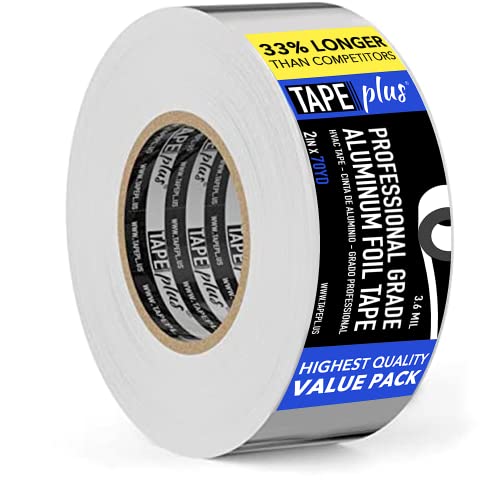
TapePlus targets professional-grade duct sealing with strong moisture, UV, chemical, and flame resistance. The tape is designed for sealing HVAC ducts and various intake points, offering robust adhesion and reliable insulation. Its film and foil construction helps it conform to curved surfaces and joints found in dryer vent runs. The product emphasizes long-term durability for industrial and household applications alike, making it a solid option for permanent or semi-permanent installations.
TAPEWELL Heavy Duty Aluminum Foil Tape — 2″ x 150 Feet

TAPEWELL markets a heavy-duty solution with a 3.9 mil foil thickness ideal for hot and cold duct sealing. It offers resistance to high temperatures, making it suitable for dryer vent patches and repairs in environments that experience temperature fluctuations. Its adhesive is designed to adhere to metal surfaces while enabling easier removal if needed, reducing the risk of leaving sticky residues on duct surfaces after replacement or rework.
Buying Guide: Key Purchase Considerations
- Thickness and tear resistance: A 3.9 mil (0.1 mm) foil is a common compromise between conformability and strength, helping it to fit ducts with curves while resisting tearing during application.
- Adhesive performance: Look for pressure-sensitive adhesives with high heat tolerance and low residue after removal. This is important for dryer vents that are exposed to heat and humidity.
- Temperature tolerance: Dryer vents can experience elevated temperatures. Choose tapes with long-term ratings around 120°C and short-term spikes well above that to cover peak dryer operations.
- Moisture and UV resistance: Outdoor and indoor dryer vents may be exposed to moisture and sunlight. UV resistance and moisture resistance extend the life of the seal.
- Ease of use: A thicker backing and tear-friendly paper backing can speed installation and reduce waste, especially when working in tight spaces.
- Residue-free removal: If future maintenance is anticipated, select tapes advertised as residue-free or easy to remove without leaving a glue trail.
- Surface compatibility: Most foil tapes stick well to metal, plastic, and painted surfaces. Ensure the surface is clean and dry before applying for best results.
- Application scope: Use foil tape primarily for sealing joints, patches, and securing sections of the dryer vent duct, while avoiding use on cracked, structurally compromised ducts where replacement may be necessary.
- Environmental considerations: Some tapes advertise eco-friendly or low-residue formulas. If sustainability matters, compare product claims and usage notes.
When evaluating options, consider your specific dryer vent configuration, including duct diameter, surface texture, and exposure to heat. For long-term performance, prioritize tapes with strong adhesion, high temperature tolerance, and minimal residue. For quick fixes or temporary repairs, a easier-to-trim, tear-friendly tape may be preferable, provided it still offers adequate heat resistance.