Choosing a gas-powered backpack leaf blower blends raw power with long runtime and ergonomic design. This guide highlights top models that deliver strong airflow, high velocity, and comfortable wear for extended yard work. The selections focus on reliability, performance, and user-friendly features suitable for American lawns and seasons.
| Product | Airflow (CFM) | Velocity (MPH) | Engine | Brand |
|---|---|---|---|---|
| Husqvarna 150BT | 765 | 270 | 51cc 2-cycle | Husqvarna |
| HTK Backpack Blower | 665 | 205 | 63cc 2-stroke | HTK |
| Husqvarna 360BT | 890 | 232 | 65.6cc 3.81-HP | Husqvarna |
| Husqvarna 350BT | 692 | 180 | 50.2cc 2.1-HP | Husqvarna |
| Getell Gas Backpack | 850 | 220 | 65cc 2-stroke | Getell |
Below are five standout models, chosen for overall performance, comfort, and value. Each product section provides key specs, ergonomic features, and practical notes to help you compare effectively.
id=”Husqvarna-150BT”>Husqvarna 150BT Gas Backpack Leaf Blower

The Husqvarna 150BT pairs strong blowing force with a refined ergonomic harness system. Its 51cc, 2.16-HP engine delivers up to 765 CFM and 270 MPH, enabling efficient clearance of leaves, debris, and light snow. Emissions are reduced by up to 60%, and fuel efficiency improves by up to 20% compared with older two-stroke designs.
The ergonomic harness includes a padded shoulder, hip belt, and a weight-balancing system to minimize user fatigue during long sessions. For landscape pros and homeowners tackling sizable properties, this model offers a practical balance of power and comfort.
id=”HTK-Backpack-Blower”>HTK Backpack Blower, 63CC Gas Powered

HTK’s 63cc 2-stroke engine delivers commercial-grade power with a 665 CFM airflow and 205 MPH velocity. Designed for heavy-duty cleanup, it handles wet leaves and debris with ease. The unit emphasizes operator comfort through a fully padded harness and low-vibration design, helping reduce fatigue during extended use.
As a workhorse option, HTK is aimed at professionals and homeowners who need dependable performance in varying conditions, with a focus on predictable operation and efficient air delivery.
id=”Husqvarna-360BT”>Husqvarna 360BT Gas Leaf Blower

The 360BT uses a powerful X-Torq engine to cut emissions by up to 60% and improve fuel efficiency by up to 20%. An offset handle design minimizes arm strain while maintaining strong blow force, and the engine delivers high air speed and flow. It’s built for bigger yards and tougher debris, with a focus on efficient operation and control.
id=”Husqvarna-350BT”>Husqvarna 350BT Gas Backpack Leaf Blower
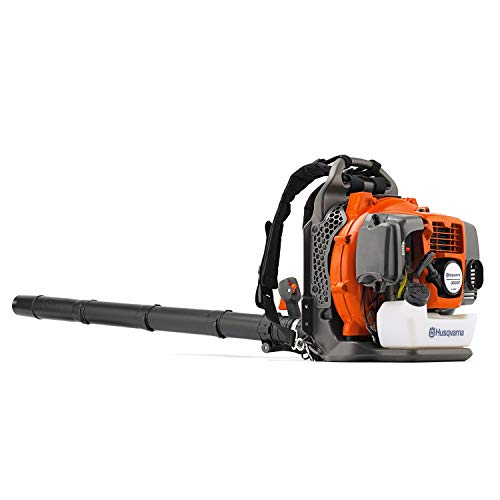
The 350BT is a balanced option with a 50.2cc two-stroke engine producing 692 CFM at 180 MPH. It emphasizes an ergonomic harness and an adjustable offset handle to reduce arm strain during prolonged use, while delivering steady power for mid-sized landscapes and routine seasonal cleanup tasks.
id=”Getell-Backpack-Blower”>Getell Gas Powered Backpack Leaf Blower

The Getell model uses a 65cc two-stroke engine delivering 850 CFM and 220 MPH, making it suitable for large properties and heavy debris. It features an adjustable padded harness for all-day comfort, a ventilated back design to stay cool, and a cruise control option along with a precise joystick for maneuverability. This combination supports efficient, controlled, high-output cleaning.
Buying Guide
Key considerations when selecting a gas backpack leaf blower include engine displacement, airflow and velocity, weight, harness ergonomics, start-up reliability, and maintenance requirements.
- Engine size and power: Larger engines (60cc and above) typically provide stronger air output for heavy debris but can be heavier to wear. Choose based on yard size and climate.
- Airflow and speed: Higher CFM and MPH translate to faster debris clearing. Balance this with weight and control features to avoid fatigue.
- Ergonomics: Padded shoulder straps, hip belt, and weight distribution reduce strain. An offset handle may improve balance and reduce arm pull.
- Vibration control: Low-vibration designs help minimize fatigue during long sessions.
- Cruise control and throttle: A cruise control feature helps maintain a steady airflow and reduces hand fatigue on long jobs.
- Maintenance and durability: Look for robust builds, reliable carburetors, and accessible filters for easier upkeep.
- Noise and emissions: Engines with technologies like X-Torq reduce emissions and may offer quieter operation, which can be a consideration for neighborhoods with noise restrictions.
Product selection varies by yard size, debris type, and user preference for weight and balance. For most moderate-sized lawns, models in the 50–65cc range with 650–900 CFM airflow provide strong performance with manageable weight. For larger properties or wetter conditions, higher power, larger CFM, and a well-designed harness become increasingly beneficial.