Gas leaks pose serious safety risks in homes, RVs, and workspaces. The right gas leak detector detects early leaks of methane, propane, natural gas, and other combustible gases, giving you time to react. This guide reviews five reliable options that balance speed, accuracy, and ease of use, helping you choose a detector that fits your space and safety needs.
The following table highlights the five selected models, focusing on the type of gas detected, notable features, and intended use. This quick reference helps you compare at a glance before diving into detailed product sections.
| Product | Brand | Key Gas Detection & Features |
|---|---|---|
| PT199 Natural Gas Leak Detector | TOPTES | Detects natural gas, methane, propane, butane; visual and audible alarms; 0.5s response; includes two batteries |
| PT205 Natural Gas Detector | TOPTES | %LEL detection (1%LEL to 10%LEL); wide gas range; visual & audio alarms; portable |
| PT177 Gas Leak Detector | TOPTES | Detects LPG, methane, propane; 0.5–3s alarm; five red LEDs; pocket-sized |
| PT830S Rechargeable Gas Leak Detector | TOPTES | 14.5″ flexible probe; TFT color display; 0–10,000 ppm; multiple alarm modes |
| PT210S Gas Leak Detector | TOPTES | 4-inch probe; percent LEL display; 0.5s alarm; 75 dB buzzer |
PT199 Natural Gas Leak Detector
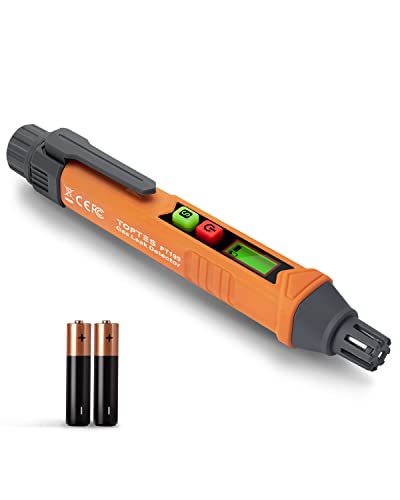
The TopTes PT199 is a portable combustible gas detector designed to locate leaks quickly in homes and other spaces. It detects natural gas, methane, propane, butane, LPG, and more. It provides immediate feedback via audible and visual alarms, with the LCD screen turning red at higher gas concentrations. The device ships with two AAA batteries and offers a swift 30-second warm-up. A low-battery indicator appears below 2.4V, and the device auto-powers off after five minutes of inactivity, helping conserve power.
Key considerations for PT199: It is compact and portable, making it suitable for quick inspections around appliances, gas lines, and storage areas. The dual alarm system (sound and display) improves visibility in dim environments, while the red LCD indicator conveys severity at a glance. Battery availability and auto-power-off help maintain readiness. For broader detection beyond natural gas, this detector remains an efficient go-to option for many households.
4-in-1 Upgraded Gas & CO Detector (NICGOL)

This NICGOL device combines gas detection with carbon monoxide sensing and environmental readouts like temperature and humidity. Its dual-sensor setup provides fast alerts for both gas leaks and CO buildup, a valuable feature for RVs, homes, and workspaces with enclosed air circulation. The unit is designed for 110V–220V AC plug-in operation and emphasizes energy efficiency, delivering long-term use with minimal power draw. A quick alert system with dual alarms ensures occupants receive timely warnings in emergencies.
What to know about NICGOL: The 4-in-1 approach covers multiple threat vectors in one unit, reducing the need for separate sensors. The plug-in design makes it a fixed installation option, suitable for central monitoring in areas like kitchens, basements, or near garage doors. The dual alarms (audible and visual) are intended to catch attention even when one alert medium is muted. For travelers or mobile setups, consider how a plug-in unit fits your space versus a cordless detector.
PT520A Natural Gas Detector with Gooseneck

The PT520A from TOPTES features a 17-inch gooseneck probe designed to reach tight spaces such as behind appliances, near pipelines, or inside enclosed basements. It detects methane, propane, natural gas, LPG, and more, with detection ranges (50-10,000 ppm) and a responsive 0.5-second alarm. The device provides 7 colored bars and a 75dB alarm that intensifies with gas concentration. The long reach makes it particularly suitable for RVs, mechanical rooms, and areas where access is limited.
Key aspects of PT520A: The flexible probe expands inspection options beyond surface-level detection. Its audible and visual alerts keep you informed during inspections in dim or cluttered spaces. Consider this model if your typical leaks occur behind cabinets, near vents, or in dense mechanical areas where a standard detector cannot reach easily.
Klein Tools ET120 Gas Leak Detector

The Klein Tools ET120 is a versatile combustible gas leak detector with an 18-inch gooseneck for reaching pipes, storage areas, and tight corners. It offers a broad detection range from 50 to 10,000 ppm and features adjustable sensitivity to switch between High and Low modes, allowing for precise monitoring in varied environments. The device includes a set of five red LEDs and an 85 dB audible alert that intensify as gas concentrations rise, providing clear visual and audible cues during inspections.
What to consider with ET120: The adjustable sensitivity makes it suitable for both quick spot checks and detailed leak tracing. The long gooseneck enables inspections that shorter probes cannot access. Its durability and included pouch aid portability for on-site professionals and DIY users who frequently inspect gas lines and appliances.
PT205 Natural Gas Detector with %LEL

The TopTes PT205 detector emphasizes %LEL detection, providing precise readings from 1%LEL to 10%LEL (approximately 100 ppm to 5,000 ppm for methane). It supports a wide range of combustible gases, including LPG, methane, ethane, propane, butane, natural gas, coal gas, and liquefied natural gas. The unit offers rapid 0.5-second detection and combines visual and audible alarms. A red LCD display signals high gas concentrations for quick recognition of danger levels. Battery operation and a compact form factor support portable use in various settings.
PT205 considerations: The %LEL readout offers a nuanced view of leak severity, which can be helpful for evaluating risk and prioritizing responses. If you need a detector that communicates detailed concentration levels in professional or semi-professional contexts, PT205 provides actionable data alongside standard alarms. Be mindful of battery maintenance and ensure you have fresh batteries for ongoing monitoring.
Buying Guide: Key Purchase Considerations
When choosing a gas leak detector, consider the following factors to ensure you select a device that matches your space, risk profile, and workflow.
- Gas detection range and gases: Look for detectors that cover methane, propane, natural gas, and LPG. Some devices include CO detection or %LEL readings for more detailed risk assessment.
- Response time and alarms: A fast 0.5-second response is ideal for early warning. Check for audible, visual, and vibration alerts, plus configurable alarm thresholds.
- Probe length and reach: Long gooseneck probes (12–17 inches) help probe tight spaces behind appliances, in attics, basements, or around piping.
- Display and readouts: Large, high-contrast displays or color screens simplify reading ppm or %LEL values in varying lighting conditions.
- Power and portability: Battery-powered detectors are portable and great for quick checks; plug-in detectors are stable for fixed installations but less mobile.
- Maintenance and durability: Consider auto-shutoff features, battery life, and overall build quality for long-term reliability in homes or work sites.
- Ease of use: Auto-calibration, quick warm-up times, and simple two-button operation reduce setup time and user error.
- Safety certifications and limits: Verify that the detector meets relevant safety standards and is suitable for indoor use and non-industrial environments.
In choosing the best detector, evaluate your typical settings—kitchens, garages, basements, and RVs—along with how often you need to perform checks. For families and renters, a compact, easy-to-use unit with clear alarms may be the most practical. For workshop or traditional home maintenance, a detector with longer reach, detailed readouts, and durable construction can provide ongoing safety and confidence.