For makers and hobbyists, selecting the right adhesive can dramatically affect the durability and finish of 3D printed parts. This guide stacks up top glues designed to bond PLA, ABS, PETG, and other plastics common in 3D printing, plus materials like resin and metal when needed. We examine fast-drying cyanoacrylate glues, plastic-specific epoxies, and bed-adhesion sticks that help you complete models, miniatures, and functional prototypes with predictable results. Each option below is chosen for reliability, ease of use, and compatibility with typical 3D printing materials.
| Product | Brand | Key Benefit |
|---|---|---|
| Creality 3D Printer Glue Sticks Pack | Creality | Enhanced adhesion and reduced warping on PLA/ABS/PETG/PC/PA/TPU |
| NoClogger 3D Printing Glue | NoClogger | Fast-drying, precise CA-based bonding for detailed prints |
| Y’allCanDiy Plastic Glue | Y’allCanDiy | High-strength, universal plastic repair for a range of plastics |
| CREALITY 3D Printer Glue Sticks PVP Solid | Creality | Original quality glue sticks with low-odor, strong adhesion |
| CYAFIXED Super Glue For Plastic | CYAFIXED | Multi-material compatibility with precision application |
Creality 3D Printer Glue Sticks for Hot Bed Warping

Creality’s glue sticks are designed to improve bed adhesion and minimize warping during the printing process. The sticks are formulated from safe PVP material to reduce odors and promote a healthier printing environment. Users apply a thin, even layer to the heated bed to help prints maintain first-layer contact without excessive buildup. The product is particularly aligned with PLA, ABS, PETG, PC, PA, and TPU filaments, providing a reliable baseline for quick, consistent bed prep. For those seeking a known brand with a straightforward application, these sticks offer a predictable result with minimal fuss.
Key features include 100% Creality quality assurance, an eco-friendly composition, and a focus on easy application and reliable demolding after cooling. The sticks are favored for (a) stronger initial adhesion to the bed, (b) reduced risk of prints peeling or curling, and (c) compatibility with multiple popular polymers. While not a miracle solution for every bed surface, they provide a practical, low-odor option for hobbyists who want repeatable first-layer success.
Creality PVP Glue Sticks For 3D Printing
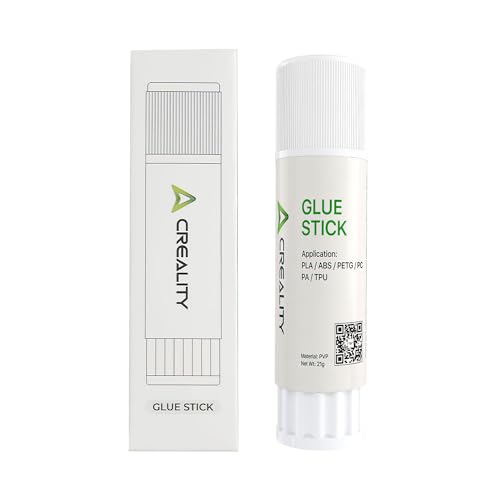
This Creality pack features solid glue sticks designed specifically for hot-bed adhesion. The PVP-based sticks generate a thin, consistent layer that improves first-layer adhesion without creating an overly sticky surface that can complicate detachment. They are noted for safety, offering low odor and a straightforward application suitable for beginners and seasoned users alike. The product emphasizes the practical benefits of a stable bed, easier print removal, and fewer print defects caused by poor layer adhesion.
In practice, users apply a small amount to the bed in a designated area and spread it evenly before heating. The result is usually a smoother first layer and a reduction in warping for typical FFF creations. This option is well-suited for those who value a dedicated bed adhesive from a trusted printer maker and want a simple, reliable routine without needing additional sprays or coatings.
NoClogger 3D Printing Glue
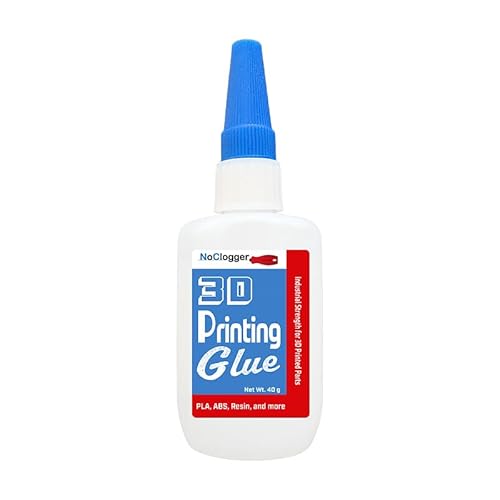
NoClogger 3D Printing Glue is a CA-based adhesive designed for 3D printed components. It emphasizes fast-setting with a 40 g bottle and a precision tip, enabling targeted application on small or intricate parts. The glue bonds PLA, ABS, PETG, resin, and other common 3D printing materials with strong, durable results. This option appeals to users who need quick, reliable fixes on prototypes or functional parts, especially where precision is critical. The emphasis on rapid bonding makes it a practical choice for urgent repairs or time-sensitive builds.
Pros include a balance of strength and speed, as well as controlled application to minimize waste. Potential considerations include the need for good ventilation due to fumes and the regular use of a proper curing window. For projects requiring fast turnaround and repeatable results, NoClogger offers a focused solution for small- to mid-size components.
Y’allCanDiy Super Glue For Plastic

Y’allCanDiy offers a universal plastic repair adhesive designed for a wide range of plastics, including PVC, ABS, acrylic, and more. The formula aims to deliver high-strength bonds capable of withstanding everyday handling in models and toys. Its quick-drying nature promises rapid fixes for PLA and other 3D-printed components, making it a practical choice for hobbyists who want a single, dependable solution for multiple plastics. The absence of heavy odor and a focus on broad compatibility are additional selling points for workshop use and on-the-go repairs.
The product highlights include deep bond strength, wide plastic compatibility, and fast setting times. This makes it a solid option for those who work with diverse materials or need a glue that can handle both prints and assembled parts in one bottle. When used correctly, this glue can deliver reliable performance in model assembly, kit repair, and everyday plastic bonding tasks.
CYAFIXED Super Glue For Plastic

CYAFIXED offers a multi-material compatible CA adhesive designed for precision application. The glue aims to bond ceramics, plastics, glass, wood, rubber, and metal, making it suitable for projects that blend 3D printed parts with other components. A microtip or precision nozzle helps ensure clean, targeted placement, reducing waste and mess. This product is particularly useful for detailed repairs or assemblies where exact glue placement matters.
The stated benefits emphasize precise control, anti-clog design, and broad material compatibility. Users can rely on quick-setting bonds that hold up under typical daily use, with the added assurance that the glue remains usable over multiple sessions thanks to its design. For complex builds or mixed-material assemblies, CYAFIXED provides a flexible option that complements 3D-printed parts well.
Buying Guide: Key Purchase Considerations
- Material compatibility: Check whether the adhesive supports PLA, ABS, PETG, PC, PA, resin, or multi-material bonding. For many hobbyists, a combination of a bed adhesive and CA glue covers most needs.
- Bonding speed vs. work time: Faster-setting glues save time but offer less adjustment time. Consider a two-glue approach: a quick-bond CA for assemblies and a slower, cured adhesive for structural parts.
- Application precision: For small parts, a bottle with a precision tip or micro-droppers reduces waste and improves placement accuracy.
- Bed adhesion vs. part bonding: Distinguish glues designed for bed adhesion (to improve first layers) from adhesives meant for bonding finished parts. Do not rely on bed sticks as a general-purpose glue for assemblies.
- Safety and odor: Choose low-odor formulations when possible, especially in confined spaces. Always use in well-ventilated areas and follow product instructions for curing times.
- Durability and flexibility: Some glues provide rigid bonds suitable for static models, while others allow a little give to endure vibration or thermal cycling in 3D-printed parts.
- Cleanup and rework: Consider whether the adhesive can be removed or softened if you need to replace a part or adjust fit after bonding.
- Brand reliability and warranty: For consistent results, select products from reputable brands with documented performance across common filaments.
In summary, a practical approach is to maintain a small assortment: a bed-adhesion product for prints and a CA-based adhesive for precise post-processing and assembly. This combination helps ensure reliable first layers and robust, lasting joins for 3D-printed parts across a variety of materials and project types.