Choosing the right grit for sanding spackle can improve finish quality and reduce turnaround time on drywall projects. This guide highlights top sanding sponges and blocks designed to smooth joint compound efficiently, control dust, and protect the surrounding surfaces. We compare grit ranges, durability, and versatility to help you select the best option for both DIY and professional work.
Summary of chosen products:
- 3M Drywall Sanding Sponge, Fine/Medium Grits (9095DC-NA) — Dual grit for removing and smoothing
- S&F STEAD & FAST 60/80/120/220 Grits — Four-grit sanding blocks for broad applications
- Romeda 8-Pack Sanding Sponge — Multi-grit blocks (60/80/120/220)
- SACKORANGE 120/220/320/400 Grit Pack — Four-grit set in one
- WokHok 60/80/120/180/220 Pack — Five-grit versatility for various stages
3M Drywall Sanding Sponge, Fine/Medium Grits

The 3M Drywall Sanding Sponge combines flexibility with a dual-grit design, enabling both removal and smoothing tasks in a single tool. The medium grit tackles joint compound removal on gashed or heavy skim coats, while the fine grit refines the surface for a ready-to-paint finish. Its sponge base adapts to flat walls and contoured corners, reducing gouging risk on edges and around fixtures. This makes it suitable for mid-depth sanding of spackle and compound on drywall projects where a balanced approach is needed.
Key considerations for this product include its dual-grit versatility, which can streamline workflows by reducing the number of sanding steps. The sponge’s resilience helps maintain shape during repeated passes, and its flexibility aids in maintaining consistent contact across irregular surfaces. It is well-suited for moderate smoothing after initial joint compound application and for final touch-ups prior to priming.
S&F STEAD & FAST Sanding Sponge Set — 60/80/120/220 Grit
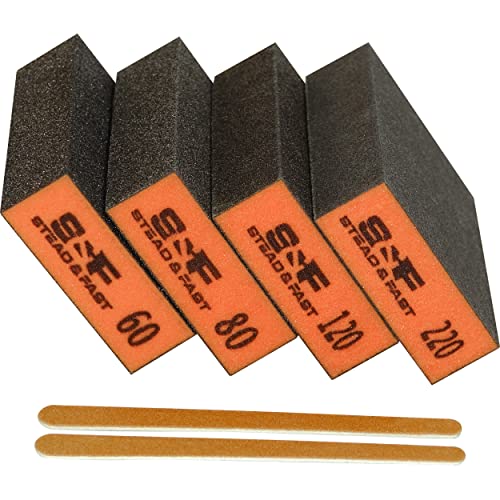
This set includes four high-density foam sanding blocks in grits 60, 80, 120, and 220. The foam is designed to be robust and tear-resistant, providing a stable grip and controlled abrasion across a range of surfaces, including drywall joint compound. The aluminum oxide abrasive is engineered for both wet and dry sanding, offering consistent performance from heavy material removal to fine finishing. The color-coded grits help distinguish stages quickly on job sites.
When sanding spackle, the coarse grits (60/80) expedite removal of excess material, while mid (120) and fine (220) grits help refine the joint, reduce scratches, and prepare the surface for priming. The multi-use capability—wood, metal, drywall, and primer work—adds versatility for overall refinishing projects beyond drywall repair. Durability and uniform grit distribution are notable advantages for longer campaigns.
SACKORANGE Hand Sanding Sponge Set — 120/220/320/400 Grit

This 4-piece set covers a broad sanding spectrum, from 120 to 400 grit, enabling a clear progression from bulk removal to ultra-fine smoothing of joint compound and spackle. The blocks are made from high-density sponge that resists tearing and maintains abrasive integrity, reducing grit shedding during use. Color-coded for quick grit identification, these blocks are suitable for drywall prep, wood filler finishing, and light refinishing work where spackle requires a gentle touch to avoid creating swirl marks.
Durability and reuse are central in this set, making it a practical option for contractors and DIY enthusiasts who want consistent results across multiple projects. The range from 120 to 400 is particularly helpful when finalizing surfaces before painting, as it minimizes visible sanding scratches while delivering a smooth finish.
Romeda 8-Pack Sanding Sponge — 60/80/120/220 Grit

The Romeda set provides eight sanding blocks with four grit levels—60, 80, 120, and 220—organized in color-coded packs. The high-density sponge is designed for durability and flexibility, allowing the blocks to hold their shape during aggressive removal or careful smoothing on spackle applied over joint compound. The assortment supports large-scale projects and detailed work alike, as you can switch between grits without changing tools.
This selection is particularly suitable for drywall prep, where removing excess joint compound and evening out transitions are required before priming. The 60/80 grits handle rough patches, with 120 and 220 refining the surface for a consistent finish. The reusable nature reduces waste and contributes to lower project costs over time.
3M SandBlaster Dual Angle 220 Grit Sponge
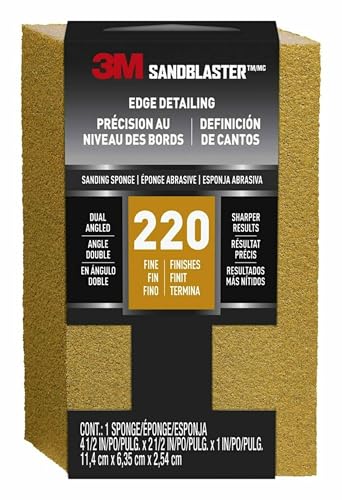
The 3M SandBlaster Dual Angle sponge is a professional-grade option designed to keep its shape during extended use. Its angled sides enable access to tight areas and corners, which is especially helpful when smoothing spackle along joint lines and around outlets or trim. The 220-grit mineral-based abrasive is intended for fine finishing, making this sponge ideal for the final smoothing stage before priming and painting.
Key strengths include shape retention, which helps ensure consistent abrasion and avoids gouging. The dual-angle design supports detailed work without needing extra tools, and the mineral grit provides uniform cut-rate for predictable results. This option suits drywall pros performing meticulous refinishing and those who require a durable tool for repeated sessions.
Buying Guide: Grit, Use, and Application Considerations
- Grit progression: Start with lower grits (60-80) for heavy removal of excess spackle and high spots, then move to mid (120-180) and fine (220-400) grits to achieve a smooth, paint-ready surface. For ultra-smooth finishes, integrate a 320-400 grit step on top of 220.
- Material and durability: Look for high-density foam or sponge bases with a robust abrasive layer. Durable blocks resist tearing and maintain shape across multiple passes, reducing the need for frequent replacements.
- Surface compatibility: Drywall and joint compounds benefit from lighter, flexible blocks that conform to walls and corners. For metal or wood prep, slightly stiffer blocks may be better to ensure efficient material removal.
- Wet vs. dry use: Some blocks are suitable for both wet and dry sanding. Wet sanding can reduce dust and improve surface finish, especially during final passes.
- Maintenance and reuse: Washable sponges extend tool life. Rinse after use to remove dust and debris, then air-dry to prevent mold growth in humid environments.
- Ergonomics and grip: Choose blocks with comfortable shapes and non-slip surfaces for longer sanding sessions. A proper grip reduces hand fatigue and helps maintain even pressure.
- Project scope: For large patches, multi-pack sets with varied grits provide flexibility, while specialized angled designs are advantageous for tight corners and around fixtures.
In sum, selecting the right grit and sanding sponge type hinges on the stage of your spackle work, the contours of the surfaces, and how much material you need to remove. The options listed here offer a range of grits, shapes, and durability levels to suit both quick fixes and more detailed drywall refinishing projects.