Handheld belt sanders offer fast material removal and smooth finishes for woodworking and DIY tasks. This guide highlights top models that balance power, control, and maneuverability, helping you pick a sander that fits your projects, whether you’re finishing trim, leveling tabletops, or removing old coatings. The selections below cover compact, versatile options and more robust units suited for longer sessions. Each entry includes core features, a product image, and a direct link to the Amazon listing for convenient comparison.
| Product | Brand | Motor | Key Benefit | |
|---|---|---|---|---|
| WEN 6321 | WEN | 7-amp | 3 in. x 21 in. | Compact, dust-friendly with bag |
| WEN 6307 | WEN | Variable speed | 1/2-by-18″ | Auto-tracking belt for easy use |
| WEN HB424V | WEN | 10-amp | 4-by-24″ | Versatile handheld or benchtop with lock-on switch |
| WEN HB321V | WEN | 7.5-amp | 3-by-21″ | Lock-on trigger and quick belt tension |
| Makita 9403 | Makita | Low-noise 84 dB | 4-by-24″ | High-capacity and long-lasting |
The following five products represent a cross-section of capable handheld belt sanders, emphasizing reliability, adjustable speed, dust control, and user comfort. Each product section includes a direct link, a visual reference, and practical details drawn from the listed features.
WEN 6321 7-Amp Belt Sander
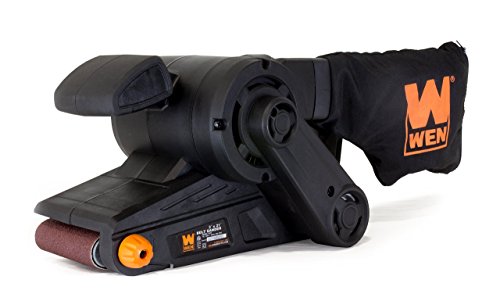
The WEN 6321 belt sander combines a 7-amp motor with a belt speed of over 13 feet per second, enabling rapid material removal suitable for flat surfaces and larger projects. Its compact six-pound design reduces user fatigue during longer sessions, making it a practical option for trim work, table tops, and door surfacing. A detachable dust bag helps keep workspaces cleaner, while the belt tracking stays stable for consistent results. This model balances power with manageability, making it a solid first choice for beginners and pros alike.
WEN 6307 Variable Speed Detailing File Sander
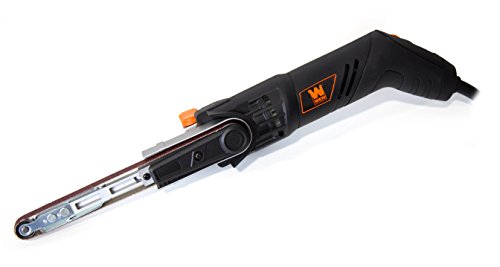
The WEN 6307 offers a variable speed range from 1080 to 1800 feet per minute, allowing precise control for detailed contour work and finishing. Its Auto-tracking belt system minimizes time spent tensioning and adjusting, keeping sanding consistent with less setup. A 50-degree pivot capability further extends its versatility for angled edges and curved profiles. This sander is ideal for intricate projects requiring fine control alongside dependable belt life.
WEN 10-Amp 4-by-24-Inch Sander (HB424V)

The HB424V combines a 10-amp motor with a 4-by-24-inch belt, offering substantial material removal for larger surfaces. It can be mounted on a benchtop to function as an upward-facing stationary belt sander, increasing its utility in workshop setups. A lock-on power switch provides continuous sanding without sustained grip, which helps reduce hand fatigue during aggressive sanding tasks or extended rounds of flattening and smoothing.
WEN 7.5-Amp 3-by-21-Inch Sander (HB321V)

The HB321V features a 7.5-amp variable speed motor, delivering 620 to 1200 feet per minute across 3-by-21 inches of belt. A lock-on switch supports continuous sanding, while a quick-release belt tension lever enables rapid belt changes and grit adjustments. This model strikes a balance between compact size and effective performance for doors, drawers, and speedier stock removal without excessive weight.
Jellas 7Amp Belt Sander BS750
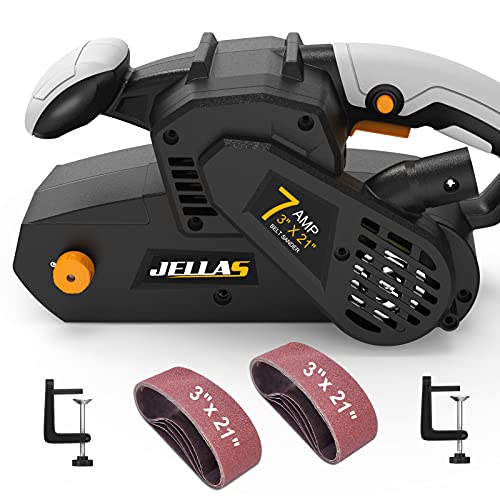
The Jellas BS750 delivers a 7-amp, 120V motor that powers a belt moving at over 13 feet per second. Its six-speed dial supports a range of applications from finer finishing to aggressive material removal. The sander doubles as a bench unit with two metal C clamps, enabling hands-free operation for more precise work. A lock-on feature reduces fatigue, and the kit includes diverse grit belts to cover various project requirements, offering value for woodworkers who juggle multiple tasks in one session.
Jellas 3 × 21-Inch Belt Sander with Dust Bag (BS750-SD)
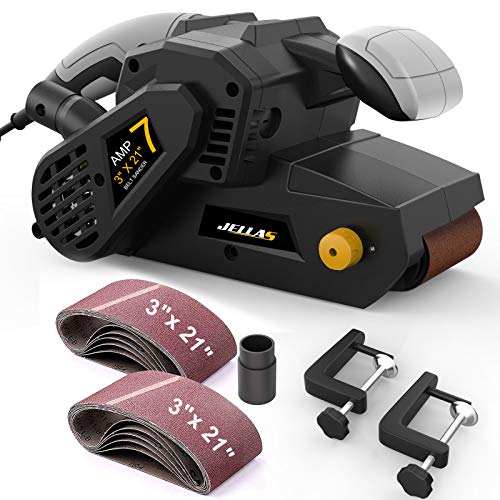
This Jellas model shares a 7-amp motor and 3-by-21-inch belt format, emphasizing versatility with a 2-in-1 bench and belt function. A 2-in-1 vacuum adapter helps maintain a cleaner work area, while a 10-foot power cord provides flexibility away from power outlets. The included belts in multiple grits help you tackle various stages of woodworking—from rough stock removal to fine finishing—without frequent belt changes.
Makita 9403 4″ x 24″ Belt Sander

The Makita 9403 operates with a low-noise profile (approximately 84 dB) and a wide 4-by-24-inch belt, enabling fast material removal on larger surfaces. Its labyrinth construction protects the motor and bearings from dust and debris, translating to longer tool life and less maintenance. This sander is well-suited for heavier jobs where a larger belt area accelerates flattening and leveling tasks, while still maintaining a relatively quiet operation for workshop environments.
Buying Guide: Key Purchase Considerations
Intended use and project scope should guide your choice of a handheld belt sander. For small, intricate work, a compact model with a narrower belt and variable speed helps preserve detail while preventing gouges. If you frequently work on tabletops, legs, or wide doors, a larger belt and higher horsepower provide faster material removal with better leveling. Dust collection is a practical feature; models with bags or vacuum adapters reduce cleanup and improve air quality. A lock-on button minimizes fatigue during extended sessions, while a quick-release belt tension lever speeds grit changes. Consider whether you need benchtop compatibility, which adds versatility if you regularly switch between handheld and stationary modes.
Performance across brands tends to favor models with adjustable speed curves, stable belt tracking, and durable housings. While premium units often deliver quieter operation and longer motor life, mid-range options frequently offer the best value for hobbyists and casual workshop use. When evaluating options, compare the belt size, RPM range, weight, and whether the sander includes spare belts or dust-control accessories. If you anticipate long sanding bouts, prioritize ergonomics, such as a comfortable grip and balanced weight distribution. Finally, ensure the model’s power requirements align with your workshop outlets and circuit capacity to avoid nuisance trips during heavy use.