Finding a reliable hobby TIG welder can boost DIY projects, automotive fixes, and light fabrication. This guide highlights five TIG-capable machines that balance ease of use, versatility, and value for American hobbyists. Each option supports AC/DC TIG, pulse features, and intuitive controls to help beginners build solid welds on aluminum, stainless steel, and mild steel. Read on for concise product notes, plus a practical buying guide to match your skill level and project needs.
| Product | Core Strength | Voltage | Best For |
|---|---|---|---|
| PRIMEWELD TIG225X 225A | Pulse, Flex Torch | 110/220V | Aluminum, thin metals |
| YESWELDER YWM-160 | 4-in-1, Synergic | 110/220V | Beginner to intermediate, multiple modes |
| ARCCAPTAIN TIG Welder AC/DC 200A | 7-in-1, Square/Triangular Wave | 110/220V | Thin aluminum, precise control |
| YESWELDER TIG-205P | Large LED, Auto Memory | 110/220V | Prolonged sessions, clear readouts |
| ARCCAPTAIN 165A MIG Welder | 4-in-1 with Synergy | 110/220V | Versatile for mixed projects |
PrimeWeld TIG225X: Solid 225 Amp TIG/Stick
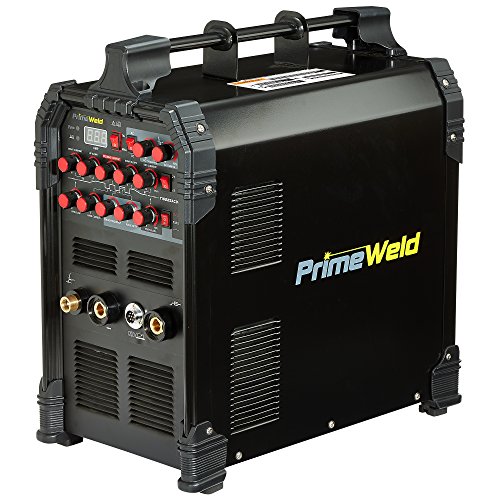
The PRIMEWELD TIG225X combines 225 amps of TIG and stick capability with a CK17 Flex torch for flexible maneuvering. It supports aluminum, stainless steel, and thin metals, featuring a pulse option for heat control and reduced warping. The unit offers 110/220-volt operation, accommodating a wide range of home shop outlets. It’s compatible with 7018 and 6013 rods for stick welding and comes with USA-made CK DINSE connectors for reliable connections. This welder is well-suited for hobbyists tackling aluminum panels, automotive exhaust work, and light-frame fabrication. Expect smooth arc starts, versatile frequency control, and robust build quality for repetitive use.
YESWELDER YWM-160: A 4‑in‑1 Beginner‑Friendly Welder
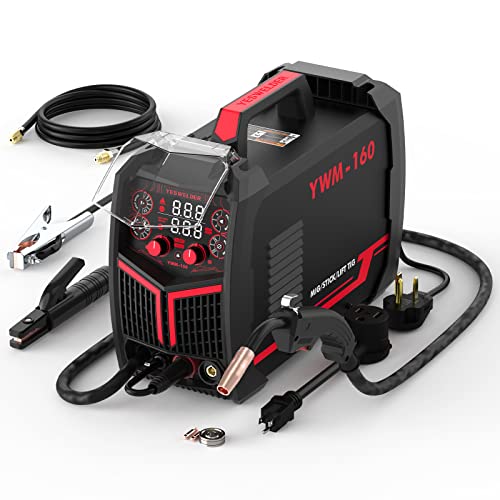
The YESWELDER YWM-160 is a versatile 4-in-1 welder offering Flux Core MIG, Gas MIG, Stick, and Lift TIG functions. With 110V/220V dual voltage and a capable 160A output, it handles automotive, construction, and DIY tasks. It supports lightweight spool sizes and is designed for users who want one machine for multiple welding modes. Its synergic control helps beginners dial in settings, reducing learning curves while delivering steady performance on a range of materials, including stainless and carbon steels. It’s a practical choice for hobbyists who anticipate occasional MIG or TIG tasks without purchasing multiple machines.
ARCCAPTAIN TIG Welder AC/DC 200A: 7‑in‑1 Powerhouse

The ARCCAPTAIN TIG Welder AC/DC 200A offers a 7-in-1 feature set, including AC/DC TIG, pulse TIG, square and triangular waveforms, and stick/mMA. The large LED display simplifies parameter tracking, and its dual voltage support (110V/220V) accommodates a typical home shop. The device targets precise aluminum work and clean welds on non-ferrous metals, with pulse and waveform options to minimize heat input and distortion. It’s a solid choice for hobbyists focusing on aluminum fabrication, cabinetry, or decorative metalwork where bead quality matters more than high-volume throughput.
YESWELDER TIG-205P: Large Display, Stable TIG

The YESWELDER TIG-205P presents a robust TIG experience with a prominent LED display to clearly view current settings, modes, and welding parameters. It supports up to 200A for TIG and stick operations, providing reliable ignition via high-frequency starting and an auto memory to save preferred setups after power-down. This unit is suitable for hobbyists doing thicker aluminum or stainless steel work, long sessions, and projects where consistent visibility and control are important.
ARCCAPTAIN 165A MIG Welder: 4‑in‑1 Versatility

The ARCCAPTAIN 165A MIG Welder is a 4‑in‑1 machine offering gas MIG, flux core MIG, Lift TIG (with a separate torch), and stick welding. It includes a synergy-based control system to simplify parameter adjustments and supports dual voltage (110V/220V). A large LED display helps users monitor settings, while 2T/4T modes enhance control for continuous welds or precision bead placement. This model is well-suited for hobbyists who perform a range of projects—from thin aluminum panels to thicker steel frames—and want a single machine that adapts to evolving skills.
Buying Guide: Key Considerations for Hobby TIG Welders
- Welding processes: Prioritize machines that offer TIG (AC/DC and pulse), with optional MIG or Stick as needed. A versatile 4-in-1 unit can reduce total cost and space for a beginner who anticipates varied tasks.
- Voltage and power: Dual-voltage (110V/220V) models provide flexibility for home shops with different outlets. For thicker materials, higher amperage TIG capability (200–225A) expands your project scope.
- TIG torch and accessories: A flexible CK-style torch (or equivalent) improves maneuverability on tight joints. Look for kits that include essential consumables and a DINSE connector for reliable connections.
- Waveforms and pulse: Pulse, square, and triangular waveforms help manage heat input and reduce distortion on aluminum and thin metals. This is especially helpful for hobbyists working with thin sheets or decorative pieces.
- Display and controls: A clear LED or LCD display and intuitive controls shorten the learning curve. Auto memory and HF start add convenience for repeated setups and reliable ignition.
- Portability and footprint: For home garages or sheds, consider weight and footprint. Lighter, compact units are easier to store and move, though they may sacrifice some high-end features.
- Support and accessories: Check warranty coverage, customer support access, and whether spare parts or consumables are readily available in the US market.
- Budget alignment: Balance features with your intended use. If you only plan occasional TIG work on aluminum, a mid‑range 160–200A machine with 110/220V capability is typically sufficient.
When choosing a hobby TIG welder, map your typical projects to the device’s capabilities: aluminum work benefits from robust AC TIG with stable polarity control; stainless and mild steel often respond well to clean DC TIG with precise heat input. If you expect to switch between TIG and MIG, a 4-in-1 model can maximize flexibility without adding multiple machines.