Choosing the right hole saw for fiberglass helps ensure clean cuts, minimal chipping, and faster work when mounting fixtures, venting, or passing wiring. This guide highlights five top picks, focusing on durability, cutting precision, and ease of use for fiberglass and related materials. Below is a quick reference table to compare the selected products.
| Product | Brand | Key Strength | Diameter | Notes |
|---|---|---|---|---|
| Hole Saw 5 3/4” (146mm) for Wood, HSS Bi-Metal | ITOOLFIRM | Carbide-like durability, accurate cuts | 5.75 in | Great for recessed lights, ducts, vent pipes |
| 1 1/8 inch Hole Saw Drill Bit for Metal and Wood | ITOOLFIRM | High hardness M42 bi-metal, precise | 1.125 in | Accurate, clean holes in fiberglass panels |
| HYCHIKA 17 Pcs Bi-Metal Hole Saw Set | HYCHIKA BETTER TOOLS FOR BETTER LIFE | Wide size range, durable bi-metal teeth | 3/4″ to 2-1/2″ | Versatile kit with mandrels and bits |
| Mollom 2-1/8″ Diamond Hole Saw | Mollom | Diamond tipped for hard surfaces | 2-1/8 in | Smooth cuts on porcelain, fiberglass, tile materials |
| Cortool 1-3/4 Inch Bi-Metal Hole Saw | Cortool | High hardness, clean edges | 1.75 in | Good on wood, plywood, plastic, drywall |
Note: The selections prioritize fiberglass-friendly cuts, durability, and ease of use across common project scenarios such as recessed lighting, ventilation, and panel work. Each product page link navigates to the respective Amazon listing for full specifications and purchase options.
Hole Saw 5 3/4” For Recessed Lights And Fiberglass

The ITOOLFIRM 5 3/4” HSS bi-metal hole saw is designed for cutting large holes in ceilings, walls, and fiberglass panels. Its carbide-inspired bi-metal teeth promote faster cutting with reduced binding, enabling clean recesses for lighting fixtures or vent tubing. The pilot bit option helps guide accurate center alignment, while the reliable construction resists wear during repeated punching of fiberglass and PVC boards. When depth control and clean edges matter, this hole saw delivers steady performance with minimal burrs and precise hole diameters.
VIKITON 2 Inch Hole Saw With Arbor

This 2 inch VIKITON hole saw features a bi-metal blade designed for durable performance on metal, wood, PVC board, and fiberglass. Its longer service life and smooth cutting edge help produce accurate circular holes with less effort. The kit includes a pilot bit on the arbor, making alignment straightforward and reducing chip-out on fiberglass surfaces. Ideal for smaller pass-throughs or venting installations where a precise cut is critical.
HYCHIKA 17 Pcs Bi-Metal Hole Saw Set

The HYCHIKA kit offers 17 sizes from 19mm to 68mm, built with bi-metal construction and high-hardness steel rated at 69–81 HRC. The high-precision teeth provide smooth cuts with reduced vibration, and the integrated chip removal groove helps evacuate debris quickly—beneficial when cutting fiberglass boards or drywall. The kit includes mandrels, drill bits, and a hex key for quick replacements, making it a versatile choice for multi-material projects including fiberglass, PVC, and plastic panels.
Cortool 1-3/4 Inch Bi-Metal Hole Saw
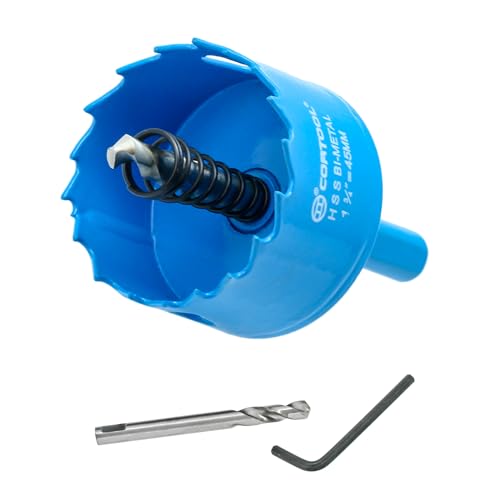
The Cortool 1-3/4 inch bi-metal hole saw combines M42 steel with a tough bi-metal body to deliver robust performance on wood, drywall, and plastic. Its non-binding edge design aims to reduce binding and provide clean, smooth edges, which is especially helpful when cutting fiberglass panels without chipping. A practical option for small-to-medium sized pass-throughs where precise diameter is key.
VIKITON 5.5 Inch Hole Saw With Arbor

This 5.5 inch VIKITON hole saw is designed for bigger projects, with a lighter weight profile after structural upgrades and an enhanced chip-removal system. The kit includes an arbor, drill bit replacements, and a hex key. The bi-metal construction, high-speed steel teeth, and a tapered cutting edge enable clean holes through fiberglass panels, plywood, and lightweight metals, delivering consistent results across larger diameter cuts.
Mollom 2-1/8″ Diamond Hole Saw
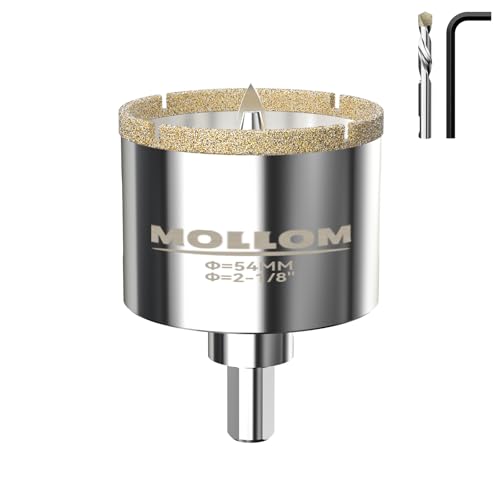
The Mollom 2-1/8″ diamond-tipped hole saw is designed for smooth drilling on porcelain, glass, ceramic, marble, and fiberglass. The diamond grains provide fast cutting with long life, and two removable pilot bits help start the hole with precision in hard surfaces. This makes it especially useful for perimeter cuts in fiberglass-tiber panels and thick composite sheets where conventional blades struggle with chipping.
Buying Guide
Key purchase considerations
- Material compatibility: For fiberglass, tools with hard-wearing teeth and low-friction designs reduce chipping and ensure clean edges.
- Bi-metal vs carbide/diamond: Bi-metal offers versatility and toughness; diamond or carbide-enhanced teeth excel on hard or composite materials like fiberglass panels and tile edges.
- Cutting depth: Check depth ratings to ensure the hole saw accommodates the required wall or ceiling pass-throughs, especially for venting or recessed lights.
- Diameter range: A kit with multiple diameters reduces the need for multiple separate tools and speeds up project planning when dealing with various fixture sizes.
- Arbor and pilot bits: A robust arbor and included pilot bits improve alignment, reduce wandering, and protect the fiberglass surface from splintering.
- Chip clearance: Designs with side chip grooves or ventilation help keep the cut clean and reduce heat buildup on fiberglass.
- Compatibility with drills: Ensure the selection works with common cordless and corded drills, including low-speed/high-torque settings for fiberglass work.
- Storage and organization: A compact case with labeled sizes helps keep blades organized for quick project setup.
How to choose for fiberglass projects
For a single project, prioritize hole saws with good edge geometry and steady cutting action to minimize fibers fraying. If you expect to switch between fiberglass, PVC, and wood, a bi-metal kit with a broad size range provides the most versatility. For especially tough or glossy fiberglass panels, consider diamond-tipped or higher-hardness blades to maintain edge quality and reduce chipping.
Usage tips for cleaner cuts
- Secure the workpiece and use mask protection to guard against fiberglass dust.
- Apply steady pressure without pushing aggressively; let the teeth do the work.
- Start with a shallow pilot hole to guide the blade before deep cuts.
- Use cutting lubrication if cutting materials with higher friction to extend blade life.
- Clear debris frequently to prevent binding and ensure smoother finishes.