Discover the best HVAC leak detectors on the market to identify refrigerant leaks quickly and accurately. This guide highlights five highly rated models, comparing sensor technology, sensitivity, and durability to help technicians and serious hobbyists choose the right tool for fieldwork.
| Product | Brand | Key Feature | Sensor Type | Refrigerants Detected |
|---|---|---|---|---|
| Fieldpiece DR58 Heated Diode Refrigerant Leak Detector | Fieldpiece | Ultra-sensitive detection with large backlit LCD | Heated Diode | All refrigerants (HFCs, CFCs, HCFCs, HFOs) and blends |
| SENSYX SFD201 Refrigerant & Combustible Gas Detector | SENSYX | Rechargeable, cordless operation with adjustable sensitivity | Ambient semiconductor | Halogenated refrigerants; detects combustible gas |
| Elitech ILD-200 HVAC Refrigerant Leak Detector | Elitech | Infrared sensor with high/medium/low sensitivity | Infrared | All halogenated refrigerants |
| Inficon 705-202-G1 Refrigerant Leak Detector | Inficon | Proven heated diode sensor; reliable leak checking | Heated diode | CFCs, HCFCs, HFCs, HFOs |
| TOPTES RT-389 Rechargeable Refrigerant Leak Detector | TOPTES | Three sensitivity modes and three alarm types | Semiconductor (Japanese sensor) | CFCs, HCFCs, HFCs, HFOs, HCs |
Note: This summary table highlights a mix of heated diode and infrared technologies, cordless operation, and multiple alarm options to suit different work conditions—from tight basements to open mechanical rooms. All models listed are designed for reliability, quick response, and compatibility with common refrigerants found in typical HVACR applications.
Fieldpiece DR58 Heated Diode Leak Detector

The Fieldpiece DR58 uses a heated diode sensor designed to detect micro leaks quickly, with a sensitivity better than many standard leak detectors. It claims detection of leaks as small as 0.03 oz/yr, offering up to 20 times greater sensitivity than simple bubble testing. The device is built to work with all refrigerants, including HFCs, CFCs, HCFCs, HFOs, and blends, making it suitable for most HVACR service scenarios. An IP54-rated sensor housing provides moisture and oil resistance, and Fieldpiece cites a long sensor life (approximately 300 hours) for dependable field use. The large backlit LCD screen facilitates easy visibility in low-light environments.
Key considerations: heated diode sensors are highly responsive to hydrocarbon and halogenated refrigerants, but routine calibration and battery management are important for consistent results. This unit is well-suited for technicians who prioritize sensitivity and broad refrigerant compatibility in a compact handheld form.
SENSYX SFD201 Refrigerant & Combustible Gas Detector

The SENSYX SFD201 provides cordless operation with a rechargeable lithium battery, enhancing mobility on the job. It features a Japan-made heat dioxide semiconductor sensor for high sensitivity to gas leaks and offers adjustable sensitivity levels (High/Low). A USB-C charging option supports quick top-ups, enabling extended use between charges. This detector targets a balance between portability and performance, making it a practical choice for service calls where access to power outlets is limited.
Key considerations: battery life and quick-charging capabilities improve workflow efficiency. The device’s sensitivity settings help tailor detection to the environment, though some users may prefer a dedicated infrared detector for low-level trace leaks in highly sensitive applications.
Elitech ILD-200 Infrared Leak Detector
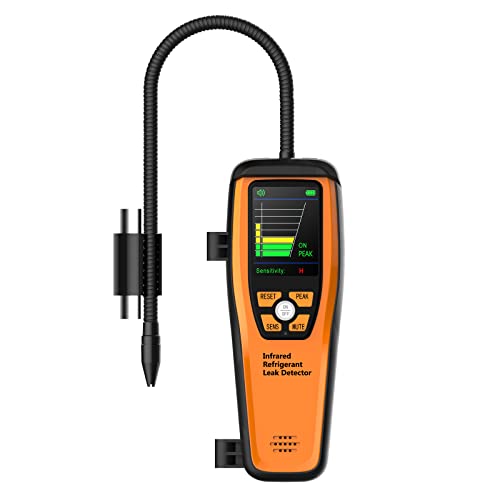
The ILD-200 from Elitech uses infrared sensing, which typically offers strong anti-interference capabilities, fast response, and durability. Its adjustable sensitivity features High/Medium/Low levels, with a maximum sensitivity around 0.14 oz/yr. It is advertised as capable of detecting a broad range of halogenated refrigerants, including common CFCs, HCFCs, HFCs, HFOs, and blends such as AZ-50. Infrared sensors are often less prone to false positives caused by ambient hydrocarbons compared to heated diode sensors, making the ILD-200 a strong option for cluttered or busy job sites.
Key considerations: infrared detectors generally perform well in varied environments but can be affected by environmental factors like ambient temperature and strong background gas. Calibration and gauge interpretation remain important for accurate leak rate estimation.
Inficon 705-202-G1 Refrigerant Leak Detector
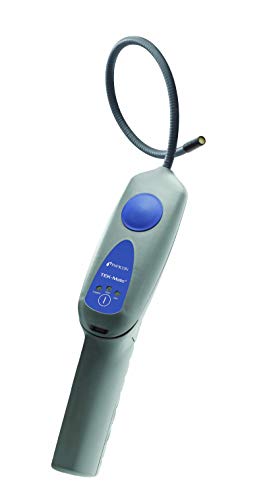
The Inficon 705-202-G1 uses a proven heated diode sensor for reliable refrigerant leak detection. It offers a sensitivity specification of approximately 0.25 oz/year (7 g/year) and is certified for detecting all CFCs, HCFCs, HFCs, and HFOs. Inficon has a long history in HVACR instrumentation, emphasizing robustness and repeatable readings in field conditions. This model is often favored by technicians who require a dependable, widely supported device with straightforward operation.
Key considerations: heated diode sensors are highly effective across a broad refrigerant spectrum, but they may require periodic recalibration and sensor maintenance. Availability of replacement parts and compatibility with common refrigerants in your service region are practical factors to verify before purchase.
Elitech ILD-100H Heated Diode Detector

The ILD-100H from Elitech combines a heated diode sensor with a TFT display that provides clearer readings for sensitivities, leakage alerts, battery levels, and other vital data. It supports adjustable high/medium/low sensitivity and reaches a maximum sensitivity of about 0.1 oz/yr. The TFT screen aids visibility in challenging lighting, and the detector is designed to handle a wide range of halogen refrigerants. This model is a practical pick for technicians who value straightforward interpretation of readings in the field.
Key considerations: TFT displays improve readability, but battery life and sensor maintenance remain essential for consistent performance over time. Ensure compatibility with the refrigerants prevalent in your service area.
TOPTES RT-389 Rechargeable Refrigerant Leak Detector

The RT-389 from TOPTES features three sensitivity modes (High, Middle, Low) and three alarm types, including sound, visual, and vibration alerts. It uses a Japanese semiconductor sensor and offers a robust 14.5-inch flexible gooseneck for reach in automotive, home, and commercial HVAC systems. The device includes a dual display with options for real-time refrigerant concentration (PPM) and a trend-tracking curve. A built-in top light improves visibility in dim environments, aiding precise leak localization.
Key considerations: the extended neck and flexible display modes support challenging layouts, but users should evaluate whether the three-alarm system fits their safety and workflow requirements. Battery life and calibration procedures should be considered for ongoing use.
Buying Guide: Key Purchase Considerations
- Sensor technology: Heated diode sensors are highly sensitive and cost-effective, but infrared sensors offer strong anti-interference and stable readings in cluttered environments. Consider the typical job sites (basements, attics, mechanical rooms) when choosing.
- Sensitivity range: Look for adjustable sensitivity to handle both trace leaks and larger leaks. Models with high/low or high/medium/low settings provide flexibility for different refrigerants and room conditions.
- Refrigerants detected: Ensure the detector covers the refrigerants you most frequently encounter (CFCs, HCFCs, HFCs, HFOs) and any blends used in your region.
- Power and portability: Rechargeable batteries and cordless operation improve mobility on service calls. Check battery life and charging options (USB-C or proprietary chargers).
- Display readability: Large LCD or TFT screens help interpret readings quickly. Backlighting or top lights are beneficial in low-light areas.
- Durability and maintenance: IP-rated housings and long sensor life contribute to field reliability. Consider ease of sensor replacement and availability of parts.
- Ergonomics and reach: Tools with flexible goosenecks or compact handles reduce user fatigue during lengthy investigations and enable access to tight spaces.
- Alarms and notifications: Visual, audible, and vibration alarms can be configured to match noise environments and safety requirements on job sites.
- Brand support and compatibility: A vendor with robust warranty, documentation, and service networks helps minimize downtime when calibration or maintenance is needed.
Across these options, technicians should align their choice with their typical workloads, space constraints, and the refrigerants most commonly encountered. For teams, standardizing on a detector with solid service support and interchangeable consumables can reduce total cost of ownership over time.