Choosing the right industrial horizontal band saw can boost productivity and precision in metal fabrication shops. The following picks focus on models that balance power, versatility, and long-term reliability for cutting steel, aluminum, pipes, and structural profiles. Each selection includes dual-voltage options, hydraulic feeds, and robust frames to keep operations consistent and safe.
| Product | Brand | Key Feature |
|---|---|---|
| KAKA INDUSTRIAL Horizontal Metal Cutting Bandsaw, BS-712N | KAKA INDUSTRIAL | 1.5HP dual-voltage motor, hydraulic feed, 4 speeds |
| KAKA INDUSTRIAL Metal Horizontal Band Saw, BS-712R | KAKA INDUSTRIAL | 24/7 readiness with auto-shutoff, 45–90° bow, 7″ capacity |
| KAKA Horizontal Metal Band Saw with 10×18 Inch BS-1018B | KAKA INDUSTRIAL | 10×18 cutting capacity, 2HP, coolant system |
| Grizzly Industrial G0561-7 x 12 Band Saw | Grizzly Industrial | Automatic shut off, multiple blade speeds |
| Baileigh BS-210M 6.69 Variable-Speed Mitering Band Saw | Baileigh | Infinitely variable blade speed, 60° miters, robust construction |
Below are five selections that emphasize durability, versatile cutting angles, and regulated feed control—essentials for shops handling a mix of structural steel, pipes, and extrusions. The list excludes consumer-grade units to focus on dependable, semi-industrial to industrial-grade performance.
KAKA INDUSTRIAL BS-712N Horizontal Band Saw

- 1.5HP dual-voltage motor supports both 115V and 230V for flexible workshop setups.
- 4 adjustable blade speeds (e.g., 80-200 FPM) optimize cuts across steel, aluminum, and alloys.
- Hydraulic feed and swivel base enable steady pressure and angled cuts from 0° to 45°.
KAKA INDUSTRIAL BS-712R Metal Horizontal Band Saw
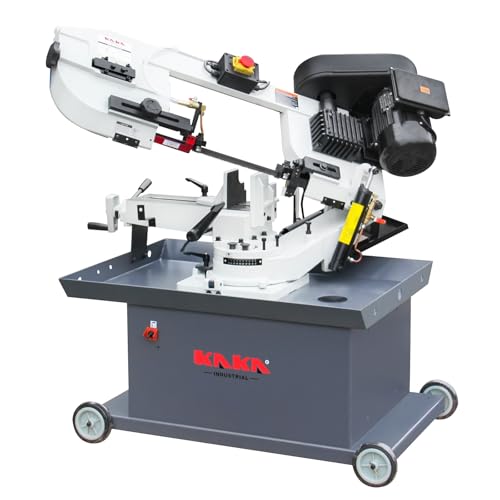
- Dual-Voltage Motor with 4-Speed V-Belt Drive for adaptable cutting.
- 7″ round and 7×8.25″ rectangular capacity with 45°-90° swiveling bow.
- Auto-Shutoff and coolant system extend blade life and support continuous operation.
KAKA INDUSTRIAL BS-712N — 3 Blade Pack
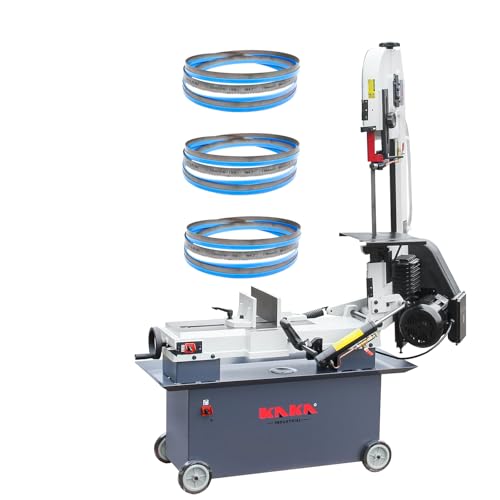
- Heavy-duty 1.5HP motor with dual voltage for versatility.
- Includes three blades optimized for thin-walled to thick solid materials.
- 4 speeds with vibration damping and solid base for straight, burr-free cuts.
KAKA Horizontal Band Saw With 10 x 18 Inch Capacity

- 2HP motor provides ample power for heavy-duty steel and aluminum cuts.
- Four blade speeds (35/60/88/115 MPM) for material-specific optimization.
- Dual-coolant system reduces blade temperature and extends life.
KAKA INDUSTRIAL BS-912B Horizontal Band Saw

- 9″ round stock and 7×12″ rectangular cutting capacity for versatile fabrication.
- Hydraulic feed for uniform cutting pressure and reduced burrs.
- 1.1kW dual-voltage motor suitable for varied power environments.
KAKA INDUSTRIAL BS-1018B Horizontal Band Saw

- 2HP motor with four speeds for precise cutting of large sections.
- 10×18 inch cutting capacity with a heavy-duty frame and coolant.
- Hydraulic feed and robust construction support long run times.
Buying Guide: Key Considerations For Your Band Saw Purchase
When evaluating horizontal band saws for metal cutting, several factors influence performance and ROI. Consider the following from multiple perspectives: operators, maintenance teams, and shop managers.
- Cutting capacity and stock size: Match the band saw’s maximum round and rectangular cutting capacity to typical workloads (pipes, beams, channels, structural profiles). A larger bow and longer blade travel enable more flexible setups.
- Motor power and voltage: Dual-voltage or single-phase motors offer flexibility in workshop environments. Higher horsepower supports tougher materials and faster cycles but may require more robust electrical supply.
- Blade speeds and control: Four or more speeds allow optimization for different metals (aluminum, steel, stainless). Variable speed with an inverter generally yields better results and longer blade life.
- Hydraulic feed: A hydraulic feed system provides consistent cutting pressure, reducing blade deflection and burrs while easing operator fatigue on repetitive cuts.
- Coolant system: Integrated coolant or mist lubrication extends blade life and stabilizes temperatures, especially on hard alloys or longer cuts. Automatic coolant flow can improve uptime.
- Bevel and miter capability: 0°–45° or 0°–60° ranges support angled cuts for pipe fittings and welding prep, increasing fabrication versatility.
- Reliability and maintenance: Cast-iron frames, reinforced bases, and quality bearings reduce vibration and wear. Consider availability of replacement blades and parts, plus ease of serviceability.
- Safety features: Automatic shutoff, guards, and safety interlocks minimize risk. Look for blade guards that stay aligned during bevel cuts and hydraulic feeds that prevent unexpected blade movement.
- Footprint and ergonomics: In-bench vs. standalone units, foot traffic, and workspace layout influence efficiency. Heavier units require stable mounting and clear clearance for material handling.
- Total cost of ownership: Weigh initial price against blade life, coolant consumption, maintenance needs, and downtime. A slightly higher upfront investment can yield lower long-term costs.
For shops focusing on structural fabrication, pipe cutting, and aluminum extrusion work, dual-voltage capability, integrated coolant, and a robust hydraulic feed offer the most tangible benefits. When selecting among the top brands, owners should weigh availability of replacement blades, parts support, and after-sales service to ensure minimal downtime and predictable maintenance cycles.