Choosing the right insulation for a pole barn is essential to control temperature, reduce condensation, and lower energy costs. The following article highlights top reflective insulation options that work well in metal buildings, barns, and sheds. Each product uses a radiant barrier and foam core to maximize protection against heat transfer, while providing easy installation and moisture control. Read on to compare features, installation considerations, and practical buying tips tailored for American pole barn projects.
| Product | Foil/Foil Type | Core Material | Typical Uses |
|---|---|---|---|
| SmartSHIELD 1.5mm (48″ x 100ft) | Foil / Foil | Foam Core | Radiant barrier, vapor barrier |
| INSULATION MARKETPLACE Bubble Core 48″ x 50ft | Foil / Foil | Bubble Core | Pole barns, sheds, garages |
| SmartSHIELD 3mm (48″ x 100ft) | Foil / White Film | 3mm Polyethylene Foam | Radiant barrier with look advantage |
| BlueTex 2mm PRO Metal Building | Single-Sided Aluminum Foil | EPE Foam | Reflective barrier with vapor control |
| Houseables 3mm (48″ x 50ft) | Foil / Foil | Foam Core | Wall, attic, ceiling insulation |
In this guide, you’ll find five carefully selected products that balance radiant performance, moisture control, and ease of installation for pole barns. Each entry includes a concise overview of its features, installation considerations, and practical notes for North American climates. We also outline a buying guide to help you weigh R-value, vapor barriers, durability, and fit for metal framing typical of pole barns.
SmartSHIELD -1.5mm 48″ x100ft Reflective Insulation Roll

This 1.5mm reflective insulation roll pairs a foam core with a radiant foil barrier designed to reflect up to 95% of radiant energy. It offers a robust vapor barrier to reduce condensation, making it suitable for metal buildings, pole barns, and attached workshops. The product aims to lower heat transfer in both summer and winter, contributing to energy savings in a practical, installable package. The system’s white exterior and foam core provide a clean aesthetic and structural stability, especially when installed across large roof or wall surfaces of a pole barn.
Key considerations include compatibility with standard metal framing, roll length that minimizes seams, and the need for an air gap to achieve optimal radiant reflection. The kit’s dual benefits—radiant reflection and moisture control—help address common pole barn challenges such as hot roofs and damp interiors. For projects facing humid conditions or sudden temperature swings, this option can be a straightforward upgrade to existing structures.
INSULATION MARKETPLACE Bubble Core Double Reflective Insulation Roll 48″ x 50ft

This bubble-core insulation features a reflective foil facing on both sides to maximize radiant energy reduction. The dual-layer design improves insulation performance while maintaining flexibility for fitting into pole barn walls, ceilings, or ducts. The product is described as versatile for indoor and outdoor applications, offering vapor barrier properties that help combat condensation common in metal buildings. Its 50-foot length is well-suited for mid-scale pole barn projects where continuous runs reduce the number of joints and potential air gaps.
Installation considerations include ensuring proper contact with framing, avoiding compression of the bubble layer, and overlapping seams to maintain vapor barrier continuity. The reflective barrier can work in tandem with existing ventilation strategies to balance moisture control and temperature stability. Prospective buyers should assess the ease of handling on larger sites and whether a second layer might be needed for extended coverage.
SmartSHIELD -3mm 48″ x100ft Reflective Insulation Roll
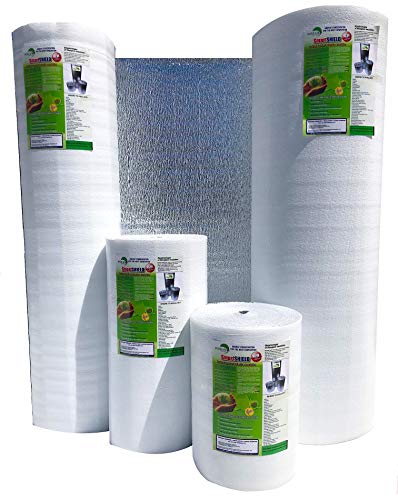
With a thicker 3mm foam core, this SmartSHIELD roll emphasizes a clean white film layer and a highly reflective foil, delivering an R-value capability that complements radiant heat reduction. It is designed to provide insulation and aesthetic appeal without needing additional materials in some installations. The product stresses a premium build with a closed-cell polyethylene foam core, which helps minimize air infiltration and improve durability in environments prone to temperature swings and wind exposure that are typical in pole barns near open fields.
Installation notes include ensuring a stable, smooth surface to maximize the foil’s reflectivity, avoiding sharp folds that could compromise the barrier, and maintaining proper overlap between panels. This option is particularly appealing for users who want a neat, paint-free finish on interior surfaces while maintaining robust thermal performance, especially in hotter climates or spaces with high sun exposure on metal roofs.
BlueTex 2mm PRO Metal Building Insulation

BlueTex offers a two-millimeter EPE foam core with a single-sided aluminum foil facing. The product emphasizes a high reflectivity, with claims of up to 97% radiant heat reflection when installed with an air gap. This makes it a strong candidate for metal buildings where sun exposure on metal surfaces contributes to interior heating. The foil layer also acts as a vapor barrier, helping to minimize condensation risks inside pole barns prone to humidity and moisture from adjacent environments or cooling equipment.
Designed for ease of installation, the 50-inch wide roll provides broad coverage and is suitable for framing schedules that align with standard pole barn construction. The long roll length reduces the number of seams, improving continuity of the barrier. While it excels in radiant reflection, installers should verify air-gap requirements and ensure that all joints are properly sealed to maximize performance in real-world conditions.
Houseables Insulation Roll 3mm Reflective Barrier

Houseables offers a 3mm thick insulation roll with a white backside and a radiant foil facing. Its 95% reflective capability aims to block radiant heat and maintain more stable interior temperatures. The product highlights versatile use across walls, ceilings, floors, and even mobile spaces like RVs, making it adaptable beyond a standard pole barn. The Class A fire-rating noted in the product features adds a level of safety for interior installations within agricultural or workshop settings where compliance and safety are important.
For pole barns, key considerations include ensuring compatibility with existing insulation assemblies and sealing seams for vapor control. The white film on the interior side can contribute to a brighter interior environment, assisting with lighting efficiency. The thickness provides a balanced combination of rigidity and ease of handling for DIY installations or contractor-led projects.
Buying Guide: Key Purchase Considerations For Pole Barn Insulation
- Radiant Barrier Performance: Look for products that reflect a high percentage of radiant energy (typically 95% or higher). This helps reduce roof heat gain and interior cooling loads in sunny climates.
- Core Material And Thickness: Foam cores (2mm–5mm) offer a balance of rigidity, insulation, and moisture resistance. Thicker cores deliver greater R-values but may require careful handling during installation.
- Vapor Barrier Capabilities: A built-in vapor barrier helps prevent condensation on metal surfaces, a common issue in pole barns. Ensure seams are properly sealed to maintain barrier integrity.
- Air Gap And Installation Method: Many reflective systems perform best when installed with an air gap. Verify installation guidelines and framing compatibility for efficient installation on wide-span pole barns.
- Fire Safety And Safety Certifications: Fire-rated options (Class A/1) provide additional safety considerations for indoor spaces and comply with building codes in various regions.
- Durability And Surface Finish: White film and reinforced foils improve durability and aesthetics. Clean, paint-free finishes reduce maintenance and provide a neat interior appearance.
- Coverage And Fit: Assess roll width, length, and overlap to minimize seams and gaps. Wider rolls may reduce installation time on large pole barn projects.
- Climate Relevance: Consider local climate—hot southern regions benefit from stronger radiant barriers, while colder regions may value combined vapor control and insulation thickness for thermal resilience.
- Moisture Management: In humid or wet environments, prioritize products advertised as moisture-resistant or with proven vapor barrier capabilities to mitigate condensation.
When evaluating options, compare the cumulative performance of radiant reflection, vapor control, and ease of installation with your specific pole barn layout, ceiling height, and roof slope. For best results, plan panel layouts to minimize exposed joints and ensure all edges are sealed. If your project includes ducts, vents, or skylights, factor in additional coverage needs and potential air leakage points.