Finding the right laser level tripod can dramatically improve accuracy for tile installation, cabinet alignment, framing, and general leveling tasks. This guide reviews five top options, highlighting height ranges, stability features, and compatibility with line lasers, point lasers, and rotary lasers. Each product is evaluated on extendable height, build quality, and ease of use to help tradespeople and hobbyists choose the best fit for their workflow.
| Product | Brand | Height Range | Key Strength |
|---|---|---|---|
| BOSCH BT 150 Compact Tripod | BOSCH | 22″ – 61″ | Extendable height; adjustable base |
| Alloyman 4×360° Self Leveling Laser Level | Alloyman | Varies with pole; up to 150 ft range | 360° lines; manual & auto modes |
| CIGMAN 3D Laser Level | CIGMAN | Up to 47″ tripod height | Remote control; versatile mounting |
| Huepar LP36A Laser Mount Pole | Huepar | Up to 12.14 ft total | Telescoping, adjustable bracket |
| Motovera Laser Level with Tripod | Motovera | 9″ – 25.6″ | IP54, four brightness modes |
The selections below focus on options that balance portability with stability and broad compatibility. Each entry includes a direct link to its Amazon product page for quick verification and purchase. The list covers compact options ideal for quick setups and more robust poles designed for larger rooms and outdoor projects.
BOSCH BT 150 Compact Tripod With Extendable Height
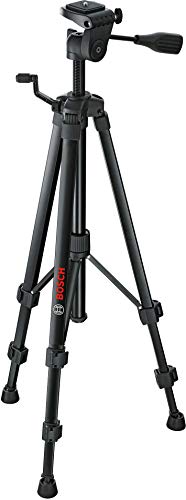
The BOSCH BT 150 is designed for line lasers, point lasers, and laser distance measures, offering an extendable height range from 22 inches to 61 inches. Its adjustable base swivels and tightens for a steady measurement setup, helping reduce drift during alignment tasks. The unit is notably compact and lightweight at about two pounds, making it easy to transport between job sites. This tripod is well-suited for tasks that require quick height changes, such as adjusting kitchen backsplashes or ceiling lines in a single day.
Alloyman 4×360° Self Leveling Laser Level With Tripod

This Alloyman unit combines a 360° cross-line capability with a robust self-leveling feature. The laser emits four lines (two vertical and two horizontal) that provide comprehensive room coverage, while the projector range reaches up to 150 feet. It supports both auto-leveling and manual modes, allowing users to project lines on tilted surfaces when needed. For interior renovations, it’s advantageous for hanging pictures, aligning tiles, or installing cabinetry where precise perpendicularity is essential.
CIGMAN 3D Laser Level With Tripod And Remote

The CIGMAN setup centers on a versatile tripod with a 360° horizontal line and two vertical lines, providing comprehensive reference coverage. The tripod extends up to 47 inches and supports up to 22 pounds, offering sturdy support for various laser configurations. A remote control is included, enabling hands-free operation and convenient adjustments without repositioning the user. The mounting system is flexible, featuring a 1/4-inch thread along with compatible brackets and a rotary base for secure, multi-angle installations.
Huepar LP36A Laser Mount Pole

The Huepar LP36A provides a telescoping pole that reaches up to a total height of 12.14 feet when fully assembled, enabling flexible positioning from floor to ceiling. It includes a multi-function mounting bracket with 1/4″-20 and 5/8″-11 threads, making it compatible with most line and rotary lasers. A height fine-tuning knob offers precise adjustments within a few centimeters, and the built-in bubble level helps ensure lateral accuracy. This option is ideal for ceilings, shelving installations, and multi-room leveling projects where stability and quick height changes matter.
Motovera Laser Level With Tripod

The Motovera model combines a 100-foot Green Cross Line Laser with a compact tripod and a four-brightness mode system. It is IP54 rated for dust and water resistance, making it suitable for challenging work environments. The tripod offers a maximum height of about 25.6 inches and a minimum of 9 inches, providing a flexible setup range for tight corners or high walls. A comfortable carry bag and ergonomic grip add convenience for field use, while the laser’s self-leveling and pulse modes support diverse work conditions.
Buying Guide: Key Purchase Considerations For Laser Level Tripods
- Project scope and height needs: Assess how tall you typically need to reach and whether you will work in cramped spaces or multi-story rooms. Look for extendable heights and stable bases that can handle heavier instruments.
- Mounting compatibility: Ensure the tripod supports common thread standards (1/4″-20 and 5/8″-11) and includes adaptable brackets or mounting heads to fit your laser model.
- Self-leveling versus manual modes: Self-leveling reduces setup time and helps maintain accuracy over uneven surfaces. Manual mode is valuable when working on inclined surfaces or when you need to project lines at a fixed angle.
- Durability and weather resistance: If projects involve dust, water, or outdoor conditions, IP ratings (such as IP54) and rugged construction become important.
- Portability and storage: Lightweight, foldable tripods with carrying bags simplify transport between sites, while still delivering stability for precise measurements.
- Visibility and line density: For bright environments, consider green lasers or high-visibility lines, which provide clearer readings and reduce eye strain during extended use.
- Battery life and accessories: Some sets include remote controls, extra batteries, or carrying cases. Ensure these align with your typical project duration and setup frequency.
- Cost versus value: Higher-end tripods offer greater stability and longer service life, but many mid-range options deliver adequate precision for most residential and light commercial work.
In selecting a laser level tripod, balance the need for height and stability with ease of use and compatibility with your laser tools. For fixed projects like cabinetry alignment or tile layouts, a taller, adjustable setup with a reliable bubble level can save time and increase accuracy. For mobile crews and frequent site changes, a lightweight option with quick setup and a secure mounting system offers substantial practical value. Consider your typical job size, indoor or outdoor conditions, and the range of tools you use most often to guide your choice.