Choosing a durable leather tool belt can improve organization, reduce fatigue, and boost efficiency on any job. This guide highlights five top-rated leather tool belts that blend rugged construction with practical pocket layouts. Each option is built to last under demanding conditions, while offering generous adjustability for all-day comfort. Use the table below to compare core specs at a glance, then dive into detailed profiles to see which belt best matches your trade and workflow.
| Brand | Model | Notable Feature |
|---|---|---|
| DEWALT | DWST550112 | 11 pockets, nubuck top-grain leather |
| STRONGLAD | TBL1 | Six pockets, oil-tanned leather, steel hammer holder |
| Custom Leathercraft | I427X | 12 pockets, suede leather, double front pockets |
| OX Tools | OX-P263609 | Padded suspenders, heavy-duty rivets |
| Klein Tools | 5415 | Basket-weave pattern, double-tongue buckle |
DEWALT Leather Tool Belt DWST550112

DEWALT’s DWST550112 combines durable nubuck top-grain leather with reinforced rivets and double stitching for strength in tough environments. The belt is designed for long days on site, with a sturdy construction that maintains shape under load. It offers two handles for easy transport between locations, which is convenient when moving from shop to job. The belt’s webbing and leather weave together for stability, helping distribute weight evenly to reduce fatigue during extended use.
STRONGLAD Tool Belt TBL1

The STRONGLAD TBL1 focuses on productivity with six roomy pockets and a steel hammer holder that keeps tools within reach. The belt is adjustable to fit waists from 29″ to 46″ and uses a double-roller buckle to secure the fit, reducing movement during work and helping minimize fatigue. This belt suits carpenters, electricians, and construction professionals who need quick access to a broad range of tools without constant rummaging.
Custom Leathercraft I427X Heavy Duty Contractor-Grade Suede Leather Work Apron

The Custom Leathercraft I427X is a suede leather work apron designed for heavy-duty use, featuring wide front pockets for easy access to essential tools. It includes 12 pockets—four main nail and tool pockets plus eight smaller pockets for nails, pencils, and pliers. The belt uses a 2-inch Poly web belt with a secure metal interlocking buckle. This configuration favors professionals who need rapid tool retrieval and a robust belt that can handle frequent bending and kneeling without losing support.
OX Tools Framing Rig with Padded Suspenders
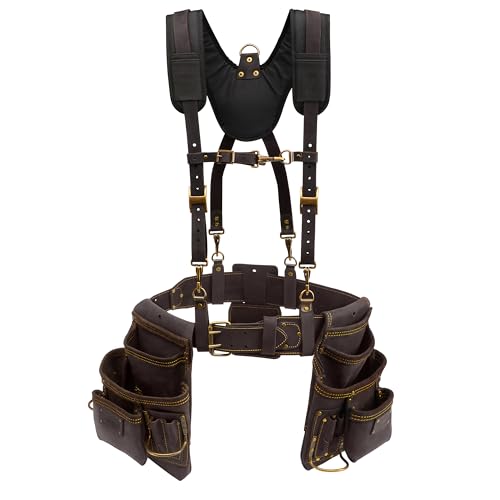
OX Tools emphasizes comfort with padded suspenders and heavy-duty riveted construction. The three-piece setup includes a 3-inch belt, reinforced pouches, and dual hammer holsters, designed to distribute weight and reduce wear on the belt line. The ergonomic design supports prolonged wear, making it a strong option for framers, carpenters, and other trades requiring mobility and reliable tool access.
OX Tools Small/Medium 3″ Wide Full Grain Leather Belt

OX’s P263301 belt uses top-grain oil-tanned leather with heavy-duty brass rivets for durability. The belt offers adjustable sizing from 27″ to 38″ and features a clean, professional look suitable for both fieldwork and workshop use. The emphasis on rivet reinforcement and a secure fit makes it a dependable choice for workers who demand longevity in their everyday carry gear.
Occidental Leather Ranger 3″ Work Belt

The Occidental Leather Ranger uses bridle leather for maximum support and a 2″ wide tongue with a nickel-plated roller buckle. Edge stitching adds durability and a refined appearance. Available in multiple sizes, this belt prioritizes rugged construction and professional aesthetics, making it a staple for serious tradespeople seeking a dependable, USA-made option.
Klein Tools 5415 Tool Belt

The Klein Tools 5415 features strong, heavy-duty leather with a basket-weave embossed pattern and a double-tongue buckle for added security. This belt is designed to hold up under daily use in demanding environments while providing a professional, organized look. Its construction emphasizes both durability and style, appealing to professionals who value longevity and a classic aesthetic.
Buying Guide: Key Considerations for Leather Tool Belts
- Material and durability: Look for full-grain or top-grain leather with reinforced stitching and rivets. Nubuck or suede finishes can offer different grip and flexibility; choose based on climate and work conditions.
- Fit and adjustability: Ensure waist size compatibility with an adjustable belt system. Confirm whether suspenders or a wide belt improves weight distribution for your typical workload.
- Pocket design and layout: Consider the number of pockets, pocket depth, and accessibility. Trades like electricians may prioritize small tool pockets for pliers and meters, while carpenters may want larger pouches for hammers and fasteners.
- Hardware and buckle quality: Durable buckles (steel, roller, or interlocking) reduce wear and ensure a secure fit during movement.
- Weight distribution and comfort: Padded suspenders, wide belts, and ergonomic suspensions help distribute tool weight and minimize fatigue during long shifts.
- Weather and environment: Some belts handle moisture, heat, or chemicals better than others. Consider finishes that resist wear in your typical jobsite conditions.
- Warranty and manufacturer support: A solid warranty indicates confidence in durability and can help with long-term investments in your toolkit.
- Trade-specific features: Electricians may benefit from tool arrangements tailored to meters and pliers, while framers might prioritize nail bags and hammer loops.
- Maintenance: Leather care, conditioning, and occasional belt resizing can extend life. Check care instructions from the manufacturer.
Overall, choosing the best leather tool belt involves balancing durability with practical pocket layouts and comfortable fit. The five options highlighted here cover a range of trades and preferences—from heavy-duty sawing and framing to electrical work—while maintaining a focus on long-lasting materials and functional design. When evaluating belts, simulate your workflow: how you reach tools, how weight shifts as you move, and how easily hardware can be accessed without compromising balance.