Choosing a reliable metal-capable CNC router can impact production speed, precision, and profitability. This guide highlights five proven desktop CNCs that balance all-metal builds, sturdy frames, and GRBL/offline options to suit small business workflows. Each product section covers key strengths, suitable materials, and practical use cases to help you compare performance and value.
Summary of Selected Products
| Product | Brand | Working Area | Main Strength | Offline/GRBL |
|---|---|---|---|---|
| Lunyee 3018 Pro Ultra CNC Machine | LUNYEE | 300 x 180 x 80 mm | All-metal 500W spindle, upgraded linear guides | GRBL offline control |
| Genmitsu CNC Router Machine 4040-PRO | Genmitsu | ~15.7” x 15.7” x 3.1” | Sturdy 4040 frame, comprehensive upgrades | Offline/GRBL capable |
| LUNYEE 3018 PRO MAX CNC Machine | LUNYEE | 300 x 180 x 80 mm | All-metal frame, long Z travel | GRBL offline control |
| FoxAlien Masuter Pro | FoxAlien | Compact size (varies by kit) | All-metal, versatile spindle options | GRBL-compatible |
| Genmitsu 3020-PRO MAX | Genmitsu | 11.8 x 8.1 x 3.1 inches | Upgraded structure, easy setup | Offline ready |
Lunyee 3018 Pro Ultra CNC Machine

The Lunyee 3018 Pro Ultra is an all-metal desktop CNC designed for metal engraving and light milling, expanding capabilities beyond typical wood-only machines. An upgraded 500W spindle and HGH15 linear guides on the X-axis improve rigidity and precision, addressing Z-axis stability issues common in smaller machines. The aluminum work platform with a one-piece design provides flatness and clamping reliability, while included T-track clamps support heavy-duty workholding. This configuration makes it well-suited for probing, drilling, and engraving brass, copper, and aluminum in small batches or prototyping runs.
Key advantages include its robust spindle power for metal tasks and the precision gains from upgraded linear guides. The trade-offs are a compact working area and a learning curve for GRBL offline control if you are migrating from Windows-based or software-controlled workflows. For small businesses needing quick turnaround and reliable metal engraving on small parts, this model offers a balanced entry point with upgrade paths as demand grows.
Genmitsu CNC Router Machine 4040-PRO

The Genmitsu 4040-PRO blends stability and expandability with a reinforced steel HSS frame and dual Y-axis rails. It features an upgraded control box with emergency stop, home button, and a protective metal housing, plus a 32-bit Toshiba TB6S109 driver. This configuration supports a broad range of spindles, including 300W units and laser modules, enhancing metal, acrylic, and wood cutting capabilities. The machine’s 42mm and 52mm spindle mounts expand compatibility, while the enclosed XZ gantry design improves rigidity. It’s a strong choice for small shops that need dependable performance across materials, with easy upgrade paths for higher spindle power or laser integration as business needs evolve.
Considerations include ensuring proper enclosure for dust and daughter boards and planning for ventilation with higher-speed spindles. The 4040-PRO is ideal for shops wanting a compact yet capable machine that can grow with demand without sacrificing accuracy on metal and composite materials.
LUNYEE 3018 PRO MAX CNC Machine

The 3018 PRO MAX is positioned as a robust all-metal CNC with a 500W spindle and enhanced Z-axis travel, delivering a deeper stroke and stronger milling capability than many desktop units. The frame uses reinforced aluminum profiles that resist wear and maintain rigidity under heavier loads. A notable feature is the 80 mm Z-axis travel, which allows deeper pockets and taller workpieces, along with a 12 mm optical axis for precise linear motion. The machine can tackle tough tasks in aluminum, copper, and other metals while maintaining accuracy for small-batch production or prototyping. It’s a strong option for startups that require reliable metal engraving and sign-making within a compact footprint.
Potential drawbacks include the need for careful calibration and stricter maintenance to sustain performance under metal-cutting conditions. The PRO MAX suits users who want a durable desktop system with a straightforward upgrade path and the reassurance of an all-metal build for metal-focused projects.
FoxAlien Masuter Pro
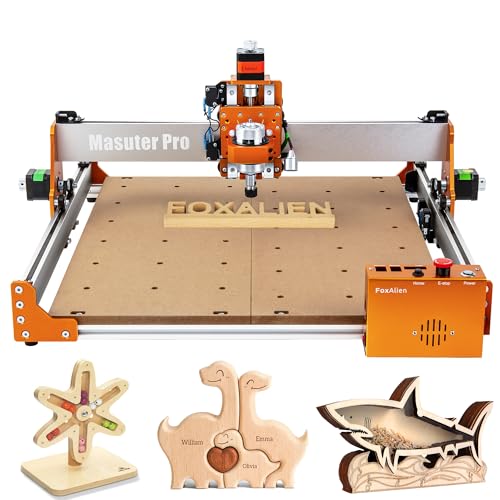
The FoxAlien Masuter Pro features an all-aluminum structure with a robust Z-axis and modular spindle compatibility, designed for reliability in detailed engraving and cutting across wood, acrylic, MDF, and nylon. The controller box is designed to be dust-resistant with accessible emergency stop and home controls, contributing to safer operation in workshop environments. The Masuter Pro supports multiple spindle clamps (52 mm and 65 mm) and offers upgrade options like a 1.5 kW spindle or larger clamps for more demanding carving tasks. This flexibility makes it a practical choice for shops that expect to scale up or shift from hobby-level to more production-oriented work.
Businesses should assess the total cost of upgrade components and the availability of spindles that fit their typical material mix. The Masuter Pro is well-suited for studios that require a capable, upgradeable machine without moving to a large-format CNC, maintaining a balance between footprint and capability.
Genmitsu 3020-PRO MAX

The Genmitsu 3020-PRO MAX builds on a proven 3020 platform with a 4040 Y-axis upgrade and a one-piece aluminum spoilboard with a measurement scale. It includes a redesigned Z-axis assembly and a back-plate-located power supply, optimizing workspace and ease of setup. The machine ships with a pre-assembled XZ gantry and base assembly, along with streamlined wiring and drag chains to minimize assembly time. This model emphasizes user-friendly assembly, reliable alignment, and a footprint suitable for small shops that need a robust, modular CNC that can run metal- or plastic-focused projects with consistent results.
For metal-focused tasks, ensure compatible spindle options and proper cooling. The 3020-PRO MAX is a good fit for teams prioritizing straightforward setup, repeatability, and the potential for offline operation as part of a growing production line.
Buying Guide
- Material capability: Look for all-metal frames, rigid gantries, and high-torque spindles (preferably 500W or higher) when engraving metals or cutting metal composites. Confirm compatibility with brass, copper, aluminum, and similar materials.
- Frame rigidity and movement: Dual Y-axis rails, thick aluminum profiles, and ball-screw Z-axis enhance dimensional accuracy and reduce Z-axis backlash, especially under heavier loads.
- Control options: GRBL offline controllers enable stand-alone operation without a PC, reducing downtime. Ensure software compatibility with popular CAM programs (Easel, Fusion 360, Easel) for efficient workflow.
- Work envelope vs. footprint: Choose a size that fits your workspace while meeting production needs. Smaller desks may suffice for prototypes; larger enclosures enable more substantial parts and multiple fixtures.
- Spindle options and upgrade path: Confirm available spindle sizes (52 mm, 65 mm, or larger) and whether you can upgrade to higher power spindles or add laser modules as your business grows.
- Dust protection and maintenance: Dust-proof enclosures and magnetic covers help maintain belt drive longevity and cleaner operation, particularly for prolonged metal engraving sessions.
- Clamping and spoilboard: A reliable, flat spoilboard with standard hold-downs and T-track clamps accelerates setup and improves material stability during machining.
- Support and parts availability: Access to replacement parts, upgrade kits, and responsive customer support can shorten downtime and ensure you can scale production without interruption.
Overall, selecting a metal-capable desktop CNC for a small business depends on balancing tool rigidity, spindle power, offline capabilities, and upgrade paths. The five machines highlighted above provide a spectrum of entry-level to intermediate capabilities, with all-metal constructions and scalable options to support small-batch production, prototyping, and custom fabrication. When evaluating, align features with your typical materials, desired throughput, and long-term growth plans to maximize return on investment.