For professionals and DIYers alike, choosing the right metal cutting reciprocating saw blade can dramatically improve cutting speed, accuracy, and blade life. This guide highlights five top-performing blades designed to tackle metal ranging from sheet steel to thick pipe and rebar. Each option combines durable bi-metal or carbide constructions with tooth geometry crafted for heavy-duty metal work. Read on to compare key features, materials, and intended uses to help you select the best blade for your project.
| Product | Material Type | Tooth Count | Intended Use | Pack Size |
|---|---|---|---|---|
| TOLESA Heavy Metal Cutting 9″ 14TPI | Bi-Metal with cobalt edge | 14 TPI | Sheet metal, pipes, profiles | 5 pack |
| Caliastro 6″ 18TPI (8 Pack) | Bi-Metal (HSS Teeth on HCS body) | 18 TPI | Metal up to 1/4″ thick | 8 pack |
| DEWALT 6″ 24TPI Bi-Metal (DW4813) – 5 Pack | Bi-Metal | 24 TPI | Sheet metal and general metal cutting | 5 pack |
| BOSCH RM618 6″ 18TPI | Bi-Metal | 18 TPI | Sheet metal, ferrous and non-ferrous | 5 pack |
| GOSHINE 25 Pack 9″ 14/18TPI | M42 cobalt-infused, Bi-Metal | 14/18 TPI | Medium to thick metals | 25 pack |
Note: Each blade is designed for specific metal cutting tasks. When selecting a blade, consider metal type, thickness, and whether you need faster rough cuts or finer, cleaner finishes. The following sections detail five top options that balance durability, speed, and value for common metalworking jobs in American projects.
TOLESA Heavy Metal Cutting 9 Inch Blade

TOLESA’s 9-inch blade features a robust bi-metal construction with a cobalt edge designed to handle sheet metal, pipe, and profile cutting. The blade is optimized for medium to thick sheet metals (0.1–0.3 inches) and solid pipes with diameters under 7 inches. Its 0.9 thin-wall design and set teeth help manage heat buildup, enabling efficient heavy metal cuts. The high-density 14TPI configuration delivers faster cutting and longer blade life in demolition tasks, making it a strong option for durable metal work.
Caliastro 6-Inch 18TPI Bi-Metal Blades (8 Pack)

This Caliastro blade set uses a bi-metal construction with HSS teeth bonded to a high-carbon steel body, delivering a balance of toughness and flexibility. Each 6-inch blade can cut metals up to about 1/4 inch thick, including black pipe, conduit, cold-rolled steel, rebar, and angle iron. The 0.05-inch blade thickness reduces bending while providing precise cuts. The 18TPI tooth count is optimized for fast, clean cuts in a range of metal profiles, making it a versatile choice for professional metal cutting tasks.
DEWALT Reciprocating Saw Blades, 6″ 24TPI (DW4813) – 5 Pack

DEWALT’s 6-inch, 24TPI blades are built for high-speed metal cutting with a durable bi-metal construction for flexibility and long edge life. These blades are designed for sheet metal and other metal cutting applications, offering a balance between aggressive cutting and durability. The American-made manufacturing approach supports consistent performance across demanding tasks and varying metal types, though consumer use often favors precise, clean cuts when working with ferrous and non-ferrous materials.
BOSCH RM618 6-Inch 18TPI Metal Cutting Blades
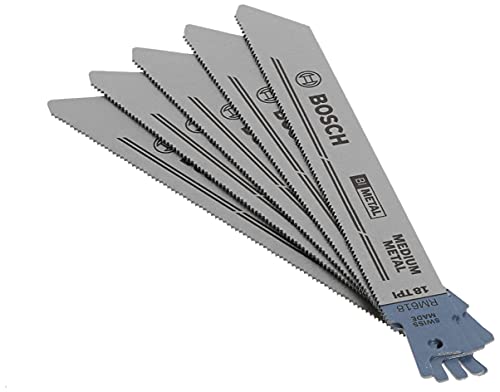
BOSCH RM618 blades emphasize bi-metal construction with reinforced tooth settings and thin-kerf bodies to deliver clean, efficient cuts in metal sheets. The 18TPI configuration is suitable for both ferrous and non-ferrous sheet metals in the 10–16 gauge range. The blades are designed to maintain rigidity and reduce chatter during cutting, contributing to smoother finishes and reduced waste when slicing through metal panels and profiles.
GOSHINE 25 Pack 9″ 14/18TPI Metal Cutting Blades

GOSHINE offers a bulk 25-pack set with 9-inch blades featuring 14/18TPI configurations. Made from M42 high-speed steel with 9% cobalt, these blades prioritize durability and performance in medium to thick metal cutting. The cobalt content enhances heat resistance and edge retention, making them suitable for cutting steel, stainless, rebar, and various alloys. The packaging in a plastic box adds convenience for toolboxes and job sites with high blade turnover.
Buying Guide: Key Considerations For Metal Cutting Reciprocating Saw Blades
When selecting a blade for metal cutting, consider blade material, tooth configuration, thickness, and the intended scope of work. Each factor influences cutting speed, heat buildup, blade life, and cut quality.
- Material and construction: Bi-metal blades pair a flexible alloy steel body with a harder tooth material, offering durability and reduced breakage in heavy metal cuts. Carbide-tipped or cobalt-infused blades extend edge life for demanding alloys, albeit at a higher cost.
- Tooth configuration and density: Higher TPI (teeth per inch) yields finer cuts and smoother finishes but can cut slower in hard metals. Lower TPI delivers aggressive cuts in thicker or tougher materials, with a trade-off in finish quality.
- Blade thickness: Thinner blades reduce resistance and heat buildup, enabling faster cuts in fine work; thicker blades resist deflection and are better for straight, heavy cuts.
- Metal type and thickness: For sheet metal, higher TPI blades often perform best. For thick steel or iron, lower TPI with robust bi-metal or carbide teeth improves longevity and efficiency.
- Shank compatibility: Ensure the blade shank matches your reciprocating saw model. Most blades use universal quick-release or proprietary shanks; verify fit before purchasing.
- Heat management: Designs with set teeth or heat-reducing features help minimize overheating, preserving blade life in continuous demolition or long cuts.
- Pack size and value: For frequent users, larger packs may reduce per-blade cost and ensure you always have a suitable blade on hand for various tasks.
Overall, for general metal cutting, a bi-metal blade with 18–24 TPI is a versatile starting point. For thicker metals or stainless steel, consider carbide-tipped or cobalt-enhanced blades with lower TPI. When precision matters, pair a higher TPI blade with a clean-cut finish and controlled feed rate. Always follow tool manufacturer guidelines for safe operation and blade replacement intervals.