When tackling metal cutting with a sawzall, choosing the right blade is crucial for speed, accuracy, and safety. This guide highlights top blades designed for thick metal, steel, pipe, rebar, and high-strength alloys. Each option balances durability, tooth design, and material compatibility to help you finish demolition and renovation projects efficiently.
| Product | Brand | Teeth Per Inch | Blade Length | Best For |
|---|---|---|---|---|
| DEWALT Reciprocating Saw Blades, Bi-Metal | DEWALT | 24 TPI | 6 inches | General metal cutting, sheet metal, conduit |
| EZARC Carbide Reciprocating Saw Blades | EZARC | 8 TPI | 6 inches | Thick metal, cast iron, alloys |
| TOLESA Heavy Metal Cutting Blades | TOLESA | 14 TPI | 6 or 9 inches | Pipe, rebar, profiles |
| Caliastro 6-Inch Bi-Metal Blades | Caliastro | 18 TPI | 6 inches | Metal up to 1/4 inch |
| BOSCH RM618 Blades | BOSCH | 18 TPI | 6 inches | Sheet metal, ferrous and non-ferrous |
Selections focus on durability, compatibility with common metal materials, and performance across heavy-duty tasks. The list includes bi-metal and carbide-tipped blades to cover a range of metals and thicknesses while maintaining cut quality and blade life.
DEWALT Reciprocating Saw Blades, 6-Inch Bi-Metal, 24 TPI

DEWALT’s 6-inch bi-metal blades combine flexibility with a durable cutting edge, crafted in the U.S. with global materials. The hardened teeth extend blade life and maintain efficiency when cutting metal sheets, channels, and studs. The design offers reliable performance in metal demolition and remodeling scenarios where straight, clean cuts are essential.
EZARC Carbide Reciprocating Saw Blades, R678HM Endurance
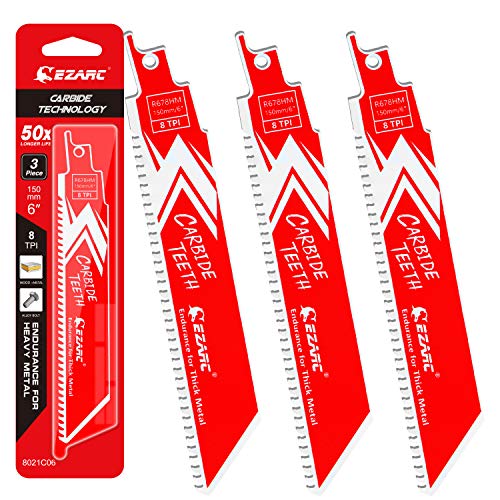
EZARC’s carbide-tipped blades deliver up to 50x longer life than typical bi-metal blades. With 8 TPI, they excel in tough metal applications, including high-alloy steels, stainless steels, rebar, and structural beams. These blades maintain cutting performance where standard bi-metal blades slow down or wear quickly.
TOLESA Heavy Metal Cutting Blades, 9 Inch, 14TPI

TOLESA’s 9-inch blades feature a cobalt edge and 0.9 mm thin wall with 14TPI teeth for fast, efficient cuts through sheet metal, pipes, and profiles. The design emphasizes heat management and cutting efficiency in heavy metal demolition tasks, enabling quicker progress with less tool stress.
Caliastro 6-Inch Bi-Metal Blades, 18TPI

This 8-pack provides professional-grade, 6-inch blades designed for metals up to 1/4 inch thick. The bi-metal construction supports faster cutting and durability in black pipe, conduit, rebar, and angle iron. Teeth are precision-set for smoother cuts and reduced blade wandering.
BOSCH RM618 6-Inch 18T Metal Cutting Blades
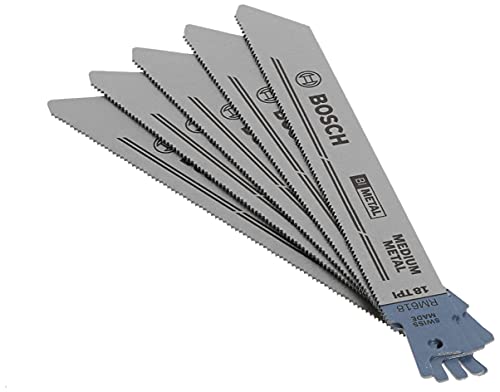
BOSCH RM618 blades offer bi-metal construction with reinforced teeth and a thin-kerf body for precise cuts in sheet metal. The 18 TPI configuration supports cleaner edges in ferrous and non-ferrous metals, suitable for a range of metalworking and renovation tasks.
Additional Options to Consider
Carbide-tipped blades, like the EZARC option above, extend life when cutting tough metals such as stainless steel and high-strength alloys. Higher TPI blades yield smoother finishes on thinner metals, while lower TPI blades cut faster in thicker materials but may wear quicker. Blade length typically ranges from 6 to 9 inches; match length to your tool’s stroke and the material’s thickness.
Safety And Maintenance Considerations
Always wear eye protection, gloves, and hearing protection when cutting metal. Ensure the blade is properly seated and secured before operation. Allow blades to cool after heavy cuts to prevent warping or binding. Clean off metal shavings and inspect teeth for damage before reuse to maintain efficiency and safety.
Buying Guide: Key Purchase Considerations
- Material compatibility: For ferrous metals like steel and rebar, carbide-tipped blades or hardening bi-metal blades perform best in demanding conditions.
- Blade teeth per inch (TPI): Higher TPI (18–24) yields cleaner cuts in sheet metal; lower TPI (8–14) cuts faster through thicker or tougher metals but may roughen edges.
- Tooth design: Set teeth and blade thickness influence heat buildup, debris clearance, and cutting speed. Thinner blades offer less resistance but may bend under heavy loads.
- Blade length: Longer blades reduce chatter in deep cuts; shorter blades provide more control for precise, shallow cuts.
- Construction quality: Bi-metal blades balance flexibility and edge durability; carbide blades excel in extreme metal cutting but can be pricier.
- Application scope: For recurring metal demolition, carbide-tipped or heavy-duty bi-metal blades deliver longer life and fewer blade changes.
- Brand and compatibility: While reputable brands offer consistent performance, verify that the blade fits your reciprocating saw’s arbor size and shank style.
In summary, selecting the right metal-cutting blade depends on material type, thickness, and project demands. For general metal cutting with dependable life, a high-quality bi-metal blade is often sufficient. For demanding metals or extended use, carbide-tipped blades provide superior longevity and performance across challenging applications.