Finding the right metal mini lathe for hobby projects means balancing power, precision, and ease of use. The models below represent a selection of compact, benchtop lathes designed for turning, threading, drilling, and more on small-scale projects. Each option offers distinct advantages, from variable speeds and durable gear systems to user-friendly controls and helpful safety features. Read on to compare five strong contenders and learn what to consider when choosing your best metal mini lathe.
| Product | Brand | Key Feature |
|---|---|---|
| VEVOR 7×14 Mini Lathe | VEVOR | 550W motor, 50–2500 RPM, nylon gears |
| Mini Metal Lathe 7″x14″ | Generic | 0.01mm spindle accuracy, LED display |
| SHENGJINSH 8.7″x29.5″ | SHENGJINSH | 1100W brushless motor, 0-3000 RPM |
| INTSUPERMAI 8″×16″ | INTSUPERMAI | 1100W, imperial/metric compatibility, gearless |
| Beacon Pet Mini Lathe | Beacon Pet | 12V safe DC, multi-purpose for wood/plastic/soft metals |
VEVOR 7×14 Mini Lathe With Lamp

The VEVOR mini lathe combines solid construction with a 550W motor and a wide speed range from 50 to 2500 RPM. It features nylon gears for wear resistance and a full-length splash guard for operator protection. The machine accepts a 0.82″ spindle bore and includes a 3-jaw chuck for secure workholding, plus a free lamp to illuminate small turning operations. This model supports manual control as well as adjustable auto feed, with an emergency stop button providing an added safety measure.
Mini Metal Lathe 7×14 Upgraded
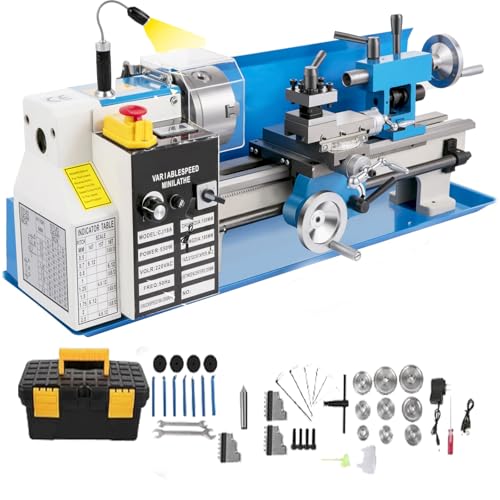
This upgraded model emphasizes high precision with a spindle accuracy better than 0.01 mm and a 4″ 3-jaw self-centering chuck for stable material grip. It operates up to 2500 RPM with a clear digital speed readout and supports reversible threading and manual or automatic feed. A turret-based tool setup enables internal, face, and bevel cuts, making it versatile for small metalworking projects in a compact benchtop footprint.
SHENGJINSH 8.7×29.5″ Metal Lathe
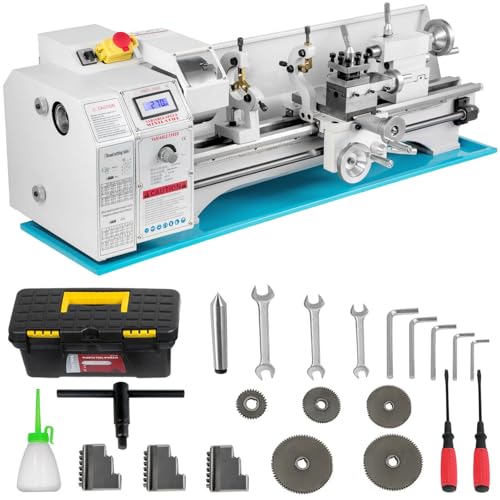
Equipped with a powerful 1100W brushless motor, this lathe provides continuous variable speed from 0 to 3000 RPM, with a low-gear option for slower threading and finishing tasks. The large swing over bed of 8.7″ and swing over cross slide of 29.5″ expands capacity for larger small-workpieces while maintaining a benchtop footprint. A digital speed display helps maintain consistent settings, and an emergency stop button enhances operator safety.
INTSUPERMAI 8×16″ Gearless Lathe

INTSUPERMAI delivers a gearless design paired with a 1100W motor and two-speed range, simplifying operation by minimizing belt and gear changes. Center length reaches 15.75″ with an 8.27″ swing over bed, offering versatility for both metric and imperial threading and turning. The digital panel shows real-time speed, helping users manage precise cuts while maintaining a compact form factor and decent torque for hobby projects.
Beacon Pet Mini Metal Lathe

The Beacon Pet mini lathe is designed as a multi-purpose tool for beginners and students. It supports turning, drilling, boring, and threading on wood, plastic, and soft metals, using a 12V safe DC transformer. The build emphasizes sturdy metal components for improved precision and longevity. Users should note it is not suited for harder alloys, and slower feed rates are recommended for non-wood materials to maintain control and surface finish.
Buying Guide: Key Considerations for Selecting a Metal Mini Lathe
- Workpiece size and swing: Choose a model whose swing over bed and center distance fit the typical dimensions of your projects. Larger swings enable bigger parts but require more bench space.
- Power and speed range: A higher wattage motor and a wide RPM range improve capability for fastening, threading, and finishing different materials. Look for variable speed with clear feedback displays.
- Spindle and chuck quality: A precise spindle with durable bearings and a reliable chuck (3-jaw or 4-jaw) ensures concentric turning and easier workholding. Self-centering chucks simplify setup for cylindrical parts.
- Safety features: Essential features include an emergency stop, splash guards, and protective housing. A well-lit work area, such as built-in lamps, helps precision and reduces errors.
- Gear design vs. gearless: Gearless or belt-driven systems reduce maintenance and noise but may have limited gear options. Consider your tolerance for maintenance and noise when choosing.
- Material compatibility: Confirm whether the lathe can handle the materials you plan to work with (wood, plastic, soft metals, or harder alloys). Some models are optimized for non-ferrous work whereas others allow basic steel threading.
- Accessory ecosystem: Availability of chucks, toolposts, inserts, and teaching accessories affects long-term utility. A model with a broad accessory set can expand capabilities quickly.
- Ease of use for beginners: Look for features like digital speed readouts, intuitive control panels, and straightforward threading options if you are new to metalworking.
- Maintenance and parts availability: Readily available replacement parts and service support are important for ongoing performance and longevity.
- Budget and space: Benchtop models balance capability and footprint. Align price with expected workload and space constraints to maximize value.
In summary, the featured models provide a range of capabilities—from compact, beginner-friendly units to more robust, high-torque benchtop lathes. When selecting, prioritize workpiece size, speed control, spindle quality, and safety features. Consider how you’ll use the lathe most often and which accessories will support those tasks to choose the best fit for your workshop.