For hobbyists and small-scale woodworkers, a reliable mini wood lathe makes it possible to craft pens, bowls, spindles, and other intricate pieces with consistency. This guide highlights five standout mini lathes that balance power, control, and compact design. Each model offers variable speeds, solid housings, and easy setup for beginners and more experienced woodworkers alike.
Summary of selected products
| Product | Brand | Key Feature | Top Speed Range |
|---|---|---|---|
| WEN Mini Benchtop Lathe LA3421 | WEN | 8″ swing; 13″ centers; soft-start motor | ~3,200 RPM |
| WEN LA3424 12″ x 18″ Lathe | WEN | Large workpiece capacity; five speeds; faceplate | ~3,400 RPM |
| CXRCY 8″ x 12″ Mini Lathe | CXRCY | Infinitely adjustable speed; safety goggles included | 750–3200 RPM |
| UOKRR 10″ x 18″ Wood Lathe | UOKRR | 5 speeds; long bed; high torque | 500–3200 RPM |
| JET JWL-1015VS | Jet | Three variable ranges; indexing; stable bed | 200–3600 RPM |
WEN Mini Benchtop Lathe LA3421 — 8″ Swing

The WEN LA3421 is designed for compact turning tasks such as pens, bowls, cups, and chess pieces. It features an 8-inch swing over the bed with a 13-inch distance between centers, making it suited for small-to-medium projects. The soft-start 3.2-amp motor helps protect the lathe and the user by gradually ramping power on startup, reducing vibration and start-up shock.
Operational notes: The included soft-start and steady RPM control support smoother finishes on delicate stock. The 8″ swing capacity limits very large workpieces but targets precision for detail work. Ideal for hobbyists who want a reliable, beginner-friendly machine that can grow with projects over time.
WEN LA3424 4.5-Amp 12″ x 18″ Lathe

Designed for larger mini-turned pieces, the LA3424 supports workpieces up to 18 inches long and 12 inches in diameter. It offers five speed settings: 520, 900, 1400, 2150, and 3400 RPM, enabling a broad range of materials and techniques. A 3-1/8 inch faceplate expands capabilities for bowls, cups, and other non-spindle workpieces. This model suits users who need more room than a compact lathe provides while staying on a bench.
Emphasis here is on versatility: the wider turning envelope allows more ambitious projects without moving to a full-size floor lathe. Safety-minded users benefit from the sturdy construction and straightforward speed changes.
CXRCY 8″ x 12″ Mini Benchtop Lathe

The CXRCY lathe offers an infinitely variable speed range from 750 to 3200 RPM, which helps users dial in the cut for different woods and finishes. With 12″ distance between centers and 8″ swing over bed, it supports a variety of medium-to-small workpieces. The tailstock is adjustable, enabling precise alignment for boring and turning tasks. A safety emphasis is present with recommended eye protection when operating this machine.
This model balances capacity with compactness and is often chosen by woodturners seeking a flexible, entry-to-mid-level machine that can handle bowls, spindles, and vases with good control.
FesmTek Mini Lathe — Desktop Multi-Purpose Lathe

The FesmTek mini lathe is a multi-purpose desktop kit aimed at beginners and hobbyists. It supports turning, cutting, grinding, and polishing with a 96W motor and seven-speed regulation. The included professional lathe tools and hardened steel components enhance durability for ongoing use. The compact footprint makes it a practical starter unit for small-scale projects and learning the basics of wood turning and finishing.
Prospective buyers should consider the balance between speed range, tool quality, and the level of vibration control when evaluating this model for regular hobbyist use.
UOKRR 10″ x 18″ Wood Lathe

The UOKRR lathe expands the mini-lathe capabilities with a longer bed and a 10″ swing over bed, supporting workpieces up to 18 inches long. Five speeds (500, 750, 1150, 1800, 3200 RPM) provide flexibility for different woods and finishes. A robust copper motor delivers steady torque, while the detachable guard and protective panel help manage debris and improve safety. This model is suitable for users who want more bed length without stepping into larger professional machines.
Other notable features include a 3/4-inch faceplate compatibility and straightforward maintenance, making it a practical option for mid-sized mini-lathe projects.
JET JWL-1015VS — Variable-Speed Wood Lathe
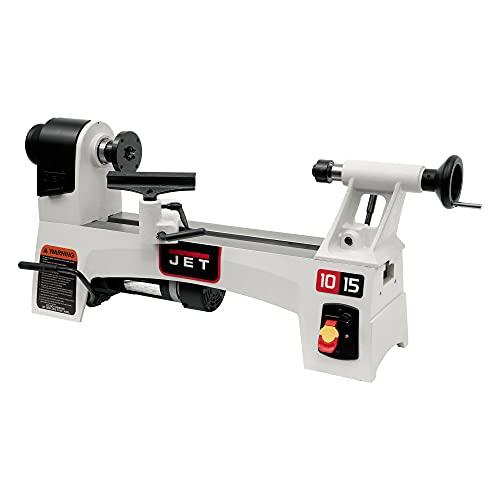
The JET JWL-1015VS is designed for precise turning with three variable speed ranges: 200–1050, 300–1750, and 600–3600 RPM. This setup accommodates a wide variety of materials and project types. Its wider bed ways contribute to increased stability, especially on longer turnings, while the built-in indexing features enable repeatable, accurate work. This model sits at the higher end of compact lathes and is often chosen by users prioritizing stability and precision for more ambitious mini-turning projects.
Buying Guide: Key Purchase Considerations
When selecting a mini wood lathe, consider these factors to match your projects and workshop setup:
- Turning capacity: Swing over bed and distance between centers determine the largest piece you can work on. If you plan bowls or deeper vessels, prioritize larger swings and longer centers.
- Speed options: Variable speeds or multiple ranges help handle different woods and finishes. Infinitely variable speed offers fine control, while fixed ranges simplify setup.
- Motor power and torque: A higher wattage or amperage generally yields better performance on hardwoods and longer turning sessions. Look for solid, low-vibration designs with soft-start optional.
- Bed stability and alignment: A sturdy bed reduces chatter and improves finish quality. Wider beds and well-made tailstock adjustments contribute to accuracy.
- Accessories and safety: Included faceplates, chucks, guards, and eye protection influence versatility and safety. Check for compatibility with common chucks and accessories.
- Noise and vibration: Sub-65 dB operation is preferable for quiet workshops. Proper mounting and damping help minimize vibration for smoother turning.
- Setup and maintenance: Ease of assembly, straightforward belt changes, and accessible replacement parts matter for ongoing use and longevity.
- Target projects: Pens, bowls, spindles, and small decorative items each benefit from different combinations of speed, torque, and capacity. Align the model with your typical output.
In summary, the right mini lathe balances capacity, speed control, and stability with your project goals. For beginners, models with clear safety features, soft-start, and easy adjustments are ideal. For more advanced hobbyists, larger swings, greater center distance, and broader speed ranges offer more versatility for diverse turning tasks.