The right miter saw blade can dramatically improve cut quality, reduce chipping, and increase finish consistency. This guide highlights top picks that balance tooth count, kerf width, and carbide quality for American workshop standards. Each product section includes key features and practical applications to help you choose the right blade for crosscuts, framing, and fine finish work.
Product Summary
| Product | Brand | Diameter | Teeth | Link |
|---|---|---|---|---|
| DEWALT DW3128P5 | DEWALT | 12 in | 80T / 32T | Amazon |
| DWA112CMB | DEWALT | 12 in | 40T / 60T | Amazon |
| LU91R012 | Freud | 12 in | 72T | Amazon |
| BL1280 | WEN | 12 in | 80T | Amazon |
| BL1080 | WEN | 10 in | 80T | Amazon |
DEWALT 12-Inch 80-Tooth Crosscut Blade (DW3128P5)
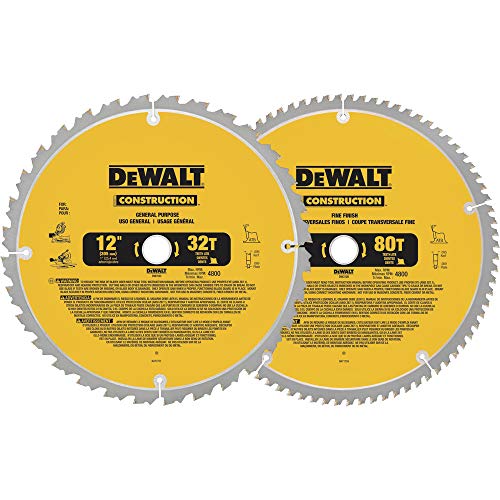
Designed for crosscut precision, this 12-inch DEWALT blade features 80 teeth for smooth, clean cuts and a second blade with 32 teeth for versatile switchouts. The carbide tips deliver long life and reduced heat in woodwork, making it a strong option for finishing and trim work. The combination pack is practical for shops that require both fast rough cuts and refined finishes. Ideal for plywood, hardwoods, and softwoods when accuracy and edge quality are paramount.
DEWALT 12-Inch 40-Tooth & 60-Tooth Fine Finish Blade (DWA112CMB)

This DEWALT combo pack is built for accuracy and finish quality. The 40-tooth blade and 60-tooth blade provide flexibility for different tasks, while the patented body slot design minimizes vibration for stable cutting. Optimized tooth geometry enhances precision and reduces tear-out, making it suitable for cabinetmaking, trim, and fine carpentry where smooth edges matter most.
Freud LU91R012 Thin Kerf Miter Saw Blade

Freud’s LU91R012 uses a TiCo Hi-Density Carbide blend and a negative hook angle to reduce aggression while maintaining cutting power. The thin kerf design requires less horsepower, enabling smoother starts and cleaner finishes with less waste. This blade is well-suited for fine crosscuts in hardwoods and plywood, delivering consistent edge quality for professional results.
WEN BL1280 12-Inch 80-Tooth Fine-Finish Blade
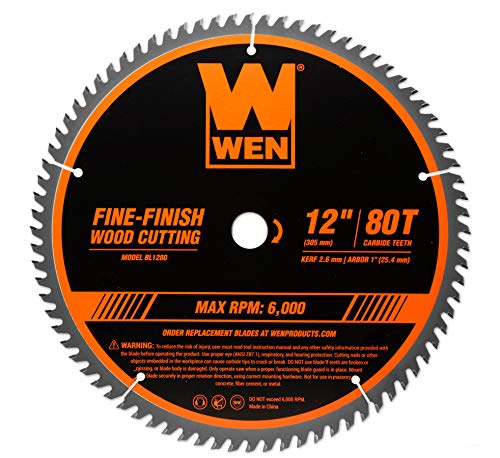
The WEN BL1280 is a 12-inch, 80-tooth blade designed for fine finishes on both hard and softwoods. A large number of teeth reduces tear-out and produces very smooth crosscuts, especially on cabinet and furniture components. The blade’s robust carbide tips and stable kerf help maintain accuracy across extended cuts in workshop settings.
WEN BL1080 10-Inch 80-Tooth Ultra-Fine Finish Blade

With an 80-tooth count and a 10-inch diameter, the WEN BL1080 targets ultra-fine finishes for thinner stock or tight-corner cuts. The ultra-thin kerf minimizes material removal and reduces load on the saw, helping to achieve precise, clean edges in moldings and panel work. This blade is a favorable option for detailed trim and cabinetry tasks where finish quality is critical.
WEN BL1280 vs BL1080: A Quick Comparison
The 12-inch BL1280 provides higher tooth count for finer finishes on larger stock, ideal for cabinet doors and furniture boards. The 10-inch BL1080 focuses on ultra-fine finishes with a smaller diameter, suitable for detailed trim and fitments where maneuverability is essential. Both blades share thin kerf design and carbide tips, but diameter and tooth distribution influence suitability for different saws and stock thicknesses. For most home shops, choosing between 10-inch and 12-inch blades depends on your saw compatibility and typical project profiles.
Buying Guide
Key purchase considerations help buyers match blades to tasks and tools:
- Tooth count and configuration: Higher tooth counts (60–80T) yield smoother finishes on finishes and ply; lower tooth counts (40T–60T) cut faster in framing and rough cuts with acceptable edge quality.
- Kerf width: Thin kerf blades remove less material and require less power, enabling smoother starts and reduced saw load, but some users may prefer standard kerf for durability in challenging woods.
- Carbide quality: Premium TiCo or similar carbide blends retain sharpness longer and resist chipping in hardwoods and reclaimed lumber.
- Blade diameter and arbor compatibility: Ensure the blade diameter matches your saw’s capacity (10″ vs 12″) and that the arbor hole and shank dimensions fit your tool.
- Vibration and finish quality: Blades with optimized body slot designs minimize vibration for smoother cuts, especially in long crosscuts and precision trim work.
- Material suitability: Some blades are optimized for plywood, melamine, or hardwoods. Consider the common materials in your shop when selecting a blade.
- Maintenance: Keep blades sharp and clean; store them properly to extend life and preserve edge geometry for consistent results.
In summary, for crosscutting and fine finishes, blades with high tooth counts and quality carbide deliver the cleanest edges. Packages offering multiple tooth configurations provide flexibility for mixed projects, while thin-kerf blades improve efficiency on compatible saws. Always verify compatibility with your miter saw before purchasing to maximize performance and safety.