Motion sensor light switches offer a blend of convenience, safety, and energy efficiency for homes and workplaces. The right switch automatically illuminates spaces like bathrooms, hallways, garages, and closets when you enter, then turns lights off to conserve energy. This guide highlights five top-rated options, comparing installation, sensor ranges, and modes to help you choose the best fit for single-pole circuits and practical, daily use.
| Product | Brand | Key Benefit |
|---|---|---|
| Lutron Maestro Motion Sensor Switch | Lutron | Reliable auto-on/off with vacancy/occupancy sensing |
| TOPGREENER TDOS5-HL-W-2PCS | TOPGREENER | No neutral required; adjustable modes and delays |
| Leviton DOS05-1LZ | Leviton | Humidity sensing and flexible usage in baths and vents |
| Leviton DOS02-LW | Leviton | Wide coverage with no neutral option |
| TOPGREENER TSOS5-W 2-Pack | TOPGREENER | Two-pack with in-wall sensor and 180° field of view |
Lutron Maestro Motion Sensor Switch

The Lutron MS-OPS2-WH is designed for single-pole installations in areas such as bathrooms, garages, laundry rooms, or closets. It automatically turns lights on when motion is detected and off when the room is empty, helping reduce energy waste. The switch emphasizes occupancy sensing with a simple, low-profile design that blends into most decors. It supports common bulbs and emphasizes reliability, making it a popular choice for busy homes that want automated operation without complex wiring. Installation is straightforward for standard single-pole circuits.
Key features include an automatic on/off function, occupancy-based control, and a focus on ease-of-use for tasks that require light but not manual attention. This model is especially noted for quietly saving energy by ensuring lights aren’t left on after occupants leave. It is a solid option for a bathroom or utility area where hands-free lighting enhances safety and convenience.
Pros: dependable sensor performance, straightforward wiring, useful in spaces with frequent entry and exit. Cons: not ideal for multi-location switching; requires proper mounting to ensure consistent sensing. Overall, a reliable upgrade for traditional switches where ease of use and energy savings are priorities.
TOPGREENER TDOS5-HL-W-2PCS

The TOPGREENER TDOS5-HL-W-2PCS offers a no-neutral wiring option, single-pole operation, and two-pack value. It features occupancy and vacancy modes, allowing Auto ON, Auto OFF behavior or a manual override. Adjustable time delay settings provide flexibility for different spaces, such as restrooms or hallways, where the desired light duration after movement varies. The wall plate is included, simplifying installation and ensuring a clean, integrated look in most standard wall boxes.
With a universal wiring design, this switch supports interchangeable hot and load wires to ease installation, especially for retrofit projects. It’s especially useful in rooms where occupants frequently move in and out, providing hands-free lighting while minimizing energy use. The device is designed to respect user preferences with its OCC/VAC mode switch under the faceplate for quick mode changes.
Considerations include ensuring a suitable ground connection and confirming that the space does not require a neutral wire. This model excels in environments where wiring simplicity and immediate sensor response are valued, particularly in non-neutral retrofit projects.
Leviton Motion Sensor Light Switch (DOS05-1LZ)

The Leviton DOS05-1LZ provides flexible control with auto-on/auto-off capabilities and manual-on options. It’s designed for situations where humidity or continuous presence detection is beneficial, such as bathrooms or ventilation-controlled spaces. The sensor capability helps automate lights in the user’s absence, reducing energy consumption while ensuring lighting is available when needed. This device offers a straightforward install for single-pole configurations with no neutral required, simplifying retrofits in older homes.
Key advantages include automatic humidity sensing for bathrooms, dependable motion detection, and a compact form factor that fits in standard wall boxes. It allows for easy operation in rooms where hands-free control is a priority. Potential drawbacks involve sensitivity to small movements in bright daylight or overly large spaces where motion may not be detected consistently. Overall, it is a practical option for households seeking reliable, simple automation with minimal wiring.
Leviton DOS02-LW

The Leviton DOS02-LW is designed to offer a larger sensor coverage and flexible operation without requiring a neutral wire. With a 180-degree field of view and expansive detection range, this switch is suited for hallways, entryways, and larger rooms where movement can occur at various angles. It supports multiple load types through its voltage and wattage handling, including LED/CFL and incandescent lighting, and it’s adaptable for both single-pole installations and three-way configurations in some models.
Pros include broad coverage and compatibility with a variety of lighting types. The lack of a neutral wire can simplify installations in older homes, reducing wiring complexity. Cons to consider include a potentially higher price for some configurations and the need to verify compatibility with existing dimmers or smart home hubs. For users seeking wide-area motion sensing and flexible wiring, this Leviton model is a solid choice.
TOPGREENER TSOS5-W In-Wall Sensor (2-Pack)

The TOPGREENER TSOS5-W is a 2-pack single-pole occupancy sensor switch designed for straightforward installation in standard wall boxes. It features a 180-degree field of view, adjustable range and sensitivity, and a clear auto-activation mode for occupancy. The device supports override modes (On/Off) and is UL-listed, making it a dependable option for kitchens, corridors, or utility rooms where consistent sensing improves usability and energy efficiency. It requires a neutral wire, which may affect retrofit compatibility in older electrical setups.
Key strengths include adjustable sensitivity and a wide sensing area, enabling reliable operation in moderate to large spaces. The inclusion of two switches in one package provides value for multi-coverage installations or a broader home automation setup. Considerations include ensuring a neutral wire is available and confirming compatibility with existing switches and wall plates.
ELEGRP Single Pole Occupancy Motion Sensor Switch
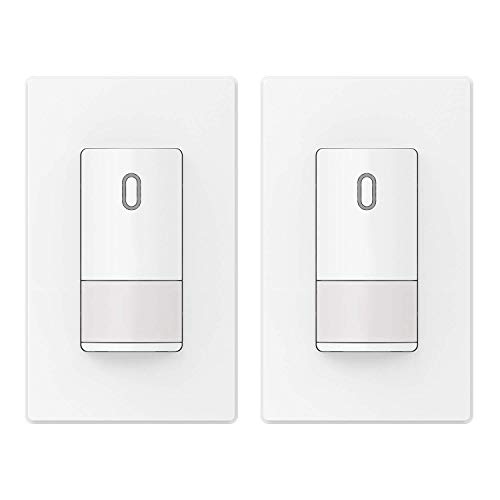
The ELEGRP PIR infrared motion-activated switch is designed for CFL, LED, and incandescent compatibility with a grounding requirement for operation. It provides a 120-degree adjustable sensing area and supports a broad load range, making it suitable for bathrooms, closets, and other interior spaces. The unit emphasizes grounding as essential to function, which can influence installation decisions in older properties or places with limited wiring access. The device’s universal compatibility and straightforward setup make it a practical option for retrofit projects seeking reliable motion-triggered lighting.
Considerations include ensuring a proper ground and compatibility with the chosen light types. Its PIR sensor provides dependable presence detection, which helps in reducing energy use. A potential drawback is the necessity of a ground wire, which may require an electrician in some installations. Overall, it’s a reliable, budget-conscious option for modernizing lighting control in smaller rooms.
Kasa Smart WiFi Motion Sensor Switch KS200M

The Kasa KS200M combines motion sensing with Wi-Fi connectivity, enabling control via Alexa, Google Assistant, or the Kasa app. It requires a neutral wire and 2.4 GHz Wi-Fi for operation, making it convenient for smart home enthusiasts who want automation, schedules, and away-mode features. Daylight detection helps prevent unnecessary lighting during daylight hours, while smart modes tailor responses to user routines, reducing energy waste in spaces such as bedrooms, hallways, and restrooms.
Advantages include hands-free control, daylight awareness, and cloud-based automation that integrates with broader smart home ecosystems. Limitations involve the need for a supported network and potential reliance on cloud services for full functionality. For users seeking a connected experience with automation scenarios and voice control, this switch offers a compelling balance of convenience and efficiency.
Buying Guide: Key Purchase Considerations
- Wired configuration: Determine if you need a neutral wire option. Some switches work without a neutral, simplifying retrofits in older homes, while others rely on a neutral connection for stable operation.
- Sensor type and coverage: Evaluate the sensor’s field of view (typically 120° to 180°) and the detection range. Larger spaces benefit from wider coverage to avoid missed activations.
- Modes and timing: Decide between occupancy (Auto ON, Auto OFF) and Vacancy (manual ON, Auto OFF) modes. Look for adjustable delay times to suit room usage.
- Compatibility: Check wattage ratings (LED, CFL, incandescent) and whether the switch supports 3-way or single-pole configurations. Ensure it integrates with existing dimmers or smart hubs if needed.
- Installation considerations: Some models include wall plates and are simple retrofit options; others require professional wiring—especially if grounding or neutral upgrades are necessary.
- Smart features: For Wi-Fi or hub-based models, weigh the benefits of daylight sensing, schedules, and remote control against potential privacy and network reliability concerns.
- Energy savings vs. convenience: Balance sensor sensitivity with practical use. Highly sensitive sensors may trigger lights by minor movement, while less sensitive setups might miss late-night activity.
- Durability and safety: Choose UL-listed or FCC-listed models for reliability and safety, especially in bathrooms and garages where moisture exposure may occur.
In selecting a motion sensor switch, prioritize the space’s layout, wiring constraints, and desired level of automation. For bathrooms and utility areas, humidity-aware or occupancy-based models provide strong energy savings. In hallways or large rooms, wider sensor coverage and adjustable delay times help maintain seamless lighting without constant manual input. If you prefer smart-home integration, models with Wi‑Fi and voice control offer advanced automation options and remote monitoring. By weighing these factors, you can choose a motion sensor switch that delivers consistent lighting, improved safety, and meaningful energy reductions across your home or workspace.