Choosing a passive welding lens involves balancing visibility, eye protection, and long-term comfort. This guide highlights five top passive lenses—from ultra-clear 2×4 variants to high-shade options—so you can pick a replacement lens that reduces eye strain while delivering a sharp arc view. Each product panel includes key features to help you compare performance, durability, and fit for extended welding sessions.
| Product | Brand | Key Features |
|---|---|---|
| KP5268-1 2x4C | Lincoln Electric | 4C Lens Technology; broader color range; reduced arc flare; lower eye strain |
| 9100, 06-0005-P13 | 3M | Passive shade 13; replacement lens |
| Magnification Welding Lens | YESWELDER | 2.0 magnification; standard 3.54″ x 4.25″; lightweight |
| 9100, 06-0000-P10 | 3M | Passive shade 10; full lens assembly; cost-effective |
| MP-10 Helmet Lens | Miller | Shade 10; large 4×4 viewing area; lightweight nylon helmet |
Note: The listed products cover a range of needs, from replacement lenses for existing helmets to complete passive-lens assemblies. They are chosen to illustrate visibility, shade variety, and compatibility with common welding helmets used in industrial and hobby settings.
Lincoln Electric KP5268-1 2x4C Passive Lens

The Lincoln Electric KP5268-1 lens uses 4C Lens Technology to broaden color range in both light and dark states. This design aims to enhance the clarity of the base material, arc, and puddle, while reducing yellow/orange flare for a crisper view. Users may experience reduced eye strain during long welding runs thanks to improved arc visibility and a more stable image. The lens is a convenient passive option, compatible with common helmets that accept 2x4C filters, and is marketed as providing a clearer, more accurate color representation during welding.
3M Speedglas Lens 9100, 06-0005-P13

This product is a replacement passive lens, shade 13, designed for Speedglas-adaptable helmets. Being a replacement lens, it does not include a filter adaptor. Shade 13 affords strong protection for high-current welding or bright arc environments where maximum protection is desired, while keeping a straightforward, non-automated solution for long-duration welds. Users seeking a high-contrast view with robust protection may prefer this option for heavy-duty tasks.
YESWELDER Magnification Weld Lens (2-Pack)
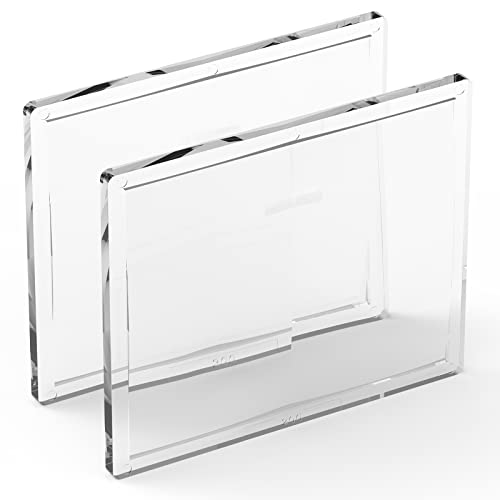
YESWELDER offers a 2.0 magnification lens set, sized 3.54″ x 4.25″, compatible with most welding helmets. This option adds cheater magnification to the user’s view, aiding in detailed work and inspection without relying on auto-darkening features. The lenses are marketed as lightweight, allowing comfortable wear over long periods. For hobbyists or professionals who need precise, close-up visibility, these cheater lenses can be a practical upgrade without changing the helmet itself.
Ridge Products 2×4.25 Clear Welding Lenses (10 Pack)

This 10-pack of 2×4.25 clear welding lenses emphasizes durability and eye protection. The lenses are designed to fit standard helmets and maintain a clear, warp-free viewing area. Ridge Products highlights that lenses should be changed when dirty to avoid eye strain and sensor interference in auto-darkening systems. The pack format is suitable for teams or shops needing bulk replacements, offering a cost-effective approach to maintaining clear visibility across multiple helmets.
Buying Guide: Key Purchase Considerations
When selecting a passive welding lens, consider the following factors to ensure you get the right balance of visibility, protection, and durability:
- Shade level: Higher shade numbers protect against intense arcs; lower shades may be sufficient for lighter welding. Choose a shade that matches your typical welding current and process.
- Lens material and coating: Look for clear viewing surfaces that resist warping and scratching. Some lenses offer color-enhanced technology to reduce glare and improve puddle visibility.
- Compatibility: Verify that the lens fits your helmet type and slot size (commonly 2×4 or 2×4.25 in). Replacement lenses save money if they’re compatible with your current helmet.
- Replacement vs. assembly: Replacement lenses are ideal for existing helmets; full assemblies simplify upgrades but may require more investment.
- Eye protection and comfort: Consider whether the lens reduces eye strain during extended sessions. Some lenses minimize arc flare and improve contrast, contributing to user comfort over time.
- Durability and maintenance: Lenses should withstand frequent changes and cleaning without degrading clarity. Dirt and smudges can impact visibility and sensor performance in auto-darkening systems if used in hybrid configurations.
- Cost and quantity: For teams or frequent replacements, bulk packs offer savings. Individual lenses are preferable for single-helmet setups or quick swaps.
Choosing a passive welding lens involves aligning your protection needs with practical use cases—from long continuous welds to precise magnified work. The products above demonstrate a spectrum of visibility, shade options, and replacement options to support safer, more efficient welding workflows.