For homeowners and garden enthusiasts, a reliable pole pruning saw is essential for trimming tall branches without ladders. The following selections cover extendable manual saws and hybrid tools that blend efficiency, durability, and user comfort. Each entry highlights reach, blade quality, locking systems, and overall value to help you compare options at a glance.
Summary of Selected Products
| Product | Brand | Approximate Reach | Blade Type | Key Benefit |
|---|---|---|---|---|
| VEVOR Manual Pole Saw | VEVOR | 7.3 ft to 27 ft | Carbon steel with teflon coating | High reach with double-lock design |
| Fiskars 2-in-1 Extendable Pruner | Fiskars | 7.9 ft to 12 ft | Double-grind saw blade | Low-friction, powerful cutting |
| HOSKO 14FT Pole Saw | HOSKO | Up to 14 ft | Bi-directional razor blade | Flexible length, sharp cuts |
| BlumeTrec 14.5FT Pole Saw | BlumeTrec | 8.5 ft to 14.5 ft | Mn steel blade | Adjustable length, sturdy construction |
| START PRO 18ft Pruning Saw | START PRO PROFESSIONAL TOOLS | Up to 18 ft | Carbon-enriched blade | High-reach pruning without ladders |
Note: The selections emphasize reach, blade durability, locking reliability, and ease of assembly to meet common pruning needs across American gardens.
VEVOR Manual Pole Saw

The VEVOR option stands out for its impressive height range, extending from 7.3 feet up to 27 feet. With eight pole sections, this saw adapts to various pruning tasks—from high canopy trimming to lower limb work—without needing a ladder. The double-lock design provides firm, reliable locking, reducing wobble during use. Weighing about 11 pounds (5.1 kg) before any wear, the design includes a lightweight construction that helps reduce user fatigue during extended sessions.
The blade is crafted from rust-proof carbon steel at 0.05 inches (1.2 mm) thickness and features a teflon coating to minimize friction. A thoughtful hook knife on both the top and bottom blades enhances efficiency by clearing twigs and removing stuck branches in one motion. While the high reach is appealing, setup and balance play a significant role in performance, especially when fully extended. This model emphasizes durability and practical reach for professional or dedicated homeowner pruning.
Fiskars 2-in-1 Extendable Tree Pruner and Pole Saw

The Fiskars Pruner combines extendable reach with a rotating head to tackle branches from multiple angles. The pole extends from 7.9 to 12 feet, and the lightweight aluminum construction keeps weight under control, reducing user fatigue during longer pruning sessions. A low-friction coating on the blade helps prevent sap buildup, optimizing performance in sticky environments. The chain-drive gearing system delivers up to three times more cutting power, while a secure double locking mechanism ensures the pole remains rigid during use. The 15-inch blade provides solid reach for thick branches without requiring excessive effort.
Durability and longevity are typical strengths in Fiskars tools, and this model is designed for frequent pruning and occasional heavy-duty cuts. As with all extendable systems, proper maintenance—cleaning the joints and ensuring locks engage fully—will maximize lifespan and performance. The combination of power, balance, and ease makes this a strong choice for homeowners seeking a versatile pruning solution.
HOSKO 14FT Pole Saw
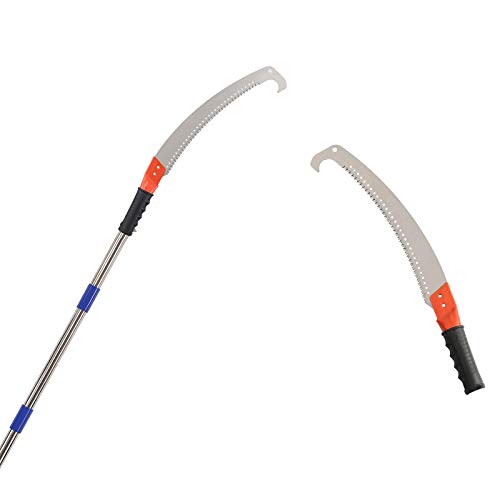
HOSKO offers a mid-length option with a 14-foot reach, providing flexibility for reaching tall branches without ladders. The design emphasizes adjustability through detachable stainless steel pole sections, which helps prevent rust and enables straightforward storage. The blade features a razor-sharp bi-directional cut, with a double-sided barb design designed to trim efficiently by drawing the cut through the branch. The combination of rust resistance and user-friendly assembly makes this a practical choice for regular pruning tasks in yards with tall trees or dense shrubbery.
Two notable considerations are weight distribution and balance when extended to full length. While the 14-foot configuration supports tall pruning, users should ensure they maintain proper stance and leverage to preserve control and reduce fatigue during extended use. This model aligns well with gardeners who need reliable reach without sacrificing cutting efficiency.
BlumeTrec 14.5FT Pole Saw

BlumeTrec delivers a versatile pole saw with a three-stage length adjustment from 8.5 feet to 14.5 feet. The Mn steel blade is designed for durability and rust resistance, with a sharp three-sided edge and a double-sided barb to grip branches for efficient cutting. The steel pole construction includes a powder-coated finish to resist corrosion, and the anti-slip grip enhances control during operation. The modular design makes assembly quick, allowing users to tailor reach for close pruning or tall-tree trimming in minutes.
The tool’s strength lies in its combination of a robust blade and a modular pole system. It is particularly suitable for gardeners who frequently switch between ground-based pruning and higher-lut tasks, offering a balance between lightness and strength. For those focusing on longevity and predictable performance, this model merits consideration.
START PRO 18ft Tree Pruning Saw

The START PRO 18-foot telescoping saw emphasizes high-reach pruning without ladders. The blade is described as carbon-enriched and designed for durability, enabling smooth cuts on branches and vines. The overall construction uses high-strength aluminum alloy to keep the tool lightweight while maintaining stiffness, contributing to comfortable handling during prolonged pruning sessions. The non-slip handle aids in secure grip, even when working in warm or humid conditions, making this a practical option for homeowners who regularly prune tall trees or large shrubs.
Users should consider the balance between reaching distance and the weight of extended configurations. While the 18-foot reach is impressive, extended setups can introduce more leverage and potential fatigue. Proper technique and brief rest breaks help ensure cleaner cuts and safer operation when dealing with taller growth.
Buying Guide: Key Purchase Considerations
When choosing a pole pruning saw, consider the following factors to match your yard’s needs and your preferred pruning style:
- Reach and extension: Determine whether you need a saw that extends to 14 feet, 18 feet, or more. Balance reach with weight; longer poles can be heavier and harder to maneuver for extended periods.
- Locking mechanism: A reliable double-lock or similar system prevents the sections from slipping during use. Check that locks engage securely and are easy to operate with gloves on.
- Blade material and design: Carbon steel blades with corrosion-resistant coatings extend cutting life. Look for three-sided edges or features like bi-directional cuts to improve efficiency on various branch angles.
- Weight distribution and ergonomics: A well-balanced tool reduces user fatigue. Lightweight aluminum or fiberglass poles are common; ensure the grip is comfortable and non-slip.
- Maintenance: Consider ease of cleaning, lubrication of joints, and blade replacement availability. Tools with modular components or simple blade replacements tend to be more user-friendly over time.
- Intended tasks: Light pruning of shrubs or heavy-limb trimming of tall trees require different blade strengths and pole stiffness. Some models blend manual saws with pruner components for versatility.
- Storage and portability: Detachable sections, quick assembly, and compact storage help when you have limited garage space or need to transport the tool frequently.
- Safety considerations: Always wear eye protection and gloves. Ensure stable footing and avoid overreaching. Check local guidelines for ladderless pruning practices if height is a concern.
Perspective-based comparison can help you decide between a pure manual pole saw and a hybrid design. If you primarily trim tall trees but want occasional handheld use, a longer extension with a comfortable handle is appropriate. If you frequently prune near structures or need quick, low-effort cuts, a lighter model with a robust locking system might be preferable. Finally, blade longevity and replacement availability influence long-term value and maintenance costs.