Stay prepared with compact, low-noise generators that deliver reliable power without disturbing neighbors. This guide highlights top portable quiet generators, focusing on fuel efficiency, clean power for sensitive electronics, and portability. Each choice balances runtime, noise levels, and ease of use for home, RV, camping, and emergency backup scenarios.
Summary of selected products
| Product | Brand | Key Power (Surge / Rated) | Noise (approx.) | Fuel | Special Features |
|---|---|---|---|---|---|
| WEN 3600-Watt Portable Inverter Generator (56360i) | WEN | 3600 / 2900 W | Ultra-quiet | Gas | Lightweight, RV-ready, CO shut-off |
| WEN 4800-Watt Portable Inverter Generator (56477i) | WEN | 4800 / 4000 W | Quiet operation | Gas | Longer runtime, fuel shut-off |
| WEN 2800-Watt Dual Fuel Inverter Generator (DF280iX) | WEN | 2800 / 2250 W (Gas) | Very quiet | Gas/Propane | Dual fuel, CO watchdog |
| PowerSmart 4400-Watt Portable Inverter Generator | PowerSmart | 4400 / 3600 W | Quiet operation | Gas | Long runtime, CO sensor |
| Champion 4000-Watt RV Ready Inverter Generator | Champion Power Equipment | 4000 / 3000 W | Low-noise (CO Shield) | Gas | Lightweight, parallel kit option |
WEN 3600-Watt Inverter Generator (56360i)

The WEN 3600-Watt Portable Inverter Generator offers a compact 149cc engine that can surge to 3600 watts and provide 2900 watts of clean, stable power. It is designed to protect sensitive electronics such as smartphones, tablets, and laptops with clean power output. The ultralight design weighs about 46 pounds, aiding portability for camping, tailgating, or backup power at home. Features include RV readiness and a fuel shut-off for safer storage. This model emphasizes quiet operation alongside reliable performance in a compact package.
WEN 4800-Watt Inverter Generator (56477i)

The WEN 4800-Watt Portable Inverter Generator increases power capacity to handle larger loads while remaining RV-ready and quiet. It uses a 224cc engine to deliver up to 4800 surge watts and 4000 rated watts, ensuring clean power for sensitive electronics. A standout feature is its efficient 1.9-gallon tank, offering up to about seven hours of runtime at half load. This model balances higher output with inverter-grade power quality for adventures or home backup scenarios.
WEN 2800-Watt Dual Fuel Inverter Generator (DF280iX)

The DF280iX provides flexibility with dual-fuel operation, running on gasoline (2800 surge / 2250 rated watts) or propane (2800 surge / 2000 rated watts). It outputs clean power suitable for charging phones, tablets, and laptops. A key safety feature is the CO Watchdog Sensor, automatically shutting off the generator if dangerous carbon monoxide levels are detected. This model emphasizes versatility and safety for portable power needs in variable fuel environments.
WEN 2350-Watt Inverter Generator (56235i)
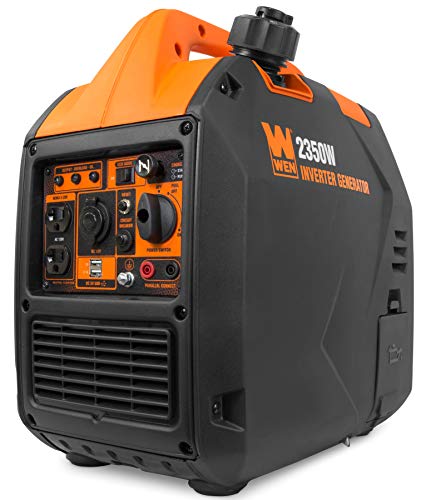
The WEN 2350-Watt Inverter Generator focuses on portability and ultra-quiet operation. Weighing about 39 pounds, it is easy to transport and store. It is designed to be extremely quiet, with power output of 2350 surge watts and 1900 rated watts, providing clean power suitable for charging a range of electronics while maintaining a low noise footprint. This option suits travelers seeking minimal heft and a quiet campsite experience.
WEN DF680iX Quiet 6800-Watt Dual Fuel Generator

The DF680iX model delivers 6800 surge watts and 5100 rated watts on gasoline, with 6000 surge / 4500 rated watts on propane. It supports low-power Level 2 charging for electric vehicles with a bonded-neutral 240V configuration and includes the CO Watchdog safety feature. This dual-fuel option is suitable for heavier backup power needs, RV use, and situations where fuel flexibility is essential for longer outages.
Champion 4000-Watt Inverter Generator

The Champion Power Equipment 4000-Watt inverter is RV-ready and designed for mobility at under 49 pounds. It operates at about 64 dBA from 23 feet, making it suitable for camping, tailgating, or backing up essential home circuits. With 4000 starting watts and 3000 running watts, it can provide up to 10 hours of runtime under typical loads. The CO Shield system adds automatic shutoff to protect occupants, and a parallel kit option allows pairing with another 4000-watt Champion inverter to boost output when needed.
Buying Guide: Key Considerations for Portable Quiet Generators
- Noise levels and sound footprint: Look for units advertised as “quiet” or with decibel ratings near 60-70 dBA at a practical distance. Inverter generators typically offer quieter operation than standard portable models, which improves usability in residential areas and campsites.
- Power output and surge vs. running watts: Match the generator’s surge watts to your startup requirements (fridges, power tools, air conditioners) and ensure the running watts cover continuous loads. For most home backup and RV use, 3000-4000 running watts provide ample headroom for essential appliances.
- Fuel type and efficiency: Gasoline is common, but dual-fuel options give flexibility during outages. Consider tank size and expected runtime at a given load to minimize refueling frequency.
- Portability and weight: Lighter units (e.g., 39-46 pounds) simplify transport for camping or events. Wheels, handles, and compact form factors further enhance portability.
- Safety features: CO detectors (CO Watchdog/Shutoff) protect occupants, and a bonded-neutral 240V option supports vehicle charging. Fuel shut-off mechanisms after use prolong storage life and reduce leaks.
- RV readiness and electrical compatibility: RV-ready models with appropriate outlets and clean power output fit well with modern electronics and appliances. Consider parallel kit compatibility if you anticipate higher loads.
- Runtime at load: Evaluate the fuel tank size and efficiency to estimate hours of operation. Longer runtimes reduce the need for frequent refueling during camping or power outages.
- Maintenance and warranties: Review oil changes, spark plugs, and warranty terms. Generators with widely available replacement parts and service networks offer easier long-term reliability.
When choosing among these options, consider your typical use case: light weekend camping with minimal devices, or full-home backup and larger RV setups. Dual-fuel options offer flexibility in fuel shortages. For sensitive electronics, prioritize inverter technology and clean power output to prevent equipment damage. If quiet operation is a priority for sites near neighbors, compare the decibel ratings and test minimum-load runtimes to select the best match.