For contractors and DIY enthusiasts, a portable table saw that blends power, portability, and accuracy can save time and boost on-site productivity. The following selection highlights five approaches to portable table saws suitable for job sites and workshops. Each model offers a distinct mix of motor strength, rip capacity, fence reliability, and stand portability. Use this guide to compare capabilities and choose the best fit for your typical materials and travel demands.
| Product | Brand | Power | Rip Capacity | Notable Feature |
|---|---|---|---|---|
| DEWALT 15 Amp 8-1/4 in. Compact Portable Jobsite Table Saw (DWE7485) | DEWALT | 15 Amp | 24.5 in. | Rack & pinion fence rails |
| DEWALT 10-Inch Table Saw with Rolling Stand (DWE7491RS) | DEWALT | 10 Inch | 32-1/2 in. | Rolling stand and large capacity |
| BOSCH GTS15-10 10 Inch Portable Jobsite Table Saw | BOSCH | 15 Amp | 32-1/8 in. | Gravity-Rise wheeled stand |
| SKIL 15 Amp 10 Inch Portable Jobsite Table Saw TS6307-00 | Skil | 15 Amp | 10 in. blade; fence parallelism | Folding stand, rack and pinion fence rails |
| Evolution R10TS 10″ Jobsite Table Saw | EVOLUTION | 15 Amp | 26 in. | Multi-material cutting |
Note: The five products below were selected for a balance of power, portability, fences, and versatility across common jobsite tasks. Each entry includes a direct link to its Amazon listing for quick reference.
DEWALT DWE7485: Compact Yet Capable

The DEWALT DWE7485 is designed for jobsite work where space is at a premium. Its 15-amp motor delivers steady power for ripping plywood, boards, and trim materials. The 24.5-inch rip capacity allows bulky sheets to pass through the blade, while the rack and pinion fence rails enable fast, precise fence adjustments. A compact footprint and foldable setup improve transport and storage between sites. Designed for homeowners and contractors who value reliable fence alignment and straightforward setup in a compact package.
DEWALT DWE7491RS: Rolling Stand Convenience

The DEWALT DWE7491RS pairs a 10-inch blade with a rolling stand for effortless on-site setup. Its 32-1/2-inch rip capacity supports larger shelving and trim materials, while the rack and pinion telescoping fence rails provide quick, accurate fence adjustments. The patented material support and stand stability help manage long boards during crosscuts and rip cuts. This model is well-suited for professionals who move between jobs and require dependable performance in a mid-size footprint.
BOSCH GTS15-10: Precision With a Gravity-Rise Stand
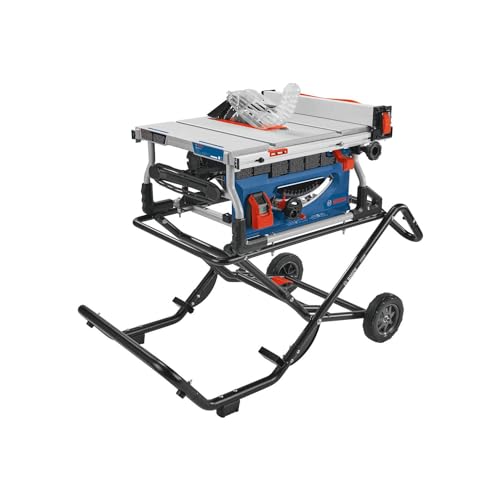
The Bosch GTS15-10 brings a gravity-rise wheeled stand for easy deployment on uneven ground or stairs. Powered by a 15-amp motor, it handles rip and cross cuts through hardwoods with confidence. The combination of a quick blade stop brake and a strong work surface expands its on-site usefulness. It is ideal for users who prioritize quick setup, mobility, and a robust cutting experience with a built-in stand that reduces fatigue on long delivery days.
SKIL TS6307-00: Folding Stand and Accurate Fence
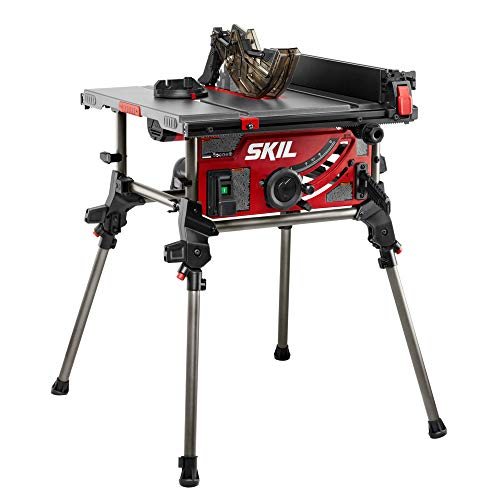
The SKIL TS6307-00 emphasizes portability with an integrated folding stand and rack-and-pinion fence rails. Its 15-amp motor provides steady power for common framing and furniture tasks. The parallel blade alignment feature allows micro-adjustment to keep the blade parallel to the fence and miter slot, reducing drift during repeated cuts. This model suits crews needing a lightweight, easily stored saw without compromising fence precision.
Evolution R10TS: Multi-Material Capabilities

The Evolution R10TS is built for multi-material cutting with a powerful 15-amp motor and a 26-inch rip capacity. It ships with a TCT blade suitable for wood, metal, and composites, reflecting Evolution’s focus on versatility. The design features a dual rack-and-pinion fence system and a precision fence, promoting accurate cuts with minimal drift. It is well-suited for workshops that require flexible cutting across different materials while remaining portable enough for job sites.
Buying Guide: Key Purchase Considerations
- Motor power and reliability: On-site tasks often demand steady torque for ripping plywood, hardwoods, and engineered materials. A 15-amp motor is common in portable models and generally delivers solid performance for most non-industrial jobs.
- Rip capacity and cut depth: Rip capacity indicates how wide a sheet you can manage. Larger capacities (30 inches and above) handle bigger panels, while 26–32 inches is common for portable units. Be mindful of the maximum cut depth at 0 and 45 degrees for crosscut flexibility.
- Fence system and alignment: A dependable fence system—preferably rack-and-pinion or dual rack-and-pinion—helps ensure parallel cuts and repeatability. Look for quick adjustments and clear miter slots alignment to minimize drift.
- Stand design and portability: Stand construction affects transportability and setup time. Gravity-rise or rolling stands reduce fatigue and speed deployment on uneven sites or stairs. Folding stands save storage space in vans and shops.
- Materials compatibility: Some saws emphasize wood-cutting performance, while others advertise multi-material capabilities. If you frequently cut metal, aluminum, or composites, consider models marketed for multi-material cutting or assess blade options separately.
- Safety features: Look for blade brakes, electronic soft start, riving knives, and blade guards. These features reduce kickback risk and improve operator safety during lengthy jobsite sessions.
- Accessory ecosystem and blades: Many models ship with basic blades; assess whether you need additional blades for plywood, dimensional lumber, or decorative trim. Some brands offer compatible accessories and accessories kits that enhance performance.
- Portability vs. capacity trade-off: Heavier-duty portable saws typically offer larger rip capacities but can compromise weight. Balance your need for mobility with the size of materials you most often work with.
- Maintenance and service: Consider the availability of replacement parts, service centers, and blade availability in your region. A durable fence and robust cast components tend to require less frequent adjustments on-site.