Protecting your family starts with reliable carbon monoxide (CO) detection. This article highlights five top residential CO alarms, featuring plug-in models with battery backups, battery-powered units, and dual 2-in-1 smoke and CO detectors. Each option prioritizes accurate sensing, clear alarms, and easy installation so you can choose the right fit for your home. Read on to compare capabilities, maintenance needs, and performance factors that influence safety and peace of mind.
Summary of chosen products:
| Product | Brand | Type | Key Benefit |
|---|---|---|---|
| First Alert CO605 | First Alert | Plug-In with Battery Backup | Continuous monitoring during power outages |
| Kidde CO Alarm (Battery Powered) | Kidde | Battery Powered | Operates on AA batteries, portable placement |
| OLUNCLE 2-in-1 | OLUNCLE | 2-in-1 CO & Smoke Detector | Dual sensing with LCD readout |
| Kidde 9-Volt Backup CO Alarm | Kidde | Plug-in with 9-Volt Backups | Digital display, identifies gas presence |
| First Alert SMICO100-AC | First Alert | Interconnect Smoke & CO Alarm | Interconnected alerts for whole-home safety |
First Alert Carbon Monoxide Detector, Plug-In Alarm with Battery Backup

This First Alert CO605 combines a plug-in CO alarm with a convenient battery backup, ensuring continuous monitoring even during a power outage. It uses an advanced electrochemical CO sensor for accurate detection regardless of placement within a room. The unit features a simple test/silence button and emits a loud 85-decibel alarm when CO reaches dangerous levels. A low-battery signal can be muted for up to eight hours, reducing nuisance interruptions while you address power concerns. Ideal for foyers, living rooms, and bedrooms near sleeping areas, this model emphasizes straightforward operation and dependable protection.
Key considerations:
- Plug-in with optional battery backup safeguards against outages.
- Electrochemical sensor for precise CO detection.
- 85 dB alarm and single-test/silence control simplify use.
- Muteable low-battery alert for temporary quiet during maintenance.
Kidde Carbon Monoxide Detector, Battery Powered
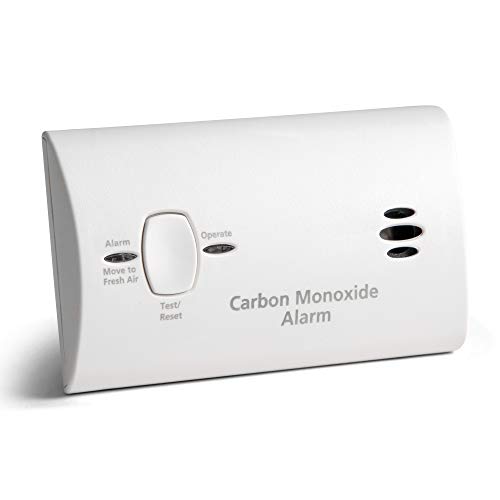
This Kidde unit operates on two AA batteries, making it suitable for spaces where hard-wiring isn’t an option. Its electrochemical sensor provides ongoing CO detection even during a power failure. Install on a wall or place on a tabletop to quickly assess risk in bedrooms or living areas. A green LED confirms power, while a red LED and 85 dB alarm indicate the presence of CO. The battery-backed design makes it a flexible choice for renters or off-grid rooms where reliability matters most.
Key considerations:
- Battery-powered operation enables portable placement and outage resilience.
- Simple wall or tabletop installation without wiring.
- Clear visual indicators (green power, red CO signal) and audible alarm.
2 in 1 CO & Smoke Alarm, OLUNCLE

The OLUNCLE 2-in-1 detector offers dual functionality in one device, serving as both a CO alarm and a smoke detector. It features dual high-stability sensors for enhanced sensitivity and accuracy and includes an LCD screen for easy CO level monitoring. This is a compact option that helps conserve wall space while delivering integrated safety coverage in kitchens, hallways, or living rooms where both smoke and CO risks exist. In households with limited outlets or where space is at a premium, a single device that covers both threats can simplify safety planning.
Key considerations:
- 2-in-1 functionality reduces device clutter.
- LCD screen for real-time CO readings.
- Accurate sensors designed for timely threat detection.
Kidde CO Detector with Digital Display
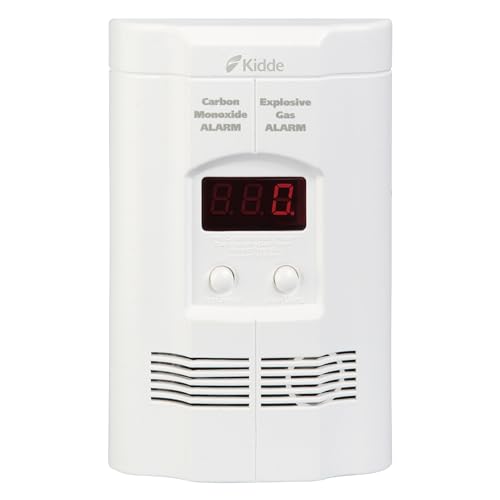
This Kidde model emphasizes a digital LED display that shows the detected CO level or indicates when explosive gas is present as “GAS.” Designed for plug-in operation with a 9-volt battery backup, it ensures continuous protection during power outages. The digital readout helps users gauge severity at a glance, and the compact design makes it suitable for bedrooms, hallways, or near sleeping areas where immediate awareness is crucial.
Key considerations:
- Plug-in 120V outlet power with 9-volt battery backup.
- Digital LED display for CO levels and gas alerts.
- Reliable alarm system with clear audible notification.
First Alert Combination Smoke & CO Alarm

This First Alert SMICO100-AC interconnect hardwire detector offers 2-in-1 protection with a battery backup. It uses precision detection to reduce cooking nuisance alarms and deliver early warning during a home fire emergency. The Quick Connect Plug simplifies installation and enables a seamless upgrade path in homes that want interconnected alarms across multiple rooms. For households prioritizing comprehensive safety coverage, this model coordinates alerts so a single incident triggers all compatible alarms, helping residents evacuate more quickly.
Key considerations:
- Interconnected alarm network for entire-home safety.
- Precision detection to minimize false alarms from cooking.
- Hardwired with a battery backup for continued operation during outages.
Kidde 10-Year Battery Powered CO & Smoke Detector

This 10-year battery-powered detector provides 2-in-1 detection for smoke and CO with LED warning indicators. The never-change battery design eliminates routine battery changes for the life of the detector, aligning with UL standards and reducing maintenance interruptions. While the initial cost may be higher, the long-term maintenance savings and reliability make it a compelling option for households seeking low-maintenance safety devices that require minimal ongoing attention.
Key considerations:
- 10-year sealed battery for long-term reliability.
- Dual detection combines smoke and CO alerts in one device.
- LED indicators for quick status checks and warnings.
Buying Guide: Key Purchase Considerations for Residential CO Alarms
Sensor Technology and Response Time
Most alarms use electrochemical sensors for CO detection due to accuracy and stability. Look for models labeled as electrochemical for reliable performance. Fast response times are critical to provide early warning in sleeping areas where occupants may not notice gradual CO buildup.
Power Source and Backup
Choose between plug-in devices with battery backups, battery-powered standalone units, or hardwired interconnect options. Consider your home’s electrical layout, the risk of outages, and whether you want cross-room interconnectivity to ensure alerts propagate through the home.
Ease of Installation and Maintenance
Opt for devices with simple installation and straightforward testing procedures. Test buttons, silence controls, and indicator LEDs help you verify operation quickly. For higher-maintenance devices, consider models with longer service intervals or sealed battery options to reduce upkeep.
Placement and House Layout
Place alarms on every level, near sleeping areas, and outside each separate sleeping zone. Avoid installing directly above or beside fuel-burning appliances, vents, or windows where drafts could cause false alarms or misreadings. A 2-in-1 detector can save wall space in smaller homes, but ensure it complies with local regulations for smoke detection.
Interconnection and Smart Features
Hardwired interconnected units provide synchronized alerts across rooms, a notable safety feature in multi-bedroom homes. Some devices offer digital readouts or LED indicators to display CO levels. Consider whether you want remote notifications or integration with smart home systems, bearing in mind compatibility and privacy considerations.
Battery Life and Warrantees
Check for 10-year sealed battery options or user-replaceable batteries with clearly stated replacement timelines. Warranties and UL listings help ensure long-term reliability and adherence to safety standards.
False Alarm Reduction
Many modern detectors include features to reduce nuisance alarms caused by cooking or humidity. Pixel-level sensors, multi-sensor approaches, and selective sampling can improve accuracy without compromising safety.
Regulatory Compliance and Certifications
Verify UL 2034 (CO detectors) and UL 217 (smoke detectors) certifications where applicable. Interconnect capabilities should comply with relevant standards if you plan to deploy a network of alarms across rooms or levels.
In selecting a residential CO alarm, prioritize models with strong sensing technology, clear audible alerts, dependable power, and installation flexibility that fits your living space. The options above span plug-in and battery-powered designs, including 2-in-1 CO and smoke detectors, to help homeowners choose a device that aligns with their home layout and safety priorities.