Flat roofs demand materials that deliver reliable waterproofing, durability, and ease of installation. The following selections focus on underlayments, sealants, and reinforcement fabrics that perform well on flat or low-slope surfaces. Each option offers distinct advantages, from rapid self-adhesive installation to high-tlexibility elastomeric coatings and reinforced fabrics that extend coating life. Below, discover five top choices with practical use cases for residential, commercial, and DIY projects.
| Product | Key Benefit | Best For |
|---|---|---|
| Gueevin Self Stick Roll Roofing | Butyl adhesive, strong waterproofing, wide coverage | Metal and flat roofs, dormers, porches |
| Sasylvia Self Stick Roll Roofing | Flexible, solvent-free, easy to apply | Small to medium flat surfaces, repairs |
| DuPont Roof Protector Underlayment | Four-layer construction, reinforced grip | Primary underlayment for protection |
| Liquid Rubber Sealant | Elastomeric, seamless waterproof membrane | Flat and low-slope roofs, foundations |
| Ames Contouring Roof Fabric | Reinforcement fabric strengthens coatings | Low-slope coatings, reinforcement |
Gueevin 35.5″ x 32.8′ Self Stick Roll Roofing

The Gueevin self-stick roll roofing is designed for quick, adhesive-based installation on metal and flat roof sections. The roll measures 35.5 inches in width and 32.8 feet in length, providing significant coverage per roll. Its primary material is butyl rubber, delivering reliable adhesion, water sealing, and flexibility to accommodate thermal expansion and contraction. The product is described as solvent-free, non-toxic, and non-shrinking, which helps maintain long-term waterproofing on dormers, porches, or garden structures. With a thickness around 1 mm, the material is thin enough for flexible application while still offering robust protection. It is suitable for use with corrugated metal panels or as an underlayment layer beneath other roofing materials.
Installation considerations include surface preparation, ensuring the substrate is clean and dry, and placing overlaps in accordance with manufacturer guidance to maximize seal integrity. While it is designed for quick deployments, careful alignment and pressure along the seam are essential to prevent air pockets or delamination in exposed climates. Durability in wind and hail-prone regions can be enhanced by combining this product with properly reinforced edge seams and periodic maintenance checks. Overall, Gueevin’s roll provides a practical option for flat or low-slope roofs requiring rapid, adhesive-based sealing with strong waterproof performance.
Sasylvia 6 Inch Self Stick Roll Roofing

The Sasylvia self-stick roll roofing offers a narrower strip option, measuring 6 inches in width and 33 feet in length, with a thickness of about 1.2 mm. The material is again based on butyl rubber, emphasizing good adhesion and waterproofing without solvents or hazardous emissions. Its compact width makes it useful for patching specific areas, detailing around penetrations, or small dormer repairs on flat or low-slope roofs. The product’s elasticity and adhesion properties support long-term performance against temperature shifts and mechanical stresses typical of flat roofing systems. It is marketed for multiple applications, including metal roofing panels, corrugated plastic, and small commercial or residential repairs.
When using narrow rolls, precision in cutting and careful alignment of seams become even more important to prevent leaks. The inclusion of strong waterproof sealing and resistance to corrosion adds value for repair projects that aim to extend the life of an existing flat roof. Sasylvia’s roll is well-suited for users who need targeted, flexible reinforcement around transitions or small areas that require a reliable seal without replacing larger sections of roofing material.
DuPont Roof Protector Underlayment
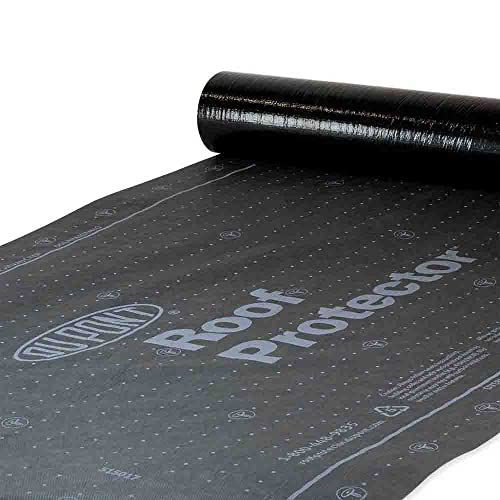
DuPont Roof Protector is a resilient underlayment designed to work as a secondary moisture barrier beneath roofing materials. Its four-layer construction offers top-layer grip, a lamination barrier against water, a woven polypropylene scrim for strength, and a slip-resistant coating for safe movement on the roof deck during installation. This configuration helps protect the roof deck during assembly and incurs fewer leak paths when combined with final roofing layers. It is a versatile option compatible with a variety of roof assemblies, including flat and low-slope systems, and is frequently used to improve overall roofing longevity by providing a durable moisture barrier before final roofing materials are applied.
When selecting an underlayment like DuPont Roof Protector, consider climate exposure, roof deck material compatibility, and the intended final roofing system. While it adds a layer of protection, the underlayment should be paired with appropriate fasteners, flashing, and edge detailing to minimize wind uplift risk and ensure a long-term, waterproof seal over flat roofs. This product is a traditional, proven choice for professional installations and ambitious DIY projects seeking robust deck protection during and after installation.
Liquid Rubber Color Waterproof Sealant

Liquid Rubber is a elastomeric, color-matched roof coating designed to form a seamless, flexible waterproof membrane over metal, concrete, and flat or low-slope roofs. The product is presented as compatible with multiple substrates and designed to bridge minor cracks and joints without cracking or hardening. A typical coverage estimate states one 5-gallon bucket can cover 150-250 square feet, depending on surface texture and porosity. The coating remains flexible to accommodate thermal movement, contributing to long-term waterproofing across flat roof areas, gutters, and foundations. It is promoted for DIY applications and professional use alike, offering a practical solution for leak repair and preventive maintenance.
When applying elastomeric coatings, surface preparation is critical—clean, dry, and sound substrates yield the best adhesion. Multiple coats are usually recommended for flatter surfaces, especially on metal roofs where thermal cycling can stress coatings. Temperature and weather conditions influence cure time, so planning around dry, mild days helps achieve an effective, durable seal. Liquid Rubber provides a cost-effective, versatile option for addressing leaks, preserving roof decks, and extending the lifespan of flat roofing systems without major tear-offs.
Ames Contouring Roof Fabric

Ames Contouring Roof Fabric is a reinforced fabric solution designed to strengthen coatings and sealants applied to roofs. Made from 100% polyester, the fabric helps reinforce coating systems vulnerable to puncture, tearing, or movement—common concerns for low-slope and flat roofs exposed to wind-driven rain. The fabric can be embedded into acrylic or elastomeric coatings to extend the life of roof seals and improve resistance to ponding areas. It is versatile enough to be cut to width, allowing for customized reinforcement around penetrations and edges. For flat roof projects, this fabric adds durability to coatings and provides added reassurance against premature deterioration.
Choosing a reinforcing fabric like Ames Contouring Roof Fabric requires aligning with the chosen coating system and ensuring proper embedding within the coating. Correct surface preparation and adequate curing time are essential for maximizing tensile strength and tear resistance. This option suits projects aiming to reinforce critical areas, extend coating lifespans, and reduce maintenance needs on flat or low-slope roofs without significant roof replacement.
Buying Guide: Key Considerations For Flat Roof Materials
- Application Type: Determine whether you need underlayment, self-adhesive rolls, liquid coatings, or fabric reinforcement based on the roof’s slope, deck material, and climate. Flat roofs benefit from a combination approach: a durable deck protection layer, a reliable waterproof membrane, and reinforcement at joints and penetrations.
- Waterproof Efficacy: Prioritize products with proven waterproofing performance and compatibility with your chosen final roofing system. Elastomeric coatings offer seam-free membranes, while self-stick rolls provide rapid, adhesive sealing for patches and transitions.
- Durability and Movement: Flat roofs experience thermal expansion and contraction. Materials that accommodate movement (elastic coatings, flexible membranes, reinforced fabrics) tend to last longer in varied climates.
- DIY vs. Professional Installation: Some products are beginner-friendly (self-stick membranes, liquid coatings), while others require professional application or additional equipment. Consider your skill level and local codes when selecting.
- Climate and Weather Windows: Plan installations for dry, moderate temperatures. Most coatings require specific cure windows and temperature ranges to achieve optimal adhesion and curing times.
- Compatibility: Verify substrate compatibility (metal, concrete, wood) and ensure the final roofing system works with underlayment, coating, or fabric reinforcement. Mixing incompatible products can compromise performance.
- Maintenance and Lifespan: Some options offer longer-term protection with periodic re-coating or reinforcement. Consider life-cycle costs, including maintenance cycles and potential resealing needs.
- Safety and Handling: Read safety data for solvents, fumes, and surface prep requirements. Ensure proper ventilation and personal protective equipment during application.