The right sander can dramatically improve surface quality and save time on woodworking projects. This guide highlights five dependable corded sanders that deliver steady performance, versatile dust control, and ease of use for American hobbyists and professionals alike. Each option supports a range of materials and finishes, from rough stock to fine detailing, with practical features like variable speed, dust collection, and ergonomic handling. Explore the selections below to find a sander that fits your project scope and workspace needs.
| Product | Brand | Key Benefit | Type |
|---|---|---|---|
| SR232301 | Skil | 4-in-1 versatility with micro-filter dust box | Detail Sander |
| DWE6421K | DEWALT | Low vibration, comfortable control | Orbital Sander |
| SR211601 | Skil | Cyclonic dust box, powerful 13,000 OPM | Random Orbital Sander |
| 6502T | WEN | Two-in-one belt and disc with sturdy base | Belt/Disc Sander |
| WORKPRO | WORKPRO | Six-speed control for versatile finish work | Random Orbit Sander |
Skil Corded Multi-Function Detail Sander
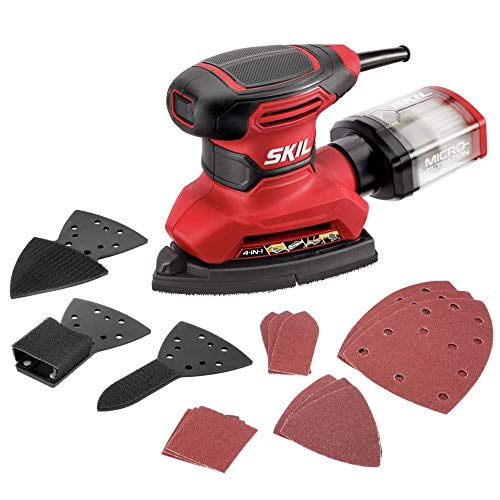
The Skil SR232301 delivers a compact 1.2-amp motor with 13,500 orbits per minute, supporting precise finishing across diverse surfaces. Its standout feature is a 4-in-1 detail sanding system that includes three attachments, allowing quick transitions for tight corners, contours, and large areas without tools. A micro-filtration dust box and a 1-1/4″ dust port provide flexible dust management options compatible with vacuum systems, helping keep workpieces cleaner as you progress. This setup is ideal for fine finishing and edge work in smaller projects.
DEWALT Orbital Sander Kit, 5 Inch

The DEWALT DWE6421K features a 3-amp motor delivering 12,000 OPM with a shorter height for better access to the workpiece. Its separate counterweight design minimizes vibration to improve operator comfort during extended sessions. This sander emphasizes steady performance, stable control, and a refined finish across a range of wood types, making it suitable for mid-to-large projects where vibration management matters.
Skil 5” Random Orbital Sander

Skil SR211601 is a 5” random orbital sander powered by a 2.8-amp motor delivering up to 13,000 OPM. It includes an X-flow cyclone dust container for easier dust disposal and clean-up. The unit supports variable speed control to tailor performance across wood, plastic, and composite materials, reducing the risk of gouges or uneven finishes on delicate surfaces.
WEN Benchtop Belt and Disc Sander
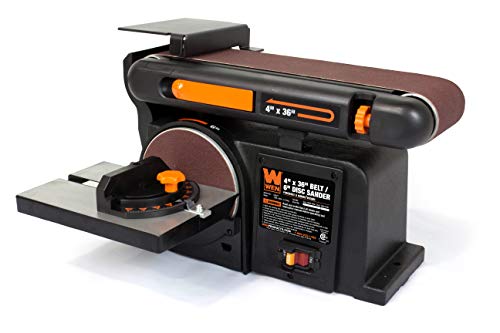
The WEN 6502T combines a 4 x 36-inch belt with a 6 x 6-inch disc and includes a cast iron base to dampen heavy vibrations. The belt tilts from 0 to 90 degrees, enabling precise bevel work and mitered edges. This two-in-one machine provides substantial material removal capacity and stability for larger wood pieces, offering a flexible setup for workshop versatility.
WORKPRO 5-Inch Random Orbit Sander

The WORKPRO 5-Inch Random Orbit Sander combines a 2.5-amp motor with six-speed options from 7,000 to 14,000 OPM for flexible finishing. Its random orbit motion minimizes visible sanding patterns, producing smooth surfaces across wood, metal, and plastic substrates when paired with appropriate sanding discs. A dust collection system and ergonomic design enhance usability for extended sessions and cleaner work environments.
Buying Guide: How To Choose The Right Sander For Woodworking
Key considerations help align a sander with your project goals and workspace constraints. First, determine the sanding style you need: detail, orbital, or belt-and-disc. Detail sanders excel at edges and contours, orbital sanders handle flat surfaces with balanced aggression, and belt/disc machines tackle heavy material removal and wide faces. Second, match the sanding disc size to your project. Common sizes are 5 inches for general tasks and 4 inches for tighter corners. Third, evaluate power and speed. Higher amperage and adjustable variable speed enable cleaner finishes across different materials, reducing burn marks and chatter. Fourth, consider dust management. Efficient dust collection minimizes cleanup and improves health in enclosed spaces. Fifth, assess ergonomics and weight, since longer runs require comfortable grips and reduced vibration. Finally, factor in accessory availability and compatibility with your current workshop setup, including vacuum options and replacement discs. By balancing these criteria, you can select a sander that provides consistent results and reliable performance across woodworking tasks.