Choosing the right sanding belts is essential for achieving smooth, precise results in woodworking. The following selections cover a range of belt sizes, grits, and strengths to suit belt sanders, disc sanders, and portable tools. Each option emphasizes durability, efficient heat handling, and reliable joint construction to minimize noise and belt flutter. Review the picks below to find belts that fit common American workshop machines and project needs.
| Product | Brand | Grit Range | Best For |
|---|---|---|---|
| Boshcraft 21 Pack 3×21 | BOSHCRAFT | 40–400 | General woodworking, knife sharpening, metal polishing |
| POWERTEC 10PK 4×36 | POWERTEC | 80 | Heavy stripping, coating removal |
| POWERTEC 3×21 Inch Sanding Belts | POWERTEC | 80 | Woodworking, paint sanding, metalworking |
| makiwork 6×48 Inch Belts Set | makiwork | 80/120/150/240/400 | Longer belt life, varied grit options |
| Jellas 3×21-Inch Belt Sander Belts | Jellas | 40–180 | Versatile belt sander with dust management |
Boshcraft 21 Pack 3×21 Inch Sanding Belts
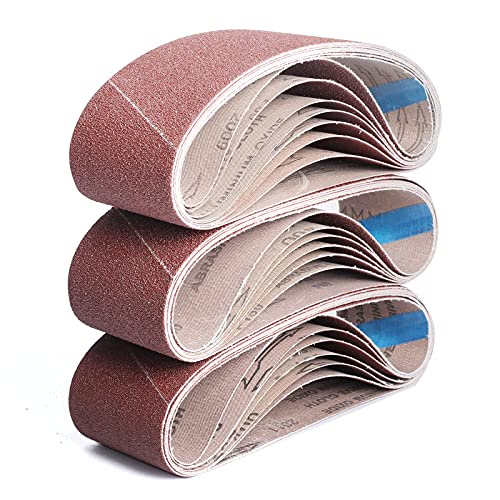
The Boshcraft sanding belts are a versatile assortment designed for 3×21 inch belt sanders. This 21-piece set includes belts in 40, 60, 80, 120, 180, 240, and 400 grit, offering a broad spectrum from aggressive material removal to fine finishing. The aluminum oxide abrasive is bonded to an X-weight cloth with phenolic resin, providing durability and resistance to wear. A reinforced joint with a German tape seam reduces belt seam bumps and minimizes vibration during grinding, helping to maintain a flat sanding surface and reducing belt jumps.
- Range of grits supports many project stages
- Durable aluminum oxide on rugged backing
- Reinforced joints for long life and stable operation
POWERTEC 10PK 4×36 Sanding Belts

These 4×36 inch belts are built for heavy-duty stripping and sanding across wood, aluminum, fiberglass, rubber, plastic, and non-ferrous metals. The belt uses a premium X-weight clothed backing with an open-coat aluminum oxide grain and a resin-on-resin bond, delivering long-lasting performance. The manufacturer emphasizes heat and moisture resistance along with seams designed to withstand pressure, making them suitable for rigorous workshop tasks where durability matters.
- Compatible with a wide range of belt sanders
- Open-coat aluminum oxide for effective material removal
- Heat and moisture resistant with sturdy seams
POWERTEC 3 x 21 Inch Sanding Belts

POWERTEC’s 3×21 inch sanding belts are designed for portable belt sanders and a variety of applications. The open-coat aluminum oxide grain on an X-weight cloth backing provides consistent abrasion, while a resin-on-resin bond supports long-lasting performance. The material is engineered for heat and moisture resistance and features seams crafted to resist breaking under pressure, making them suitable for woodworking, rust removal, and polishing tasks.
- Compact 3×21 inch size fits many portable sanders
- Durable backing and reliable joint construction
- Versatile for wood, metal, and coatings
makiwork 6×48 Inch Sanding Belts Set

The makiwork 6×48 inch belt set provides 10 belts in five grits (80, 120, 150, 240, 400), with two belts per grit. Built on aluminum oxide abrasives with an X-weight backing, these belts aim for durability and stable sanding performance. The joints use smooth two-way tape seams to reduce bumps and vibrations, helping maintain consistent contact with the workpiece and extending belt life in woodworking projects that require longer belt runs.
- Wide grit range for shaping and finishing
- Two-way tape joints minimize bumps
- Suitable for prolonged sanding sessions
Jellas 3 × 21-Inch Belt Sander Belts
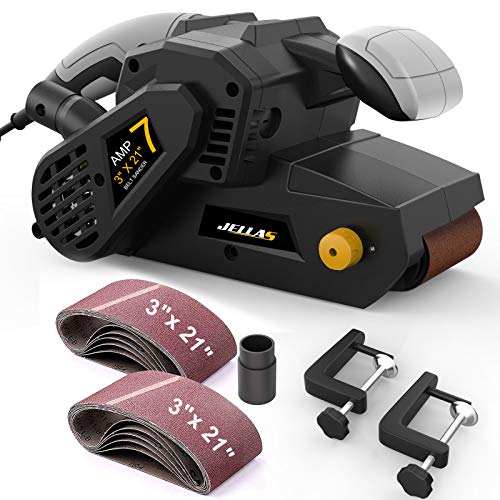
Jellas offers a belt sander set that includes 3″ x 21″ belts with a variable-speed 7-amp sander. The belts come in a mixed 40, 60, 80, 120, and 180 grit lineup, providing options from aggressive material removal to fine finishing. The sander includes a dust bag, and the 10-foot power cord enhances maneuverability during use. These belts are designed to work with the included 6-speed control, allowing users to tailor sanding speed to the task.
- Multiple grits for versatile sanding progress
- Standard 3″ x 21″ belt compatibility
- Dust management and adjustable sanding speeds
Buying Guide: Key Considerations For Sanding Belts
Choosing the right sanding belts involves evaluating machine compatibility, project needs, and belt performance. Consider the following perspectives to optimize results and reduce tool wear:
- Machine compatibility: Confirm belt dimensions (e.g., 3×21, 4×36, 6×48) and the sander model. Mismatched belts can cause tracking issues and belt breakage.
- Grit progression: For initial shaping, use coarser grits (40–80). Move toward finer grits (120–240, up to 400) for finishing. A mixed set saves time switching belts mid-project.
- Abrasive quality: Aluminum oxide belts are common for woodworking and offer good abrasion and longevity. Open-coat bonding improves resin absorption and cooling during heavy use.
- Backing and joint construction: X-weight cloth backsides and reinforced seams reduce belt stretch, heat buildup, and seam pucker. Look for belts with solid joint adhesives to minimize derailment.
- Heat and moisture resistance: In longer sanding sessions, belts that resist heat buildup maintain consistent cutting rates and reduce sample burn marks on wood.
- Durability vs. cost: Higher-quality belts typically last longer but may cost more upfront. For frequent, heavy sanding, investing in durable belts can lower total job time and material waste.
- Application range: Consider belts designed for wood, metal, and coatings if you plan to perform cross-material projects. Some belts offer better performance on multiple substrates.
- Storage and handling: Keep belts in a dry environment to prevent edge fraying and delamination. Proper storage extends belt life between uses.
In addition to belt selection, proper sanding technique can extend belt life and improve finish. Maintain even pressure, move the sander in overlapping passes, and allow the belt to do the work without forcing it. Use dust extraction whenever possible to keep surfaces clear and reduce clogging that can degrade cutting efficiency.