The right reciprocating saw blade makes quick work of thick metal, from rebar to steel plate. This guide highlights blades designed for heavy-duty metal cutting, comparing carbide-tipped blades with tough bi-metal designs. With the right blade, you can improve cutting speed, reduce heat buildup, and extend blade life—even in demanding demolition work.
| Product | Brand | Ideal For | Key Benefit |
|---|---|---|---|
| EZARC Endurance Carbide Recip Saw Blade | EZARC | Thick metal, stainless, high-alloy steels | Up to 50x longer life vs bi-metal |
| Diablo Steel Demon Carbide Teeth Blade | Diablo | Extreme metal cutting | Carbide-tipped edge for extreme durability |
| TOLESA Heavy Metal Cutting Recip Saw Blades (6″/14TPI) | TOLESA | Pipe, rebar, sheet metal | Low heat buildup and fast cutting |
| DEWALT Reciprocating Saw Blades, Bi-Metal (DW4813) | DEWALT | General metal cutting, thick metal | Durable bi-metal design, made in the USA |
| LOZAGU 14TPI Bi-Metal Blades (9″) | LOZAGU | Sheet metal, pipes, rebar | Reinforced cobalt edge for smooth cuts |
EZARC Endurance Carbide Blade For Thick Metal
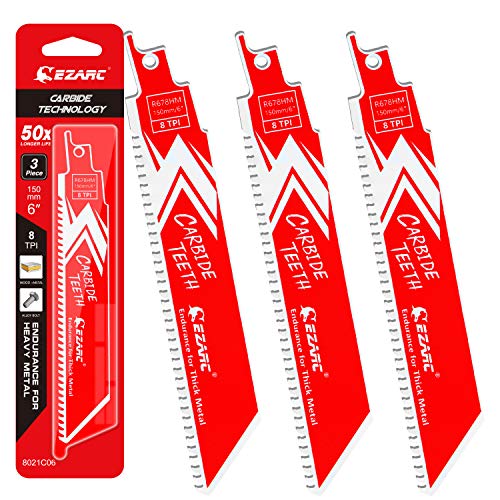
The EZARC R678HM Endurance carbide blade is designed for aggressive metal cutting where bi-metal blades may falter. Its carbide teeth offer dramatically longer life in heavy metal applications, including high-alloy steels, stainless steels, and cast iron. The 6-inch length and 8 TPI configuration balance durability with faster material removal, reducing operator fatigue during long cuts in tough materials.
Diablo Steel Demon Carbide Blade

Diablo’s Steel Demon carbide-tipped blade is built for extreme metal cutting. The TiCo Hi-Density carbide tip delivers up to 50x longer cutting life in tough materials, including high-strength alloys and stainless steel. A Perma-SHIELD non-stick coating reduces heat buildup and minimizes gumming, helping maintain a cleaner cut over extended use. This blade excels in demanding demolition tasks where standard bi-metal blades wear quickly.
TOLESA Heavy Metal Cutting 9 Inch Blade (14TPI)

This 9-inch, 14TPI TOLESA blade focuses on heavy metal cuts like pipes and thick sheet metal. Its cobalt-edge bi-metal construction delivers fast cuts with good durability, while a thin-wall design reduces heat buildup. The 0.9 mm wall and set teeth promote smoother cuts with less blade flex, making it suitable for long demolition runs where overheating can be a concern.
LOZAGU 6-Piece Bi-Metal Blades (9″)

LOZAGU’s 14 TPI bi-metal blades offer reinforced cobalt edge cutting through sheet metal, pipes, and structural profiles up to 7 inches in diameter. The thin-wall design and staggered tooth geometry minimize heat buildup during prolonged cuts, while the high-velocity 14 TPI configuration delivers faster demolition cutting with improved blade life relative to some standard bi-metal blades.
Buying Guide: Key Purchase Considerations
When selecting sawzall blades for thick metal, consider blade material, tooth configuration, and blade length to match your work. Carbide-tipped blades excel in extreme metal cutting and resist wear, but come at a higher upfront cost. Bi-metal blades offer versatility and value for general metal cutting, especially in hands-on applications where heat buildup and blade life matter. Look for these factors to optimize performance:
- Material: Carbide blades last longer in hard metals but can be more brittle. Bi-metal blades balance flexibility and durability for common metals like mild steel and threaded rebar.
- Tooth count and type: Lower TPI (e.g., 8–14) removes material quickly but can wear faster on hard metals. Higher TPI provides smoother cuts in thicker materials and reduces snagging, while advanced tooth geometry minimizes heat buildup.
- Blade length: Longer blades reach into hollow sections and longer runs, but must fit your saw and provide adequate stiffness for straight cuts.
- Heat management: Thin-wall blades and coatings reduce friction and heat buildup, extending blade life during continuous demolition work.
- Application compatibility: Ensure the blade is rated for the metal type you encounter—stainless steel, high-alloy steels, cast iron, rebar, or structural steel.
- Cost vs. durability: Carbide blades cost more upfront but may reduce frequent blade changes on demanding tasks. Bi-metal blades offer a lower-cost option for recurring general metal cutting.
- Safer cutting practices: Use proper PPE, secure the workpiece, and avoid twisting or binding the blade to prevent blade breakage and kickback.