MDF demands blades engineered for fine finishes and stable cuts. The following top-rated table saw blades are selected for smooth edge quality, reduced chipping, and reliable performance on MDF projects. Each offers a different balance of kerf width, tooth geometry, and durability to suit various woodworking needs. Explore five solid choices designed to produce clean, precise cuts on MDF with minimal burn and tear-out.
| Product | Brand | Tooth Count | Diameter | Arbor | Notes |
|---|---|---|---|---|---|
| WEN BL1080 | WEN | 80 | 10″ | 5/8″ | Ultra-fine finish; great for MDF and softwoods |
| FOXBC 80-Tooth | FOXBC | 80 | 10″ | 5/8″ | ATB teeth; high-density carbide; smooth cuts |
| WEN BL1060 | WEN | 60 | 10″ | 5/8″ | Fine-finish blade with clean kerf |
| Luckyway 32T & 60T | Luckyway | 32/60 | 10″ | 5/8″ | General purpose; dual pack for versatility |
| DEWALT DWA11080 | DEWALT | 80 | 10″ | 5/8″ | Fine finish; optimized tooth geometry |
These blades represent a mix of ultra-fine to fine-tooth options, all sized for common 10-inch table saws and miter saws. When selecting for MDF, prioritize blades with ATB (Alternate Top Bevel) geometry, thin kerf, and carbide tips to minimize chip-out and maximize edge quality on composite boards.
WEN BL1080 10-Inch 80-Tooth Carbide-Tipped Blade
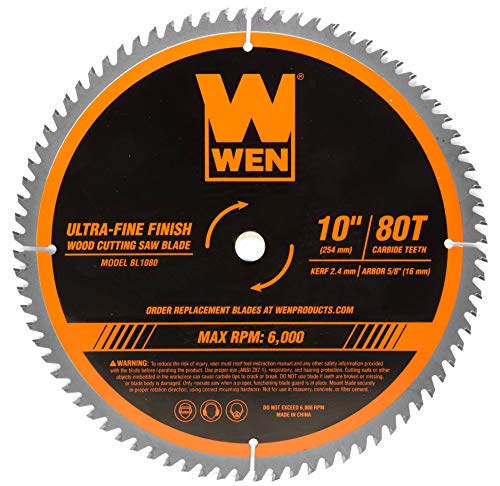
The WEN BL1080 features a 10-inch diameter, 5/8-inch arbor, and a high RPM rating up to 6000. Its 80 ultra-thin kerf teeth are designed for clean, precise cuts in softwoods and MDF alike, reducing tear-out and leaving smoother edges. This blade is well-suited for finishing work on MDF panels where surface quality is critical.
FOXBC 80-Tooth Ultra Finish Table Saw Blade

FOXBC’s 10-inch blade uses 80 Ultra Finish teeth with a 0.098″ kerf and a 5/8″ arbor. Crafted from high-density carbide, it emphasizes toughness, wear resistance, and a smooth finish with minimal vibration. The blade’s design targets clean MDF edges and consistent cuts for panels used in cabinetry and shelving projects.
WEN BL1060 60-Tooth Fine-Finish Blade
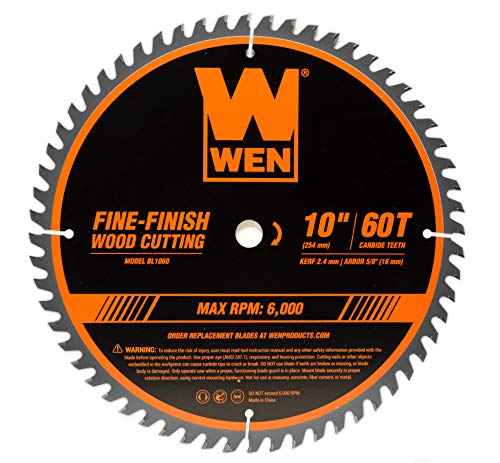
This WEN blade provides a finer tooth count for ultra-clean edge finishes. Its 10-inch diameter and 5/8-inch arbor fit standard table saws, and the 60 teeth strike a balance between fast material removal and smooth MDF finishes. Ideal for cabinetry panels and shelving where a refined edge matters.
Luckyway 32T & 60T General Purpose Blade Set

Luckyway’s 10-inch two-pack includes 32T and 60T blades with 5/8″ arbors. While 32T is for quick rough cuts, 60T serves finishing tasks with better edge quality on MDF. The pack offers value and flexibility for varied cuts, from ripping to fine cross-cuts on MDF panels.
DEWALT DWA11080 80-Tooth Fine Finish Blade

DEWALT’s 80-tooth blade emphasizes a refined finish with a patented body slot design to reduce vibration and deliver improved accuracy. The blade geometry is suited for fine finishing on MDF, plywood, and other composites, helping achieve uniform surfaces on cabinetry and paneling projects.
Buying Guide: Key Considerations For MDF Projects
When selecting a table saw blade for MDF, consider tooth count, kerf width, and blade coating. Higher tooth counts (60–80T) generally produce smoother edges on MDF, but may cut slower than lower-Tooth blades. A thin kerf reduces material waste and lowers power requirements. ATB tooth geometry helps prevent tear-out on laminated and composite boards. Carbide tips improve durability for repeated cuts. For large panels, a blade with a stable core and balanced weight minimizes vibration and chatter. Always wear protective equipment, and ensure your saw supports the blade size and arbor.
Durability and finish quality can vary between blades with similar specs. If you frequently cut MDF in cabinetry or shelving where edge quality is crucial, prioritize blades specifically marketed for smooth finishes and low tear-out. For production runs where speed matters, a slightly coarser blade may be acceptable, but expect more post-cut finishing. For specialty MDF tasks like veneered panels, consider blades with reinforced teeth and optimized tooth geometry to minimize chipping and delamination.
Safety remains essential: verify proper guard alignment, use clamps, and ensure the workpiece is firmly secured. Maintain blade sharpness and replace worn blades to preserve cut quality. By matching blade design to your MDF workflow—finishing, cross-cutting, or panel milling—you can maximize both efficiency and edge consistency across projects.