Finding the right tool to cut bamboo cleanly and safely can save time and improve your results, whether you’re pruning a grove, building garden structures, or crafting bamboo kitchenware. This guide highlights five top-performing options that balance precision, durability, and ease of use. Each selection is tailored for bamboo cutting or related bamboo work, with practical details to help you choose the best fit for your needs.
| Product | Brand | Notable Focus |
|---|---|---|
| KAKURI Japanese Hand Saw (Bamboo Cutting) 8-1/4″ | KAKURI | Fine-tooth blade, replaceable blades, Japanese craftsmanship |
| KAKURI Japanese Hand Saw (Bamboo Cutting) 8-1/4″ Replacement Blade | KAKURI | Easy blade replacement, bamboo-friendly blade |
| KAKURI Bamboo Saw Folding 4″ (Bamboo Cutting) | KAKURI | Compact, pocket-friendly, precise for tight spaces |
| Bamboo Splitter 6 inch (Manual Dividing Bamboo Tool) | Lowhigh | Efficient bamboo splitting, comfortable handles |
| EZARC Bamboo Cutting 9″ Reciprocating Saw Blades | EZARC | Tri-Edged teeth, fast cutting, durable steel |
KAKURI Japanese Hand Saw (Bamboo Cutting) 8-1/4" Overview

The KAKURI 8-1/4″ bamboo cutting hand saw is designed specifically for bamboo, a material that can be tough on ordinary saw blades due to its fibrous structure. This saw uses a fine-tooth blade that minimizes snagging on bamboo fibers, delivering clean cuts with less effort. It is marketed as a replaceable saw type, so you can swap blades as needed without tools, extending the tool’s versatility for different cutting tasks beyond bamboo.
One standout feature is blade interchangeability. The design emphasizes ease of use, with a one-touch blade replacement that avoids screw tightening and other cumbersome steps. A plastic scabbard sleeve is included for safe storage and transport, and the main unit can store three spare blades, making it helpful for ongoing bamboo projects or fund-raising workshop use where multiple blades may be needed.
Crafted with Japanese steel and built in Japan, the blade promises durability and precise cutting performance. While the primary marketing focus is bamboo cutting, users may appreciate the high-grade steel and meticulous construction that aligns with other precision Japanese hand tools. This makes it a strong option for hobbyists and professionals who value quality and long-term reliability in bamboo work.
KAKURI Japanese Hand Saw (Bamboo Cutting) 8-1/4" Replacement Blade
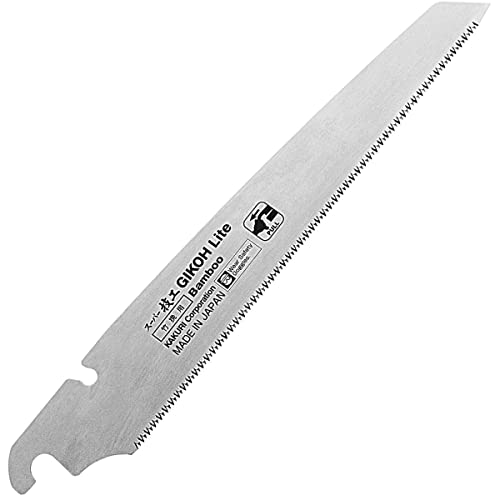
This accessory is the replacement blade designed for the KAKURI bamboo-cutting saw. It enables quick, screwdriver-free blade swaps by hand, which is particularly useful for users who cut bamboo in longer sessions or handle multiple projects with different blade needs. The blade’s geometry remains tuned to bamboo fibers, helping to reduce snagging and ensuring predictable cut quality when fibers resist the cut.
As with the primary saw, the replacement blade emphasizes easy maintenance and rapid tool-upgrades. This capability supports extended project timelines where downtime for blade changes could otherwise slow progress. The blade’s build quality mirrors the brand’s emphasis on reliable, Japan-made tools, making it a logical companion to the 8-1/4″ bamboo saw for consistent results.
In practice, this blade works well for dry or raw bamboo alike, keeping the cutting action smooth and controlled. For users who routinely cut bamboo culms into sections or craft bamboo components, having an extra blade on hand minimizes interruptions and keeps the workflow steady.
KAKURI Bamboo Saw Folding 4" for Bamboo Cutting

This compact folding saw is designed for bamboo crafts and precise work in tight spaces. The blade teeth are specifically tuned for bamboo, enabling smooth, controlled cuts even when access is constrained. The folding design makes it easy to carry in a pocket for fieldwork or on-site bamboo projects, and the blade is constructed from high-quality Japanese carbon steel for lasting sharpness.
The blade is edge-hardened to resist dulling, with corrosion resistance enhanced by plating to maintain performance over time. When folded, the tool measures about 5.7 inches, making it a practical everyday carry option for hobbyists and professionals who need a portable bamboo-cutting solution. The blade can be locked during use to ensure safety in confined spaces, and it remains user-friendly for quick transitions between tasks.
Overall, this model suits crafters who require both portability and precision during bamboo cutting, whether in a workshop or on-location. It complements larger saws by handling smaller, more delicate cuts with minimal effort.
Bamboo Splitter 6 Inch (Manual Dividing Bamboo Tool)

The Bamboo Splitter from Lowhigh is designed to optimize the separation of bamboo into manageable segments. A 6-inch manual tool with an inner diameter around 16 cm (approximately 6 inches) offers a practical balance between leverage and control for materials of various thickness. This tool focuses on efficient bamboo division, which is essential for projects that require evenly sized pieces for joinery, craftwork, or garden structures.
Ergonomics play a role here, with comfortable handles on both sides to reduce fatigue during extended use. The construction aims to minimize effort while maintaining clean, straight splits. For users who frequently subdivide bamboo culms into uniform sections, this tool presents a straightforward, low-tech option that can complement more delicate cutting tools by preparing raw material before precision trimming.
In practice, the splitter is best used for straightforward splitting tasks and is not a substitute for fine-tooth saw work. It fills a specific niche where quick division of bamboo is preferred, offering a durable approach for workshop or outdoor bamboo projects.
EZARC Bamboo Cutting 9" Reciprocating Saw Blades

EZARC’s 9-inch reciprocating saw blades are engineered for bamboo cutting and other soft woods. The blades use Tri-Edged Fleam Ground Teeth, designed to reduce binding and increase cutting speed, making them well-suited for rapid bamboo work in DIY projects or professional setups. The Chromium-Vanadium (CRV) steel body adds toughness and flexibility, expanding compatibility with softer materials while delivering a longer blade life with repeated use.
The blades are marketed for multi-material applications but highlight bamboo as a primary use-case. The design supports heavy-duty, continuous use with a focus on longevity, which can lower replacement frequency for busy users. If your bamboo work involves longer cuts or repetitive tasks, these blades offer a durable, efficient option compatible with common reciprocating saw platforms.
Buying Guide: Bamboo Cutting Tool Considerations
- <strong Blade Geometry and Material: Bamboo fibers are dense and stringy. Look for blades with fine teeth or specialized bamboo teeth geometry to minimize snagging and ensure clean cuts. High-grade carbon or alloy steels improve durability, especially for repeated use.
- <strong Handle Comfort and Control: For longer sessions, ergonomic handles reduce fatigue. Tools with locking mechanisms and secure blade changes improve safety during work in confined or elevated spaces.
- <strong Portability vs. Size: Folding or compact designs are advantageous for on-site bamboo tasks. Larger saws may offer faster cutting for larger culms but require more space and robust handling.
- <strong Replacement Availability: If you frequently cut bamboo, having spare blades or interchangeable blades can cut downtime. Check for tool compatibility and ease of replacement without tools.
- <strong Corrosion Resistance and Maintenance: Bamboo projects can involve moisture. Blades and tools with corrosion-resistant coatings or plating help maintain edge retention and longevity.
- <strong Multi-Purpose Flexibility: Some blades are marketed for multiple materials. Ensure the blade performance aligns with your primary use (bamboo) and can handle other soft woods if needed.
- <strong Safety Considerations: Always use protective gear and ensure blades are securely mounted, especially with folding or reciprocating tools. A scabbard or blade guard improves transport safety.
- <strong Budget and Availability: While premium Japanese blades offer precision, there are capable alternatives at lower prices. Balance cost with expected usage and maintenance needs.
When selecting a bamboo-cutting tool, consider your typical projects: garden pruning, craftwork, or structural bamboo work. For portable field tasks, a folding or compact saw paired with a spare blade can offer practical versatility. For workshop-heavy bamboo projects, a high-quality fixed saw and a reliable set of replacement blades can provide consistency and efficiency. The combination of blade quality, ergonomic design, and maintenance options will shape how smoothly bamboo cuts go from rough to refined.