Choosing the right variable speed bench grinder can boost both accuracy and efficiency across a range of tasks, from sharpening tools to deburring metal. This guide highlights five top-rated models, detailing features like digital displays, adjustable speeds, work lights, and durable cast-iron bases. Each option offers a blend of power, control, and safety features designed for American workshops, whether you’re a hobbyist, woodworker, or professional.
Product snapshot:
| Product | Brand | Key Feature |
|---|---|---|
| Digital Display 8 Inch Variable Speed Bench Grinder | Woodskil | Digital speed display with 2000-3450 RPM range |
| WEN BG625V 6-Inch Variable Speed Bench Grinder | WEN | Flexible work light, 2000-3400 RPM |
| WEN BG4280 8-Inch Variable Speed Grinder | WEN | High torque, 2000-3400 RPM, built-in LED lighting |
| BUCKTOOL 8 Inch 3/4 HP Low-Speed Bench Grinder | Bucktool | Low-speed 1750 RPM, dual wheels, LED work light |
| Variable Speed 6″ Bench Grinder (Greteefor) | Greteefor | Brushless motor, 1725-3750 RPM, integrated LED light |
Digital Display 8 Inch Variable Speed Bench Grinder

The Woodskil Digital Display 8 Inch Variable Speed Bench Grinder combines precise speed control with a readable digital readout. Its robust 5 Amp, 3/4 HP motor covers a wide speed range of 2000-3450 RPM, enabling smooth transitions between tasks such as sharpening chisels or deburring metal. The built-in 2W work light improves visibility, especially in dim shop spaces, and an adjustable tool rest supports versatile work angles. A cast iron base minimizes vibration for cleaner finishes and steadier operation. The digital readout helps operators dial in exact speeds for consistent results across sessions.
WEN BG625V 2.5-Amp 6-Inch Variable Speed Bench Grinder

The WEN BG625V offers a compact 6-inch platform with a flexible work light and a selectable 2000-3400 RPM range. This model suits tasks that demand medium belt speeds and fine control, such as sharpening small knives, chisels, or drill bits. The dual-function light improves accuracy during precision shaping, while its variable speed helps minimize heat buildup on heat-sensitive tools. A stable base and straightforward guard design contribute to steady work, making it a practical choice for home shops and professional setups requiring reliable speed variation.
WEN BG4280 5-Amp 8-Inch Variable Speed Bench Grinder
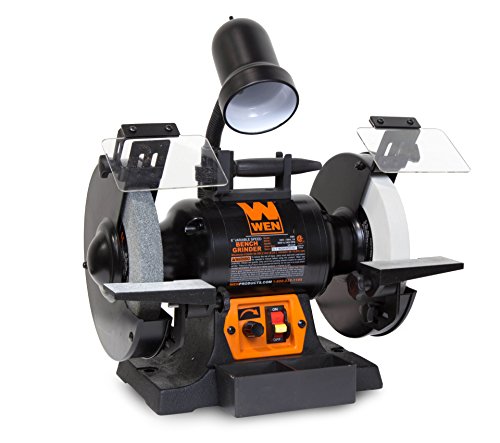
With a stronger 5-amp motor, the WEN BG4280 drives 8-inch wheels across a 2000-3400 RPM spectrum, offering more aggressive material removal at higher speeds and improved control at slower settings. The adjustable eye guards and built-in LED lighting keep the workpiece illuminated, which helps maintain precision during grinding and sharpening. This model is well-suited for users who regularly switch between fine finishing and heavy stock removal on larger workpieces, providing flexibility without sacrificing safety.
BUCKTOOL 8 Inch 3/4 HP Low-Speed Bench Grinder

The Bucktool 8 Inch Low-Speed Bench Grinder emphasizes a steady, low-speed operation with a 1/2 HP rating and a peak capability of 1-1/4 HP. The dual-wheel setup includes 80 and 120 grit wheels, optimized for edge sharpening and material shaping with reduced heat buildup. An LED work light with an independent switch enhances visibility for fine work at the wheel’s surface. This grinder is particularly suitable for carpenters, turners, and carvers who prioritize controlled heat management during sharpening tasks.
Greteefor Variable Speed 6″ Bench Grinder

The Greteefor 6-inch variable speed grinder features a brushless induction motor rated at 2.5 amps, delivering power with reduced maintenance needs and quieter operation. Its electronic control enables RPM from 1725 to 3750, with two wheels already included to support both coarse and fine grinding. An integrated LED work light and safety shields help ensure clear visibility and protection, while a stable cast iron base reduces vibration for more precise finishing on small to medium-sized parts.
Buying Guide: Key Considerations For Variable Speed Bench Grinders
- Motor power and speed range: Higher horsepower supports heavier stock removal, while a wide RPM range allows you to tailor speed to the task—lower speeds reduce heat buildup on hardened materials, and higher speeds speed up material removal.
- Wheel size and configuration: 6- to 8-inch wheels are common; larger wheels remove material faster on bigger pieces, but smaller wheels offer better control for precision work. Check wheel hardness and grit compatibility for your typical tasks.
- Guarding and safety features: Look for adjustable eye and spark shields, stable bases (preferably cast iron), and reliable guards. LED work lights improve visibility when detailing edges and beveled cuts.
- Digital displays and readouts: A digital speed readout helps achieve repeatable results, especially for precision sharpening or consistent deburring across sessions.
- Dust and debris management: Integrated lights are helpful, but consider wheel covers or splash guards to manage dust near sensitive areas and protect the operator.
- Noise, vibration, and maintenance: Brushless motors reduce maintenance and noise. A sturdy base dampens vibration, improving finish quality and user comfort during extended use.
- Wheel quality and replaceability: Confirm availability of compatible wheels (grit variety and material type) and the ease of wheel changes. Dual-wheel setups can offer immediate versatility for different tasks.
- Size and workspace fit: Ensure the grinder fits your workshop footprint and that the power requirements align with your electrical setup (voltage, amperage, and dedicated circuits).
- Accessories and extras: Features like built-in lights, adjustable tool rests, and flexible guards add value by enhancing accuracy and workflow efficiency.