Choosing the right wire stripper machine can speed up scrap cable processing, improve insulation removal quality, and reduce manual effort. This guide highlights five top-performing machines designed to handle common American wire sizes from 0.06″ to about 1.57″ (1.5–40 mm). Each entry covers core capabilities, operating style, and what to consider when comparing models for home garages, hobbyists, or small recycling setups.
| Product | Brand | Channel Range | Power | Operation |
|---|---|---|---|---|
| CREWORKS | 0.06″ – 1″ (1.5–25 mm) | 180 W | Automatic | |
| VEVOR | 0.06″ – 1.57″ (1.5–40 mm) | 370–750 W (models vary) | Automatic + Optional Manual | |
| STRIPMEISTER | Ø1/8″ – Ø3/4″ (approx. 3.2–19 mm) | Manual Drill-Powered | Drill-Powered | |
| Hizmivos | 0.06″ – 1″ (1.5–25 mm) | Manual/Wired Optional via Drill | Manual or Drill-Driven | |
| CREWORKS | 0.06″ – 1.18″ (1.5–30 mm) | 180 W | Automatic |
CREWORKS Electric Wire Stripper Machine

The CREWORKS Electric Wire Stripper Machine strips insulation from old copper wiring at speeds up to 98 ft/min with a 180 W motor and a durable steel blade. It offers five separate feed holes for wires from 0.06″ to 1″, enabling safe handling of common sizes. Users adjust blade height with a simple knob and feed wire through the appropriate hole for hands-free or manual control, making it suitable for frequent scrap operations and small-factory tasks alike.
CREWORKS 180W Motor Automatic Wire Stripper
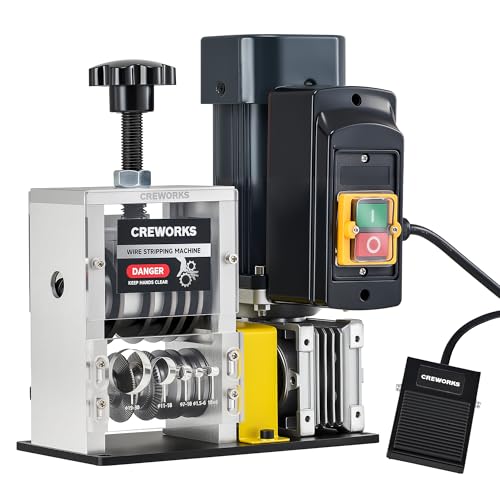
Designed for high throughput, this CREWORKS model uses a 180 W motor and five blades to strip insulation from wires 0.06″ to 1.18″ thick. It includes two swappable feed plates with five channels each, enabling quick size changes during larger recycling runs. A blade-height control knob allows precise cuts on different cable sizes, and the pedal option provides hands-free operation to boost efficiency in busy workshops.
VEVOR Electric Wire Stripping Machine (10 Channels)

The VEVOR 10-channel version features a rugged cast aluminum body, visible stripping depth reference, and a robust 750 W motor in some configurations (with faster speeds in certain models). It supports wires from 0.06″ to 1.57″ in diameter, with ten stripping channels and corresponding blades. A clear acrylic panel makes the stripping process observable, helping operators monitor performance and reduce jams over long sessions.
VEVOR Electric Wire Stripping Machine (6+1 Channels)

This VEVOR model emphasizes reliability with a cast-aluminum frame, large visible stripping area, and ten channels (six round, one flat) for versatile wire handling. It supports wires from 0.06″ to 0.98″ (1.5–25 mm) and includes a depth reference to help ensure consistent stripping outcomes. Its design caters to industrial-like throughput while maintaining straightforward operation for home workshops.
StripMeister Original Drill-Powered Wire Stripper

StripMeister’s original drill-powered stripper is engineered for precision with five-axis CNC milling, delivering consistent, jam-free stripping for wires ranging from approximately Ø1/8″ to Ø3/4″. It’s designed for high-speed, hands-free operation when attached to a standard drill, enabling rapid throughput for copper wire recycling and demanding electrical projects. Compliance with CSA, TUV, and CE standards supports safe use in professional settings.
Buying Guide: Key Considerations And Comparisons
When selecting a wire stripper machine, consider wire size range, operating style, and volume needs. Automatic machines, like CREWORKS and VEVOR, maximize throughput and reduce manual labor but vary in power (e.g., 180 W vs. 750 W) and channel counts (from 5–11). Manual or drill-powered options, such as StripMeister and Hizmivos, offer portability and simplicity, suitable for smaller jobs or where electricity use is limited. Blade adjustment and feed-hole options determine how easily you handle multi-conductor and hard-cover vs. soft-cover wires.
Practical comparisons:
– Throughput: Higher-powered automatic machines generally strip faster, ideal for recycling setups or busy garages.
– Wire range: Ensure the machine covers your typical sizes (0.06″ to 1″ and up to 1.57″ for some models).
– Observability: Clear panels help track progress and prevent jams.
– Operation style: Drilled or manual operation provides portability and resilience during power outages.
– Safety and compliance: Look for CSA, TUV, and CE marks for equipment used in professional environments.
Durability and maintenance are also important. Machines with robust frames (cast aluminum or steel) and durable blades resist wear and reduce downtime. Foot pedals or hands-free options improve efficiency for extended sessions. Always follow manufacturer guidelines on blade height adjustments and feed-rate management to maximize insulation removal without damaging conductor cores.
In summary, for high-volume scrap work, prioritize automatic stripers with multiple channels and strong motors (CREWORKS Electric, VEVOR models). For flexible, on-the-go use, consider drill-powered or manual options (StripMeister, Hizmivos) that still deliver reliable results across typical American wire sizes. The best choice aligns with your workspace, power access, and target throughput.