Choosing the right wood splitting wedge can dramatically speed up firewood preparation while reducing effort. The following five wedges are selected for versatility, durability, and clear benefits across common wood types. Read on for each product’s highlights, how they differ, and practical buying considerations to help you pick the best wedge for your needs.
| Product | Brand | Key Benefit | Edge/Head Type |
|---|---|---|---|
| ESTWING Sure Split Wedge – 5-Pound Wood Splitting Tool | Estwing | Forged steel, strong edge for tough logs | 1-7/8″ cutting edge |
| Collins 4 lb. Forged Steel Diamond Splitting Wedge | Collins Store | Diamond shape directs force for efficient splits | Diamond head |
| Kindling Cracker XL Kindling Cracker King | Kindling Cracker | Safe, hands-free kindling with large top ring | Diamond/round combined for flexibility |
| Truper 33040 Super Splitter Wood Splitting Wedge | Truper | Durable, drop-forged head for high impact | Standard wedge head |
| Felled Manual Log Splitter Diamond Wedge | Felled | Four-direction splitting for faster results | Diamond cross-section |
Note: This article presents objective comparisons based on product features and common user needs, avoiding price references and focusing on performance, safety, and practicality for American firewood preparation.
ESTWING Sure Split Wedge – 5-Pound Wood Splitting Tool
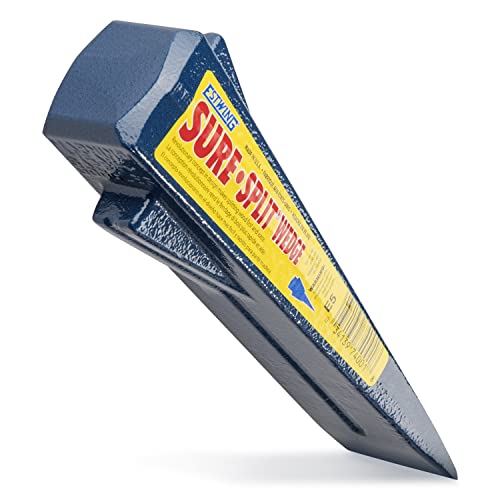
Estwing’s Sure Split Wedge weighs 5 pounds and features forged steel construction with a 1-7/8 inch cutting edge. The hefty profile is designed to drive through logs with fewer swings, making it suitable for quick, repetitive splits in seasoned hardwoods. Its solid one-piece construction minimizes failure points, and the durable steel finish resists impact wear. This wedge can be paired with a sledge hammer for high-volume firewood prep, and its compact size fits well in most tool setups.
Collins 4 lb. Forged Steel Diamond Splitting Wedge

Collins Store’s 4-pound forged steel wedge features a diamond cross-section designed to direct impact energy inward, reducing the number of blows needed for stubborn logs. The drop-forged construction provides durability under repeated strikes, while heat treatment adds wear resistance. This wedge is well-suited for a range of firewood sizes, including medium-to-large logs, and works effectively with a standard hardwood splitting hammer or maul.
Kindling Cracker XL Kindling Cracker King

The Kindling Cracker XL focuses on safety and ease of use for kindling production. It prevents hands from coming near the edge during operation and requires less force than standard axes to produce small, ready-to-use kindling. The wider top ring accommodates larger pieces of firewood, enabling quick kindling prep for campfires or stoves. It’s a versatile option when you need consistent, safe kindling without a sharp-edged tool passing by the hands.
Truper 33040 Super Splitter Wood Splitting Wedge

Truper’s 4-pound Super Splitter features a drop-forged head and heat-treated steel for durability against repeated impacts. The wedge is designed to work with a sledge hammer or maul to accelerate logs splitting, particularly for medium to larger diameter pieces. This option balances weight and leverage, helping reduce user fatigue while delivering consistent splits across a range of hardwoods.
Felled Manual Log Splitter Diamond Wedge

The Felled diamond wedge is designed for four-direction splitting, which can significantly shorten the time required to split logs by allowing cuts from multiple angles. The diamond cross-section reduces resistance and helps fracture the wood along several planes. Suitable for oak, hickory, and similar hardwoods, this wedge emphasizes speed and efficiency in a hands-on splitting workflow. It’s best used with a reliable hammer or mallet.
Buying Guide: Key Considerations for Wood Splitting Wedges
- Wedge shape and edge geometry: Diamond and multi-direction wedges offer faster splits on tough logs by concentrating force in cutting planes. For routine firewood, a standard wedge with a strong edge may suffice.
- Weight and material: Forged steel wedges around 4–5 pounds provide a balance of momentum and control. Heavier wedges can split stubborn logs, but require more user effort to swing accurately.
- Durability and construction: One-piece forged steel designs reduce failure points. Look for heat-treated edges and durable coatings to extend life in harsh outdoor use.
- Safety features: Handles, grips, or safety sheaths help protect hands and reduce risk during repeated blows. Kindling-focused wedges emphasize hands-free operation for safety.
- Compatibility with accessories: A compatible hammer or maul, along with a protective sheath, improves efficiency and reduces tool wear.
- Use case and log type: For seasoned hardwoods (oak, maple, hickory), diamond or four-direction wedges often yield faster results. Softer woods may respond well to standard wedges.
- Storage and portability: If you split wood on the trail or in a small space, consider a wedge with a compact profile and a durable carrying solution.
- Maintenance: Keep wedges dry to prevent rust; sharpen edges when necessary to maintain cutting effectiveness.
These considerations help compare products for home use, outdoor work, or camping scenarios. The right wedge depends on log size, wood type, and how often you split wood, balancing speed, safety, and durability.