Choosing the right dust collection system can help maintain air quality, improve tool longevity, and keep your workshop tidy. This guide highlights five top-performing units compatible with common woodworking setups, emphasizing flow rate, debris separation, portability, and ease of use. Each product is evaluated on capacity, filtration, and adaptability to different tools and spaces.
| Product | Brand | Implied Capacity | Notes |
|---|---|---|---|
| WEN DC1300 1,300 CFM | WEN | 1,300 CFM | Dual 4″ inlets; 50-gallon bag |
| WEN DC3401 | WEN | 660 CFM (approx.) | 12-gallon bag; mobile base |
| WEN DC3474 | WEN | 600 CFM (approx.) | Wall-mount option; 15-gallon bag |
| DEWALT DXVCS002 | DEWALT | High-efficiency cyclone | 6-gallon tank; separator |
| POWERTEC DC5371 | POWERTEC | 560 CFM | Wall-mount; 1-micron bag |
Across these options, you’ll find models that suit compact spaces, mobile shops, and larger setups with multiple tools. The list below provides detailed insights and practical considerations to help you choose the best dust collector for your woodworking needs.
WEN DC1300 1,300 CFM Dust Collector

The WEN DC1300 delivers strong airflow with up to 1,300 CFM, designed to manage dust from multiple tools simultaneously thanks to dual 4-inch inlet ports. A vertical 50-gallon collection bag minimizes emptying frequency, while the mobile base enhances shop floor mobility. This model is well-suited for mid-size shops that run multiple dust-producing tools at once and need robust debris handling without compromising maneuverability.
Key considerations include the unit’s overall suction power versus noise level, and how the two inlet connections can be configured for your most-used tools. Regular filtration maintenance ensures sustained performance, especially in longer sessions where fine dust can accumulate. The 50-gallon bag is a practical balance between capacity and emptying effort for many hobbyists and professional setups alike.
WEN DC3401 Woodworking Dust Collector
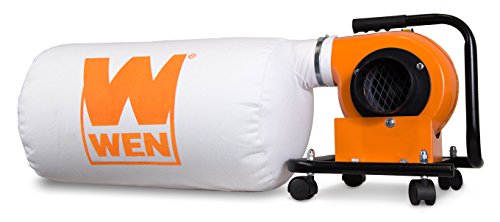
The DC3401 offers a compact, mobile design with a 12-gallon bag and a 5.7-amp motor, making it suitable for smaller shops or dedicated stations. Its 4-inch dust port allows for straightforward connections to common woodworking tools, and the onboard carrying handle makes transport and storage simple. While airflow is lower than larger models, its footprint and portability are ideal for enthusiasts who prioritize space efficiency.
Performance considerations include its capacity to handle occasional high-dust tasks and how it scales when paired with a couple of core machines. For hobbyists or small workshops with limited space, the DC3401 provides dependable dust control without occupying a large footprint. Regular bag changes and router or shaper compatibility should be planned for in advance.
WEN DC3474 Induction Motor Dust Collector

The DC3474 uses a 7.4-amp induction motor to deliver up to 600 CFM through a 4-inch dust port. With a 15-gallon bag and optional wall-mount capability, this unit balances power with space-saving options. The wall-mount feature enables convenient access to dust collection directly at the work zone, reducing hose length and potential leakage disruptions. It suits workshops that need a stable, semi-permanent dust collection point with moderate airflow.
Practical considerations include mounting height, accessibility for bag changes, and compatibility with other wall-mounted tools. For users prioritizing a higher wall-mounted setup, ensure the mounting surface and electrical supply meet the unit’s requirements. The DC3474 is a strong contender for dedicated wall configurations and smaller floor footprints.
DEWALT Dust Separator DXVCS002

The DEWALT DXVCS002 Dust Separator uses a high-efficiency cyclone design to capture debris before it reaches your vacuum, reducing suction loss and protecting filters. With a 6-gallon capacity and compatibility with 1-7/8″ or 2-1/2″ ports, it’s versatile for various shop vacs and dust collection setups. The four-caster base adds mobility, making it feasible to reposition around the shop as needed. It’s especially useful when you already own a shop vacuum and want to enhance its dust handling efficiency.
Considerations include the types of debris you typically encounter and how often you need to empty the separator. While it doesn’t replace a full dedicated dust collector, it can significantly improve the longevity of vacuum systems and reduce clogging during heavy sanding or planing tasks. It’s a practical upgrade for mixed-material environments and smaller spaces.
POWERTEC 1 HP Wall-Mount Dust Collector (DC5371)

The POWERTEC DC5371 is a compact 1 HP wall-mount dust collector with a 1-micron bag and a dedicated mounting bracket. Its space-saving design is ideal for small professional shops or hobby spaces where floor space is at a premium. The 800 CFM airflow capacity, combined with a 1-micron filtration bag, helps capture finer dust at the source and reduces airborne particles. The inclusion of a reusable, easily accessible bag system supports quick maintenance during long sessions.
When selecting a wall-mount unit, consider the available wall area, tool layout, and accessibility for bag changes. The DC5371 offers a clean, organized setup that keeps dust collection near the work zone without occupying valuable floor space. It pairs well with a few core machines in compact workshops and can be expanded with additional ducting if needed.
POWERTEC Dust Collector Bag and 4″ Clamps (30 Micron)

This POWERTEC accessory kit includes a 30-micron dust bag and a 4″ key hose clamp, designed to fit a range of planers and dust collection outlets. It helps maintain a clean workshop by improving bag containment and minimizing leaks across dust connections. The 30-micron rating captures larger particles effectively while contributing to overall air quality and system efficiency. The clamp ensures a secure, leak-free connection to 4″ ports.
Use this bag and clamp set with compatible planers and dust collection systems to replace worn bags and to optimize dust retention. It’s a practical upgrade for improving the longevity of hoses and collectors that rely on consistent containment for frequent planing and sanding tasks.
Buying Guide: Key Considerations for Woodworking Dust Collectors
- Shop size and layout: Larger, higher-CFM units suit bigger spaces with multiple tools, while compact, wall-mount options work well in tight shops. Consider available floor space and potential for future tool additions.
- Airflow and filtration: CFM indicates how much air is moved, while bag or filter micron rating denotes particle capture size. Higher CFM with finer filtration provides better dust control but may require a larger unit or system expansion.
- Mobility vs. permanence: Mobile bases and casters offer flexibility for small or changing layouts. Wall-mount or fixed cabinets save space in permanent setups but reduce repositioning options.
- System integration: Ensure compatibility with your existing tools, dust ports, and hoses (commonly 4″ diameter). Dual inlets or multiple ports enable simultaneous connections to several machines.
- Maintenance: Bag replacement frequency, filter cleaning, and ease of emptying affect long-term costs and downtime. Look for easy bag access and reusable filter options when possible.
- Noise and energy use: High-performance units can be louder and draw more current. If noise is a concern, review decibel ratings and plan for vibration isolation or placement away from work areas.
- Expansion potential: If you plan to add more equipment, choose a system that can scale (additional ducting, additional inlets, or a larger unit) to avoid bottlenecks.
- Safety and air quality: Effective dust collection reduces airborne particulates and protects respiratory health. Pair with proper shop ventilation and, if needed, an air purifier for larger spaces.
These considerations help tailor a dust collection solution to your workflow, materials, and space constraints. A balanced setup often includes a primary dust collector near the main work zone, complemented by separators or smaller units for specialized tasks, ensuring consistent debris removal without interrupting productivity.