When painting glossy surfaces, select a bonding primer that adheres securely to slick surfaces like tile, PVC, metal, and glazed substrates. This guide highlights five top options that excel on glossy and hard-to-coat materials. Each product is best for specific projects: kitchens and bathrooms, renovations involving glossy cabinetry, metalwork, and drywall priming before a dramatic color change. The buyer intent is clear: find a primer that sticks without heavy sanding, blocks stains, and creates a solid base for your topcoat. The summary table below helps compare core strengths at a glance.
| Product | Best For | Key Benefit |
|---|---|---|
| INSL-X SXA11009A-04 Stix | Glossy tile, glass, PVC, metal | Exceptional adhesion on challenging surfaces |
| Zinsser Bulls Eye 1-2-3 | Interior/exterior all surfaces | Sticks to glossy surfaces without scuff sanding |
| Rust-Oleum Stops Rust Universal | Galvanized steel, wrought iron, PVC | Improves topcoat performance on tough substrates |
| INSL-X SXA11009A-01 Stix (Gallon) | Large areas with glossy surfaces | Same high-adhesion formula in a larger container |
| Dixie Belle Bonding BOSS | Problem-prone surfaces (stains, odors) | Blocks odors and bleed-through on tricky substrates |
INSL-X Stix Acrylic Bonding Primer (Quart)

Product: INSL-X SXA11009A-04 Stix Acrylic Waterborne Bonding Primer, 1 Quart, White
Best for: Glossy tile, PVC, vinyl, plastic, glass, ceramic tile, pre-coated siding, and galvanized metals. Also suitable for drywall, plaster, wood trim, and other hard-to-coat surfaces.
Why selected: This premium acrylic-urethane bonding primer-sealer delivers standout adhesion on challenging substrates, reducing the need for aggressive surface prepping. It bonds to hard-to-coat materials and accepts various topcoats easily.
Limitations: Requires proper surface cleaning for optimal adhesion; odor may be noticeable during application.
Zinsser Bulls Eye 1-2-3 Primer
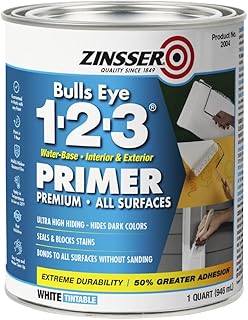
Product: Zinsser Bulls Eye 1-2-3 Water-Base Primer & Sealer, White, Quart
Best for: Interior and exterior surfaces that include glossy finishes, with a need for a stain-blocking base. Designed to stick without extensive sanding, even in cooler environments.
Why selected: It offers broad adhesion properties and helps streamline multi-surface projects, reducing surface prep time while delivering a solid base for topcoats.
Caution: As with many water-based primers, ensure adequate ventilation and allow proper drying between coats for best results.
Rust-Oleum Stops Rust Bonding Primer Spray

Product: Rust-Oleum Stops Rust Universal Bonding Primer Spray, Flat White
Best for: Exterior and interior use on galvanized steel, wrought iron, railings, furniture, laminate, PVC, porcelain, and masonry. Ideal for projects requiring broad spray-on coverage.
Why selected: It provides excellent adhesion on difficult substrates and facilitates better topcoat performance, with low odor and relatively quick drying.
Limitation: Spray application may require careful masking to avoid overspray on surrounding areas.
INSL-X Stix Primer (Gallon)
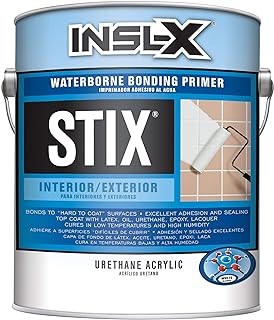
Product: INSL-X SXA11009A-01 Stix Acrylic Waterborne Bonding Primer, 1 Gallon, White
Best for: Large glossy surface projects, including pre-coated siding, Formica, and other glossy materials where substantial coverage is needed.
Why selected: This gallon-size option preserves the same high adhesion properties as the quart, making it cost-effective for bigger jobs.
Caution: Large containers require proper storage to maintain performance; reseal promptly after use.
Dixie Belle Bonding BOSS Primer

Product: Dixie Belle Paint Company Bonding BOSS Paint Primer – Clear (8oz)
Best for: Problem-prone surfaces, including those with odor or stain bleed-through. Works as a base to cover imperfections before painting; available in White, Clear, and Gray.
Why selected: It’s a versatile solution for challenging surfaces, including glossy and slippery substrates, and can help block odors and stains while improving primer-to-paint adhesion.
Caution: Not required for every project; for simple glossy surfaces, other bonding primers may be more economical.
Buying Guide: Practical How-To And Key Considerations
What makes a primer ideal for glossy surfaces?
- Adhesion capability: Look for labels highlighting bonding to glossy, hard-to-coat materials.
- Topcoat compatibility: Choose primers that accept common topcoats (latex, enamel, epoxy) without issues.
- Application method: Sprays can cover irregular glossy substrates; brushes or rollers suit smaller areas.
- Drying time and recoat window: Shorter times speed up projects but require precise conditions.
How to prepare glossy surfaces for bonding primer
- Clean thoroughly to remove oils, waxes, and residual cleaners.
- Lightly scuff very smooth surfaces if recommended by the manufacturer, but prefer primer variants designed for glossy adhesion.
- Mask surrounding areas where overspray or drips could occur.
How to choose between water-based and solvent-based primers
- Water-based primers generally have lower odor, easier cleanup, and broad compatibility on indoor projects.
- Solvent-based or polyurethane-modified options may offer greater abrasion resistance and adhesion on highly glossy or non-porous substrates but require ventilation and proper disposal.
Project considerations by surface type
- Metal and galvanized surfaces: Prioritize primers formulated for metal adhesion and corrosion resistance.
- Plastic and PVC: Choose products advertising strong plastic adhesion to reduce peeling risk.
- Ceramic tile and glazed finishes: Look for high-adhesion acrylic or urethane bonding primers designed for glassy finishes.
Frequently Asked Questions
- What primer is best for glossy surfaces?
- Do I need to sand glossy surfaces before priming?
- Can I use a bonding primer on metal surfaces?
- How soon can I apply a topcoat after priming?
- Is a bonding primer necessary for every glossy project?
- Are clear bonding primers effective?
Primers like INSL-X Stix and Zinsser Bulls Eye 1-2-3 are designed to bond to glossy substrates without extensive scuffing, providing a durable base for topcoats.
Many gloss-to-primer bonds can skip heavy sanding, but follow product guidelines. Some surfaces may benefit from light scuffing to improve adhesion.
Yes. Primers such as Stops Rust Bonding Primer provide good adhesion on galvanized steel and related substrates when used as directed.
Drying times vary by product and conditions; follow manufacturer recommendations for recoat windows to avoid improper curing.
No. Use when adhesion is uncertain or when covering nonporous surfaces that standard primers struggle with.
Certain products offer clear or tinted options that allow you to prime the surface without altering the final color substantially, useful for specific restoration projects.