Answering the question for buyers: these primers are chosen to optimize adhesion, block stains, and improve topcoat durability when applying alkyd paints. The top picks below cover interior and exterior needs, including metal, wood, masonry, and glossy surfaces. This guide is ideal for professionals and DIYers seeking reliable, all-surface primers that pair well with oil- or water-based alkyd paints.
| Product | Brand | Primer Type | Best For |
|---|---|---|---|
| Zinsser Bulls Eye 1-2-3 Water-Base Primer & Sealer | Zinsser Store | Water-based, stain-blocking | Interior/exterior, glossy surfaces |
| Diamond Brite Industrial Oil Alkyd Primer | Brite Paint | Oil-based alkyd | Metal, wood, masonry |
| Do it Best Exterior Oil-Based Wood Primer | Do it Best | Oil-based wood primer | Exterior wood surfaces |
| Zinsser Bulls Eye 1-2-3 Plus Spray Primer | Zinsser Store | Spray, oil/latex hybrid | Versatile, fast coverage |
| INSL-X SXA11009A-04 Stix Acrylic Bonding Primer | INSL-X Store | Acrylic bonding | Challenging, hard-to-coat surfaces |
Zinsser Bulls Eye 1-2-3 Water-Base Primer & Sealer
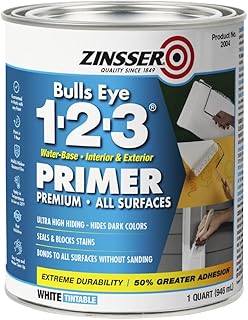
This water-base primer is designed for interior and exterior use, with stain-blocking capabilities and excellent adhesion. It bonds to glossy surfaces without scuff sanding, expanding its usefulness on pre-finished materials. It performs well at low temperatures, with a listed application temperature around 35°F. Best for projects where a quick-drying, versatile primer is needed and where both indoor and outdoor surfaces may be involved. Best for DIY remodeling and professionals working on diverse substrates that require efficient sealing before alkyd topcoats.
Best for: Renovations on glossy or previously painted surfaces where sanding isn’t ideal. Choose this when you want a multi-surface primer that dries quickly and reduces prep work. Caution: on very porous surfaces, additional coats may be beneficial for full coverage.
Diamond Brite Industrial Oil Alkyd Primer

This gray, 1-gallon oil-based primer is designed to seal and protect metal, wood, and masonry surfaces. The primer aims to create a durable base that resists scuffs, fading, cracking, and peeling when used with compatible Diamond Brite oil-based enamels. It pairs well with oil enamel topcoats for enhanced rust protection on metal. Best for projects where metal surfaces require robust rust resistance and a tough foundation for alkyd topcoats. Caution: ensure proper ventilation when applying oil-based primers and follow cure times for topcoats.
Do it Best Exterior Oil-Based Wood Primer

This exterior oil-based wood primer is tailored for outdoor wooden surfaces. It provides a solid base for alkyd topcoats, helping to block tannins and moisture-related issues that can affect adhesion. Best for homeowners or tradespeople refinishing decks, siding, or exterior trim where longevity matters. A potential limitation is longer dry times typical of oil-based products, so plan for adequate recoat intervals and ventilation.
Zinsser Bulls Eye 1-2-3 Plus Spray Primer

This spray primer delivers high-hide, stain-blocking performance suitable for many surfaces, including drywall, concrete, wood, masonry, metal, and glossy or difficult substrates. It bonds without extensive sanding and dries quickly, covering areas efficiently. Best for fast projects or hard-to-reach areas where spray application offers a clear advantage. Limitation: spray primers may overspray in tight spaces without proper masking and ventilation.
INSL-X SXA11009A-04 Stix Acrylic Bonding Primer

This acrylic-urethane bonding primer is designed for challenging surfaces where adhesion is critical. It adheres to glossy tile, PVC, vinyl, glass, Formica, and many other hard-to-coat materials, providing a solid seal before alkyd or latex topcoats. Best for surfaces where standard primers struggle. Choose this if you’re dealing with non-porous or previously coated substrates. Caution: bonding primers can require meticulous surface cleaning for maximum performance.
Buying Guide: Key Considerations For Alkyd Primers
- Surface compatibility: Match primer to substrate (wood, metal, drywall, glossy surfaces, masonry).
- Oil-based vs. water-based: Oil-based primers often excel on difficult surfaces but require ventilation and longer dry times; water-based primers reduce odor and cleanup.
- Adhesion and stain blocking: For glossy or stained surfaces, choose high-adhesion or stain-blocking formulas to improve topcoat results.
- Topcoat compatibility: Confirm that the primer is compatible with the intended alkyd topcoat (oil-based or acrylic/latex).
- Drying time and recoat window: Consider project timelines; some primers dry quickly, others require longer cure periods.
- Spray vs. brush/roller: Sprays offer rapid coverage on large areas or complex shapes; brushes/rollers provide control on edges and detailed work.
- Ventilation and safety: Oil-based primers require good ventilation and protective gear; water-based primers are often more user-friendly indoors.
Frequently Asked Questions
- What primer works best with alkyd paint on metal? Best for metal is often an oil-based or bonding primer designed for rust resistance, such as Diamond Brite or other rust-protective primers.
- Can water-based primers be used under oil-based alkyd paints? Yes, many water-based primers are compatible with oil-based topcoats, but always check the product’s compatibility guidelines.
- Do I need to sand glossy surfaces before priming? Some primers are designed to bond to glossy surfaces without sanding, but spot sanding can improve adhesion in some cases.
- How long does primer dry before applying alkyd paint? Dry times vary; read the label for recoat windows and ensure surfaces are clean and dry before topcoating.
- Should I use a bonding primer for difficult surfaces like PVC or glass? Bonding primers like Stix are recommended for hard-to-coat materials to improve adhesion.
- Is spray primer safer for indoors than brush-on options? Sprays can reduce application time but require masking and ventilation; choose based on space and project needs.